訊息
OK
The Inner World of Taiwan Literature
Dialogues
The languages, mores and other cultural manifestations of different ethnic groups come naturally into conflict at different points and places in time. Those forced into sharing the same land inevitably learn, however gradually, to coexist and get along. Different time periods engender different ideas. Initial violent conflict evolves into more complex and subtle relationships for different ethnic groups shoehorned into the same living space. Through conflict and cooperation, groups learn how to interact. Differences become tolerated and then accepted. In listening to the other’s life experiences, a shared historical dialogue begins, which leads to coexistence and the blooming of a multi-ethnic and multi-cultural society. Taiwan’s rich historical experience has engendered a profound literary tradition grounded in disparate cultural and historical experiences.
This section highlights the process of competition and accommodation that has nurtured inter-ethnic conflict and cooperation. Different types of writing written in different periods reveal differences in author emphasis. Creations of literature using various languages and forms have created solid foundations for a cooperative and resplendent literary garden. This section also examines contemporary literary journals and societies to highlight the incessant search of Taiwan’s authors to answer the questions of how best to create a cohesive society and how to go about establishing prosperity for all of Taiwan’s various ethnic groups. Countless literary luminaries have played unquestionably important roles in realizing a rich multiethnic literary inner being.
Competition and Coexistence
Interethnic competition fed clashes and conflict that was broken only occasionally by alliances to oppose threats from abroad. This long and difficult road sowed the seeds destined to grow and create the foundations that all groups would accept as uniquely “Taiwan.”
Internecine conflict, resistance to government oppression, anti-colonialism and battles for linguistic rights have all left their mark on Taiwan history. But through the conflict, Taiwan’s different peoples have come to know one another and gradually learn to respect and even appreciate one another’s differences. Complicated relationships running the gamut between bitter conflict and active cooperation forms one of Taiwan literature’s most indelible themes. Raising the light of reason, authors delve into the meaning of interethnic cooperation. In expounding on the struggle for existence, authors spark cultural awareness, debate literary form, discuss future possibilities and guide people out from under conflict’s shadow. Authors and their works create the framework for coexistence and cooperation and herald the arrival of a distinct Taiwan culture.
Life and Death Struggles
Armed conflict was a part of life on Taiwan during the early decades of settlement. Individuals, clans and ethnic groups were locked in life and death struggles to squeeze prosperity and hope from their island wilderness. The arrival of new competitor groups, however, sometimes brought former enemies into new alliances out of a need to “protect the homeland.” Dominant groups also occasionally split into squabbling factions, expanding local conflicts and destroying former peaceful coexistence. Authors living through such times took it upon themselves to pen their observances and thoughts on contemporary affairs.
Cultural Awakening
Japanese colonial authorities began their rule forcefully. Military rule was gradually replaced by a more enlightened and modern authoritarian rule that suppressed and reoriented the island’s social and political landscape. Responding to oppression, Taiwanese poured their energies into various societies and cultural activities. Calls for reform necessitated a grassroots movement that welcomed cooperation from all those disenfranchised and sidelined by colonial rule. Every period in history has its authors willing to heed the clarion call to action and invest their lives for the social good. They witness oppression and resistance in their writings and participate themselves in social activism.
Linguistic Crossroads
The frequent appearance of two or more languages in a single work is a hallmark feature of Taiwan literature. While the promotion of a common language for the island at various times in history has certainly reduced problems inherent in miscommunication and misunderstandings, such policies have nonetheless created a system of linguistic apartheid. Those writing in the “common” language had a much better chance of getting their literature read and messages heard. The writing of perceptive and talented authors can help satiate the curiosity of different groups about one another, overcome language differences and open pathways to acceptance and understanding.
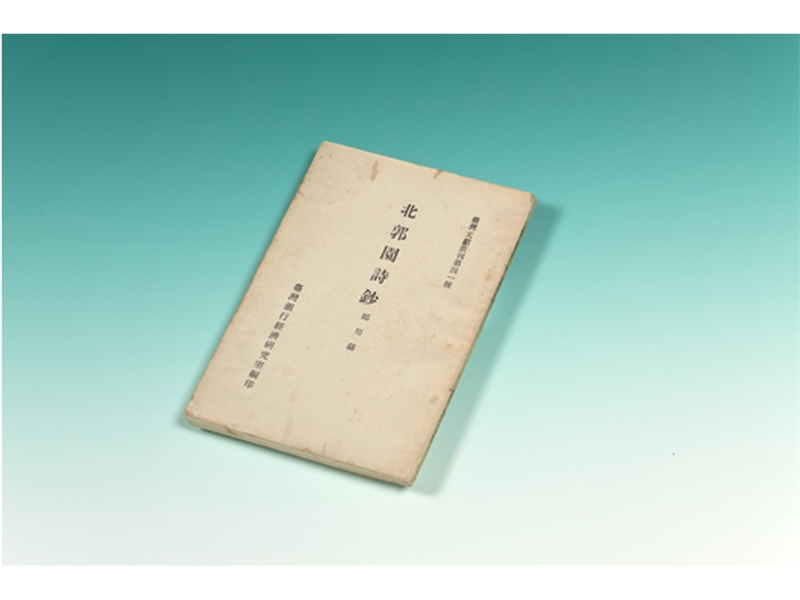
“Reconciliationism” in Beiguo Garden Anthology
Cheng Yung-hsi (1788-1858) was a native of Zhuqian, modern-day Zhubei in Hsinchu County. Cheng wrote “Reconciliationism” in 1853 in response to the Zhang-Quan Clan Wars and followed up by traveling personally amongst the affected villages promoting a resolution of tensions. He longed to create peace in a land wracked by ethnic and intra-ethnic feuding and violence.
(Taiwan Bank Press, Taipei, 1987; book; donated by Hsu Ping-ting)

Winds of Change over Taiwan
Chiu Chia-hung (1933 - ) is a Taichung, Taiwan native. Chiu published the 2.3 million (Chinese)-word Winds of Change over Taiwan at age 70 in 2002. In 6 chapters with names such as “The Calamity of the Second World War”, “Empire Lost” and “228 Terror”, he narrated the ebb and flow of modern Taiwan history and the life and times of its citizenry.(manuscript; donated by Chiu Chia-hung)
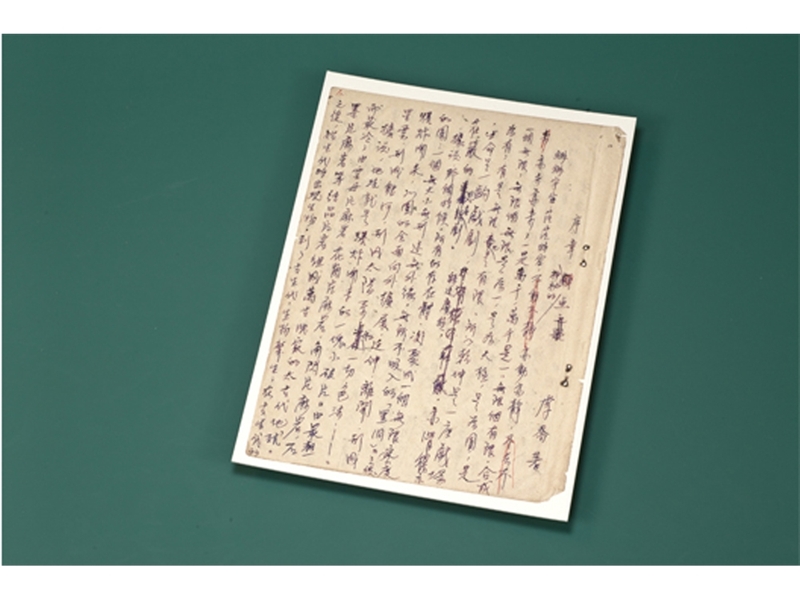
Winter Night Trilogy
Lee Chiao (1934 - ), aka Lee Nung-chi, is a native of Miaoli, Taiwan. His Winter Night Trilogy was the literary package for his three works, Winter Night, The Lone Lamp and Deserted Village. Winter Night is a tale of the land that describes a century of struggle to tame the wilderness and make it productive. Through conflict and disaster, the protagonists’ determination to hold firm to roots dug deep into Taiwan’s soil creates a tale of bitter survival.(1979; manuscript; provided by Lee Chiao)
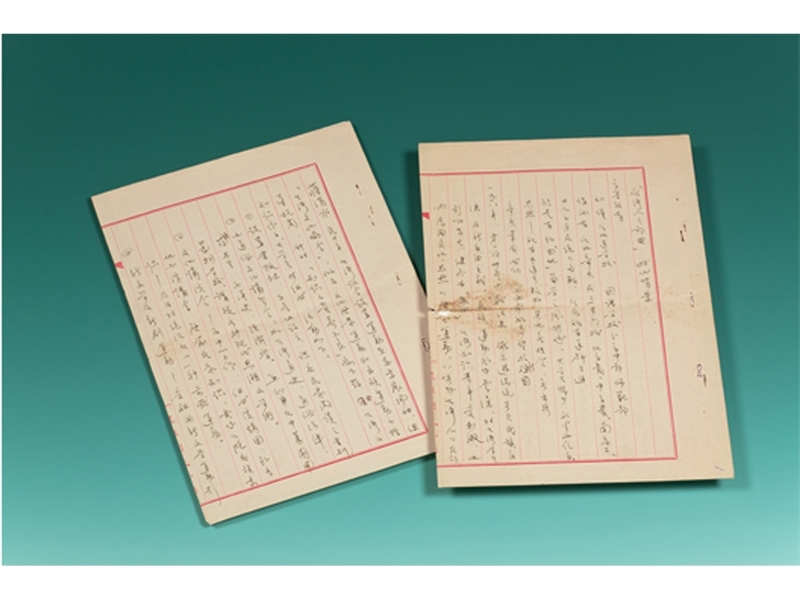
"'The Taiwanese – A Trilogy' in the Context of its Time"
Chung Chao-cheng (1925 - 2020) is a modern author from Longtan in Taoyuan County, Taiwan. Chung released the first installment to his Taiwanese trilogy in 1967 when he published Degradation. It was followed in turn by Dark Sea Journey and Song of Chatian Mountain. He couches his stories in the true-life experiences of Chinese Hakka. Focusing in on island-wide developments and social trends, Chung takes a sharp, clinical look at the conflicts he attributes to Taiwan’s long period of colonization.(1925; manuscript; donated by Chung Chao-cheng)
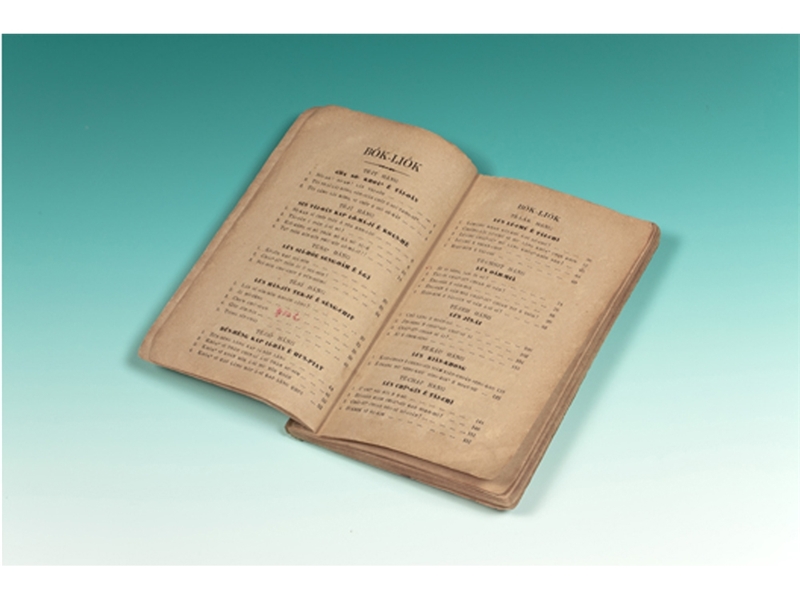
Chap-Hang Koan-Kian (Opinions on Ten Issues)
Tsai Pei-huo (1889-1983) was an author from Beidou in Yunlin County, Taiwan. Chap-Hang Koan-Kian, published in 1925 and written in vernacular prose, states opinions and ideas on ten issues the author perceived as central to the health and growth of contemporary Taiwan culture. This work was written as a social education piece to inspire and motivate his fellow Taiwanese.(1925; book (reprint); NMTL collection)
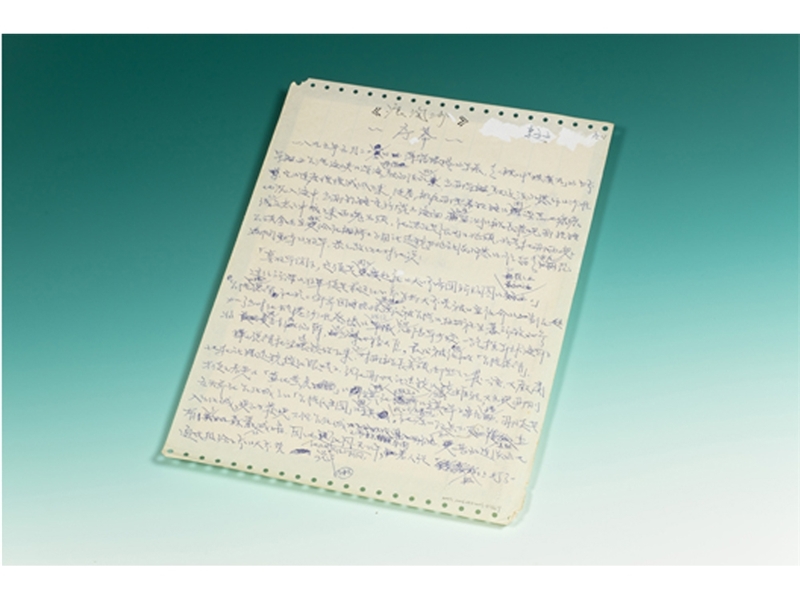
Wave-Washed Sand
Tung Fang-po (1938 - ) is from Taipei City, Taiwan. Tung finished his 11-year opus, Wave-Washed Sand in 1991. The story transgresses linguistic, cultural, national and ethnic boundaries in its examination of the problems of three families. Caught up in an emotional storm, the story steers a course toward coming to terms with fundamental human compassion.(1980s; manuscript; donated by Tung Fang-po)
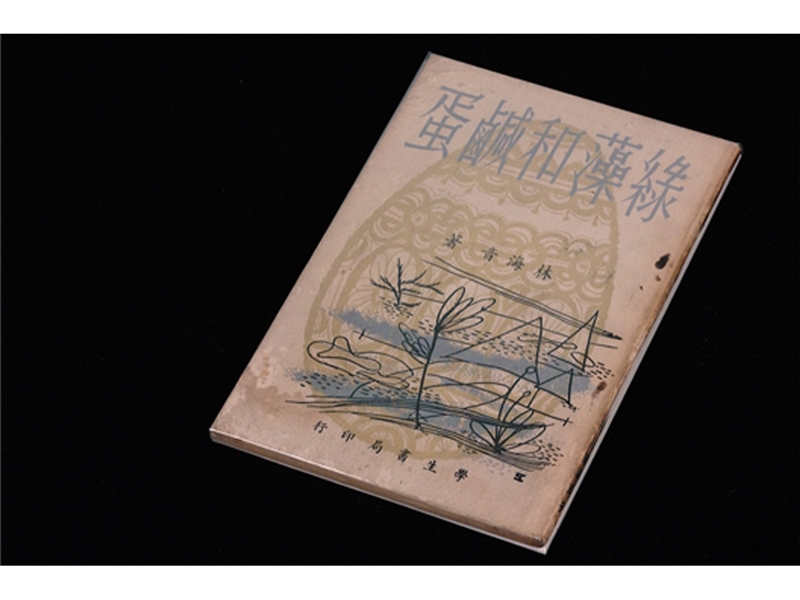
“Crab Shell Cakes” in Green Laver and Salty Eggs
Lin Hai-yin (1918-2001) was an author from Toufen Township in Miaoli County, Taiwan. “Crab Shell Cakes” describes the meeting over food of a Mainland Chinese boy and Taiwanese girl during the early Retrocession Period. The girl finally puts to rest the boy’s constant bickering over their different backgrounds, and they find common ground in a shared language and anti-communist zeitgeist. Having found himself an unexpected resident, the boy mulls over the likelihood of Taiwan becoming his permanent home.(1982; Literature Press, Taipei; book; donated by Hsia Tsu-chuo)
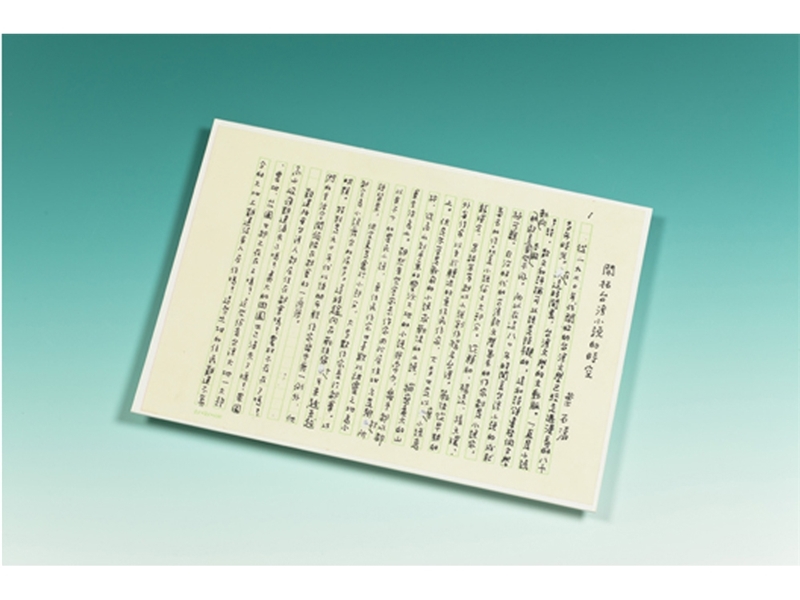
Expanding Horizons for Taiwanese Novels
Yeh Shih-shou (1925-2008) was an author from Tainan, Taiwan. Yeh wrote Expanding Horizons for Taiwanese Novels as his general narrative on the Taiwan literature’s development since the 1920s. He urged a much grander vision for the novel genre in Taiwan, writing that only by addressing the whole spectrum of ethnic and clan groups on the island could the Taiwan novel reach its fullest and richest potential.(1990s; manuscript; donated by Yeh Shih-shou)
Cooperation and the Bloom of Diversity
The springboard of language can foster mutual understanding and respect. Literature helps confirm self-identity through self-expression. The subsequent profusion of literary activities has a strong and positive role to play in dissipating the curse of internecine competition and conflict. Starting from the perspective of “my group,” authors unveil the diverse richness inherent in the inner being and invest themselves in fostering mutually supportive intergroup relationships to nurture a strong and healthy literary tree able to bear fruit for generations to come. Authors of different ethnic backgrounds join as one to nourish and expand the literary profession. Bridging old and new and motivated for the common good, authors engage in active dialogue that inter-pollinates and introduces diverse opinions and perspectives to set the literature of “us” on a solid footing with positive momentum into a future of benefit to all.
My Writings, My Voice
Since the 1920s, literary historians have led a concerted effort to collect and publish folk songs and stories from around Taiwan. From the 1980s, democratization, grassroots promotion of traditional folk culture, and tribe efforts to revive Malayo-Polynesian language use led to the creation of myriad culture-oriented groups, magazines and new literary honors. A common thread throughout has been calls for a restoration of and respect for Taiwan’s distinctive ethnic and cultural traditions. Movements are rooted in folk ways and traditions, relate local histories and encourage the telling of life stories in local languages.
The Literature of Family
Facing a society of multiple ethnic polarities, authors can draw on familiar life experiences, describe their own search for family roots, and observe the complex multi-ethnic tapestry in their own DNA to uncover origins and understand differences. Authors ultimately reconstruct the “self” and their spatial existence to foster life and plant the seeds of enlightened reflection on the threads of history that bind us all together that will sprout and flourish for generations to come.
The Literature of “Us”
forbid such. They open their hearts without prejudice to all Taiwan authors who have come before to create a forum for discussion and creativity. Their goal is cooperation. During difficult times, visionary authors step to the fore to send cool, pure water to “our” shared literary garden in hopes it will bloom again to take the literary arts to new and greater heights.
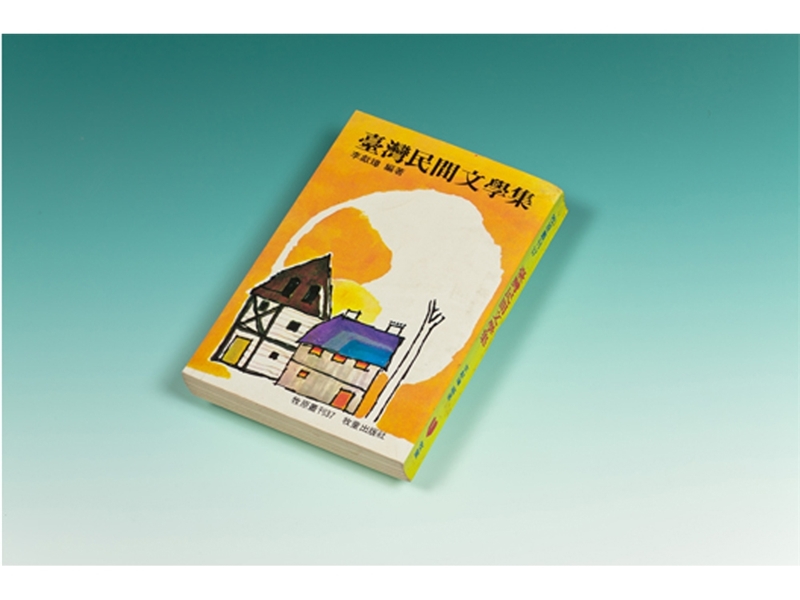
Collection of Taiwan Folk Literature
Lee Hsien-chang (1904-1999) was an author from Daxi in Taoyuan County, Taiwan. Lee spent part of the 1930s recording and writing down folk stories and songs from around the island. He compiled nearly one thousand songs and 22 stories into his Collection. He continued his research, becoming a strong advocate for valuing one’s own literary heritage over the empty ogling of foreign authors and literary traditions.(1936; book; donated by the family of Wu Shou-li)
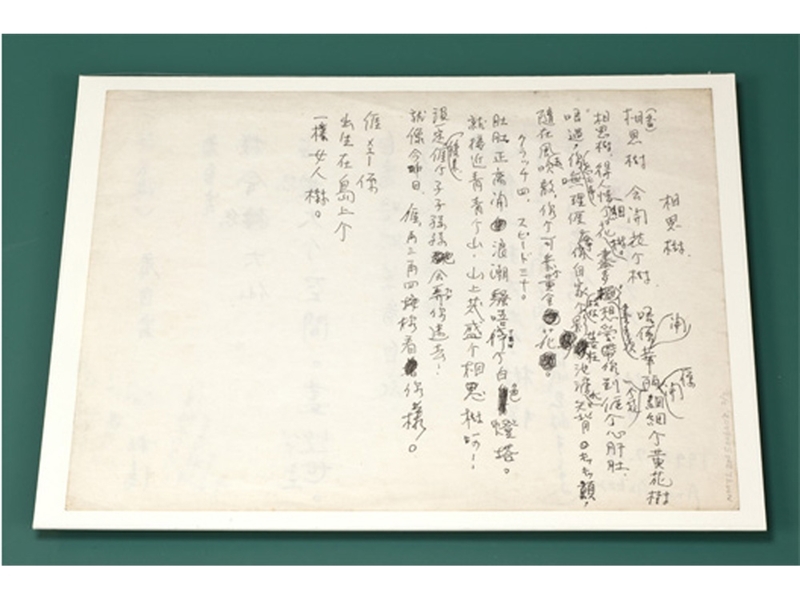
The Acacia Tree
Tu-Pan Fang-ko (1927 - 2016) is an author from Xinpu in Hsinchu County, Taiwan. This manuscript of her Hakkanese poem “The Acacia Tree” eloquently illustrates the poet’s creative process. An accomplished writer of Japanese prose prior to 1945, Tu-Pan experienced a spiritual self-awakening in her native Hakkanese (a dialect of Chinese) after the Second World War, and she reoriented her creative output into this new medium. The rustic scenes of traditional Taiwan described in “The Acacia Tree” are metaphors for aspects of the author herself. A bridge between two linguistic ages, Tu-Pan uses poetry to pass island culture forward to new generations.(1968; manuscript; donated by Tu-Pan Fang-ko)
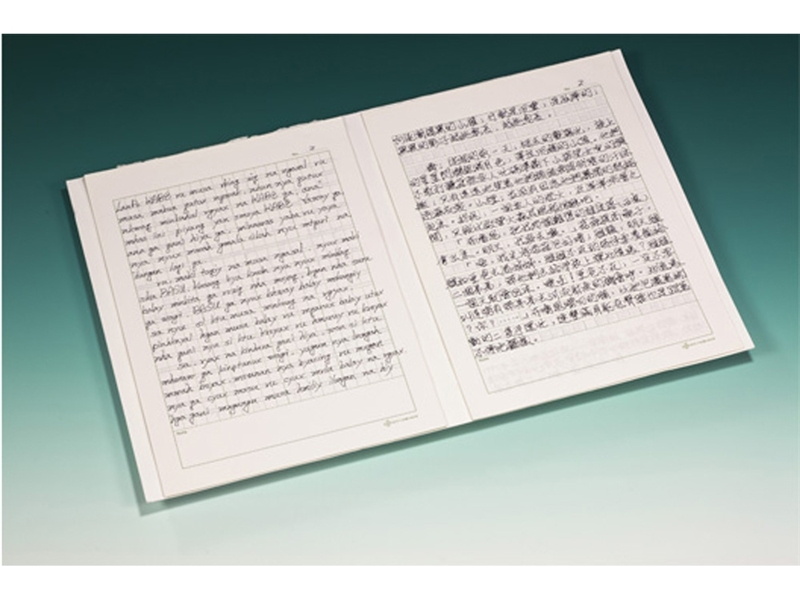
Atayal Footprints
Walis Naqang (1961 - ) is an ethnic Atayal from Heping in Taichung County, Taiwan. Walis completed Atayal Footprints during the 1990s in side-by-side Atayal (romanized script) and Chinese. The novel narrates a moving story that highlights the vital spirit of the Atayal people.(1990s; manuscript; donated by Walis Naqang)
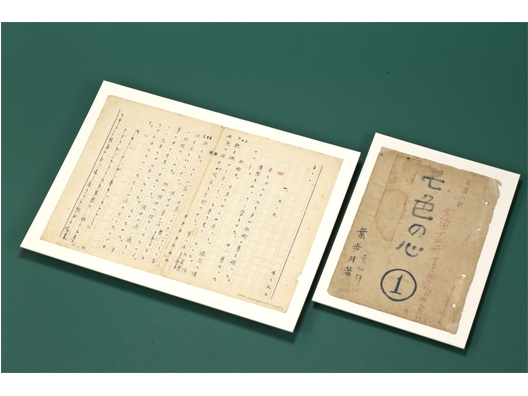
The Seven-Colored Heart
Yeh Pu-yueh (1907-1968), aka Yeh Ping-hui), was an author from Taipei City, Taiwan. He completed this epic novel in the 1960s. The Seven-Colored Heart follows the story of a Taiwanese family through three generations, highlighting their myriad and complicated cultural conflicts and the bittersweet rise of the main protagonist to social success and status.
(1960s; manuscript; donated by the family of Yeh Pu-yueh)
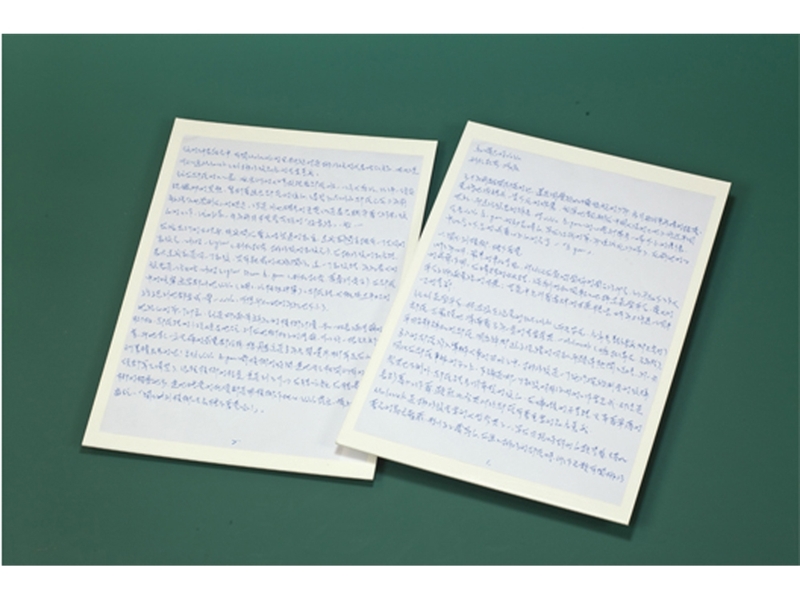
Red-Mouthed VuVu
A-wu Liglave (1969 - ) is an ethnic Paiwan from Pingtung County in southern Taiwan. VuVu is a Paiwan term of affection for the elder women in the community. This book narrates stories of life that highlight the Paiwan love of life and Paiwan determination to remain a tightly knit community.(1990s; manuscript; provided by Liglave A-wu)
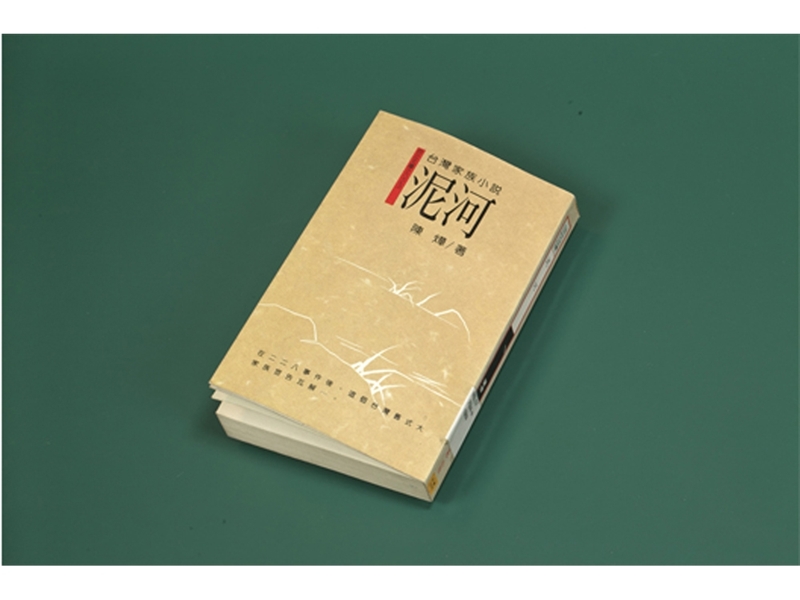
River of Mud
Chen Yeh (1959-2011), aka Chen Chun-hsiu, was a native of Tainan, Taiwan. River of Mud narrates the three-generation saga of the Lin family of Tainan. From the Japanese Colonial Period through to the postwar era, the book’s protagonists experience the tumultuous flow of history and several of Taiwan’s seminal historic turning points. Published in 1989 just as Taiwan finished disassembling Martial Law restrictions, it was one of the first works of literature to directly address the so-called February 28th (228) Incident and the ensuing years of White Terror.(1989; Independence Evening Post, Taipei; book; NMTL collection)
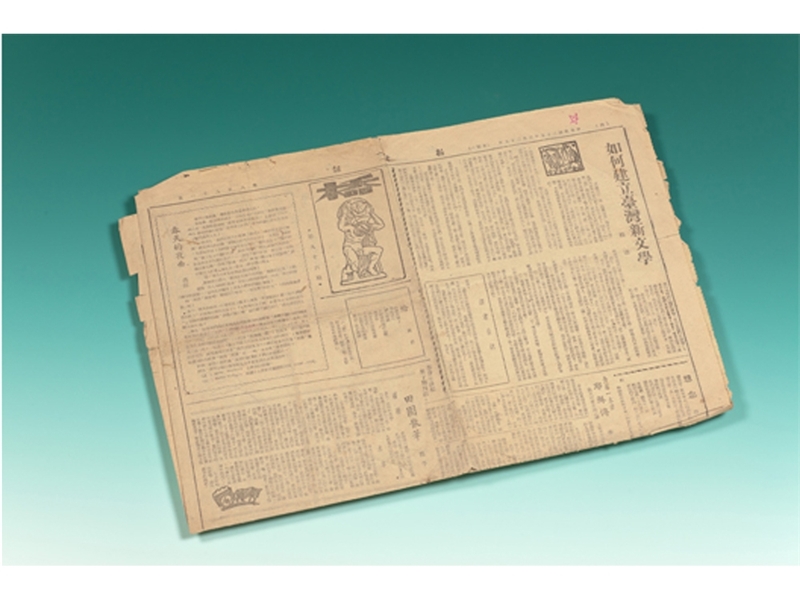
Opening Remarks
Launched in 1947, the Shin Sheng Daily News’ “Bridge” supplement carried these opening remarks by its chief editor Ko Lei. Ko wrote, “‘Bridge’ symbolizes a passing of the torch from old to new, a transformation from the exotic into familiar friend. It is a new horizon of fertile potential. ‘Bridge’ symbolizes the opening of a new era.” The supplement was intended to bridge local literature into the new postwar era, and stressed conciliation and cooperation in the work ahead.(《The Bridge Supplement, Shin Sheng Daily News; August 1st, 1947)
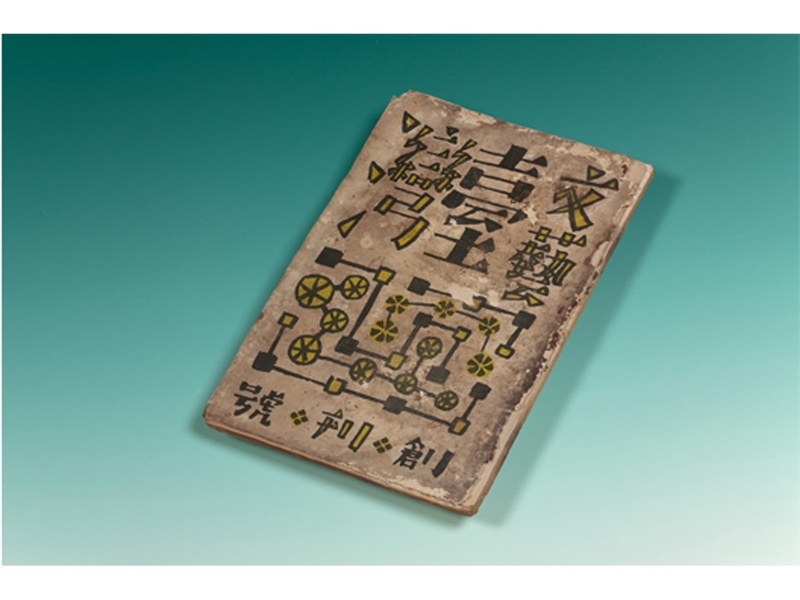
Bungei Taiwan
Bungei Taiwan published its first issue in 1940 under the editorship of Mitsuru Nishikawa. With the goal of growing to become a “focal pillar of Taiwan culture,” the journal attracted a sweeping array of short stories, poems, theatrical scripts, haikus and tankas from both Taiwanese and Japanese authors. Later issues devoted increasing space to literature related to conflict and the ongoing Pacific War.(1940, first issue; journal; donated by Long Ying-tsung)
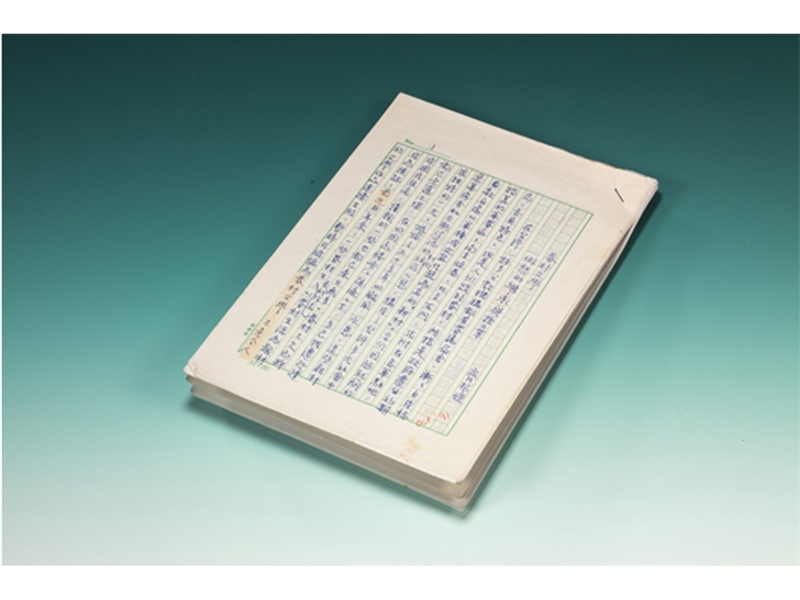
Raging River
Chi Pang-yuan (1924 - 2024) is an author from Tieling in Mainland China’s Liaoning Province. This original manuscript is one chapter from Chi’s work, Raging River. From the 1970s, the author began devoting her time to translating Chinese literature into English, opening Taiwan literature to the world. Her efforts have been crucial to developing and growing Taiwan’s increasingly rich literary dialogue with other nations and cultures.(chapter 10; manuscript; provided by Chi Pang-yuan)

Image shows
Source: