訊息
OK
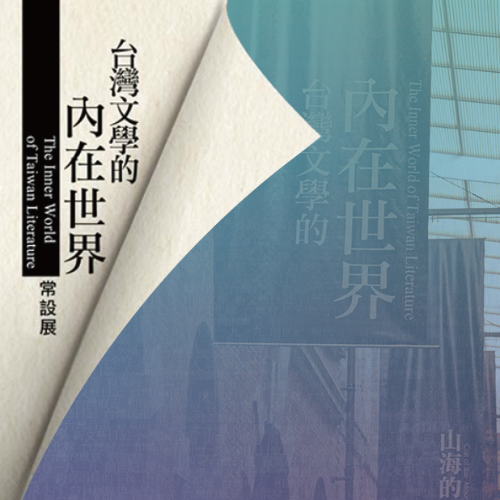
The Inner World of Taiwan Literature
The Theater of Life
At the intersection of latitude 23 north and 121 east, Taiwan is strategically located at the crossroads of the world and naturally blessed by the heritage of numerous cultures. Ilha Formosa, our island home, is the beautiful backdrop against which countless stories of immigrants of vastly different cultural and ethnic backgrounds have played out. So many touching stories, so many indelible memories.
Considering the interplay between natural topography and literary creation, all who journeyed to Taiwan had to cross the “Black Ditch” as the fickle waters of the Taiwan Strait were known. Some came to pursue new opportunity; some came to escape the dust of urbanity; others came seeking refuge from conflict, while still others arrived out of political expediency. Immigrants through the centuries left oral and written tales. It is these that have been woven into a moving and genuine body of homegrown literature that communicates the hopes and dreams of our forebears who sought a fresh start in Taiwan. By embracing the full spectrum of the Taiwan “experience,” Taiwan literature expands cultural horizons, further leavens literary traditions, inspires the spirit and enriches Taiwan’s uniqueness.
Kraken Island Rising spotlights early Malayo-Polynesian immigration to the island and the experience of the first Han immigrants in the 17th century. Island Soul introduces the emotions and experiences underlying Taiwan’s nostalgic literary genre. Formosa of the Mind shows how authors have deftly captured Taiwan’s natural wonder in words, described the complex feelings people have had about their island home at different periods in history, and captured in literature Taiwan’s changing zeitgeist. We hope the works introduced in this section help visitors better appreciate the breadth and diversity that is the essence of Taiwan literature.
Kraken Island Rising
A verdant island rises high above the waves. The arrival of different peoples spurs creation of distinct mythic tales, stories and literature. These were catalysts helping create an increasingly well-defined “Taiwan” identity. It is the myriad cultures blended into the Taiwan melting pot that give island literature its narrative and descriptive depth.
Indigenous Malayo-Polynesian culture and nature’s rhythms lie close to the unadulterated heart of the human experience. Oral traditions, tales of adventure from the Age of Exploration and other outsider stories of indigenous life and ways praise the value of Taiwan’s forests, mountains and lush lowland plains. Seeking profits from new lands, Spanish and Dutch traders build fortified settlements at San Salvador in Keelung and Zeelandia at Anping near Tainan. These Europeans traded with indigenous plains tribes for deer pelts, minerals and other items. After Taiwan’s absorption into the Chinese realm in the mid-17th century and through fifty years of Japanese colonial rule, island authors tended to describe indigenous ways and customs through the prism of “civilization” and as one of many narratives in the story of human development and survival.
Gift of the Gods
The Heavens created Formosa, the land sustains man from generation to generation. Indigenous oral traditions have much to say about man’s origins, how the gods came to be and the creation of the natural world. These stories, deeply respectful of nature, sustained tribal memories and reinforced each tribe’s uniqueness. The ancestors of Taiwan’s indigenous peoples and later Han Chinese homesteaders both arrived here after a risky journey across the waves. Whales, the gentle leviathans beneath Strait waters, showed many the way forward onto Taiwan’s shores.
Initial Impressions
The natural synergy between Taiwan’s indigenous peoples and their environment features prominently in early writings on the island. Early third-person writings about Taiwan’s indigenous peoples represent a hodgepodge of personal experience, retelling of others’ stories and creative imaginings. Authors often described the life and ways of native Taiwanese using florid prose extolling their simple, untainted ways. Headhunting, facial tattoos, communal celebrations, the traditional mouth harp and hunting are recurrent themes in early author narratives.
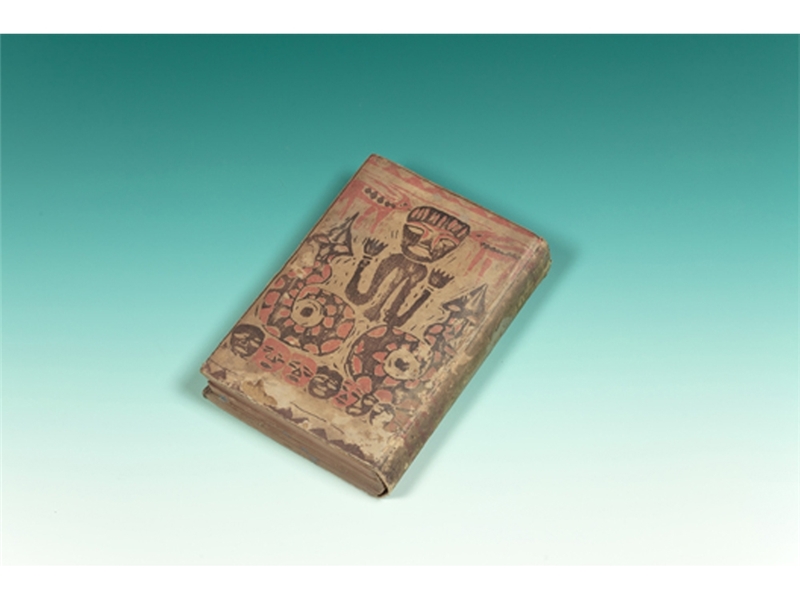
Seiban Densetsushū (Collection of ‘Cooked’ Aborigines Legends)
Japanese anthropologists Yūkichi Sayama and Yoshihisa Ōnishi came to Taiwan in the 1910s to observe and record the traditional stories and legends of Taiwan’s indigenous Malayo-Polynesian tribes. One of the tales recounts an Atayal legend about a “pile of pooh” giving birth to man.(1923; Sugita Shigezō Booksellers, Taihoku (Taipei); book; donated by Huang Teh-shih)
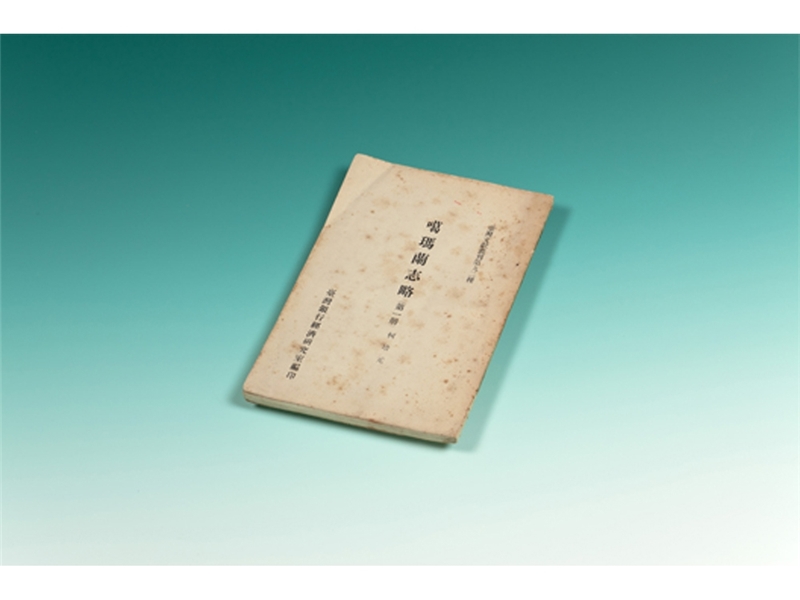
“Song of the ‘Cooked’ Aborigines” in Outline Description of Kavalan
Ko Pei-yuan (date of birth and death unknown), aka Fu-tzu was a native of Licheng in Shandong Province, China. A Qing government official, Ko was posted to Kavalan (present-day Yilan) in 1835. He served there just one month, and left the island soon after. Outline Description of Kavalan is a personal narrative of his experience, with a particular focus on the region’s indigenous peoples. The poem featured here describes the plight of the ‘cooked’ (i.e., civilized / Sinicized) natives who were the chronic and unwitting targets of Chinese settler schemes and trickery.(Taipei Bank Press, Taipei, 1961; book; donated by Hsu Ping-ting)
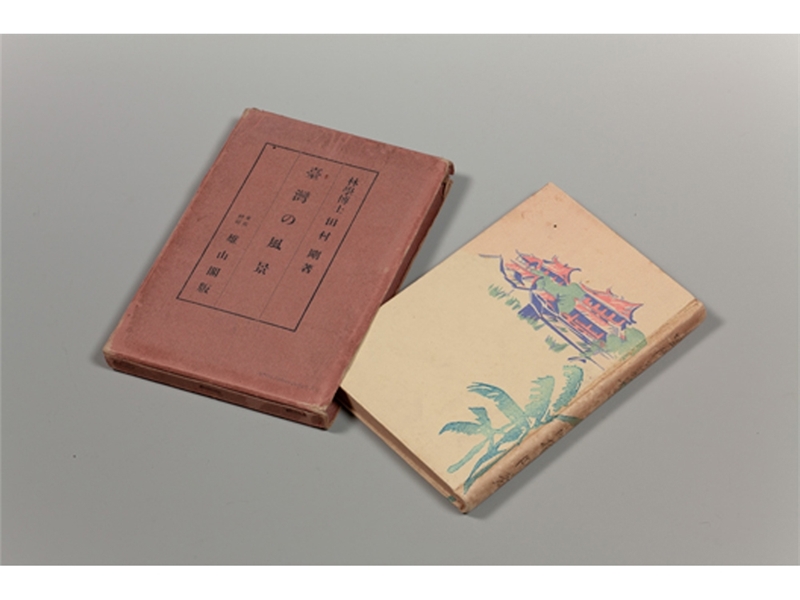
Taiwan no Fūkei (Scenery of Formosa)
Tsuyoshi Tamura (1890-1979) was a forestry researcher from Kurashiki, Japan. He arrived in Taiwan in 1928 to survey in East Taiwan for the planned new Tsugitaka-Taroko National Park (Tsugitaka Taroko Kokuritsu Kōen). Scenery of Formosa, published by Yūzankaku Shuppan, Tokyo, compiles many of his sketches and observations from that time.(book; donated by Huang Teh-shih)

Mouth Harp
Lifok 'Oteng, aka Huang Kui-chao (1932 - 2019); ethnic Amis from Taitung County). Mouth harps are prevalent among most of Taiwan’s indigenous Malayo-Polynesian groups. They are played by men and women, young and old alike, and used in communications and as an accompaniment to music, romance, ceremonies, and dance. Display Accompanied by Mouth Harp Music(handcrafted by Lifok ‘Oteng)
Spirit of the Land
Starting anew in a strange land, early authors helped capture the social zeitgeist of Taiwan during the harsh and hectic days of settlement. Using their mother tongue, these authors wrote of Taiwan’s majestic mountains and rivers, its scenic wonders and exotic tropical fruit. Works in these early times were of largely two schools. The first looked upon Taiwan with the awe of an outsider. All was strange and new in this new outpost of empire off China’s southeast coast. The second carried the sting of nostalgia for the homeland left behind. Taiwan’s mountain scenery engendered thoughts of home and family beyond the “Black Trench.” Taiwan gradually became a new home that consoled and, eventually, overcame pining for the home country.
Sights of Wonder & Awe
Subtropical Taiwan, between Mainland Asia and the Pacific, is a land of incredible landscapes and unique flora and fauna that perennially impresses visitors. Qing Dynasty authors turned their narrative and poetic spotlight on the island’s heralded “Eight Scenic Wonders”, while those in the Japanese colonial period celebrated Taiwan as a Imperial cornucopia of pineapples, bananas and other tropical delicacies. Captivated by what they saw and experienced, these authors presented Taiwan as a land to be explored, discovered and treasured. Authors were among Taiwan’s pioneers and its earliest promoters.
Home is Where the Heart Is
Authors that left childhood homes behind to emigrate to Taiwan have left behind a rich tradition of nostalgic literature. The mid-20th century was a particularly active period for the nostalgic genre, with much ink invested in tales of separation, exile, regret and pining for a home far away. While the emotions stirred by enforced separation don’t fade with time, protagonists inevitably make the difficult adjustment and invest themselves in building a new life in Taiwan.
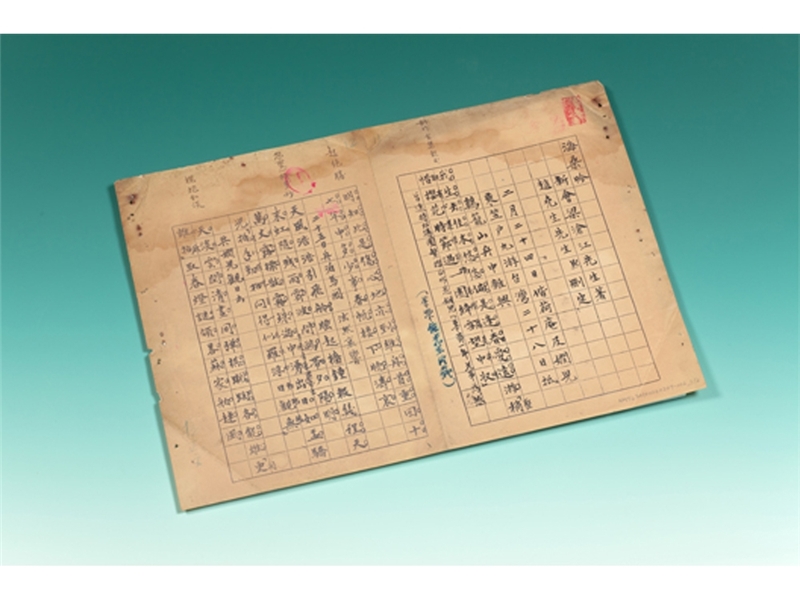
Song of the Great Wide World
Liang Chi-chao (1873-1929), aka Chuo Ju, was a native of Xinhui in China’s Guangdong Province. He co-authored works with leading Qing Dynasty reformist Kang Youwei and, after participating in the ultimately suppressed 1898 ‘100-Days Reform’, he escaped into exile in Japan. He sailed to Taiwan from Yokohama in 1911 and wrote on his myriad experiences throughout the island in Song of the Great Wide World. Unfortunately, the full text of this work has been lost to posterity.(manuscript (reproduction); donated by Huang Teh-shih)
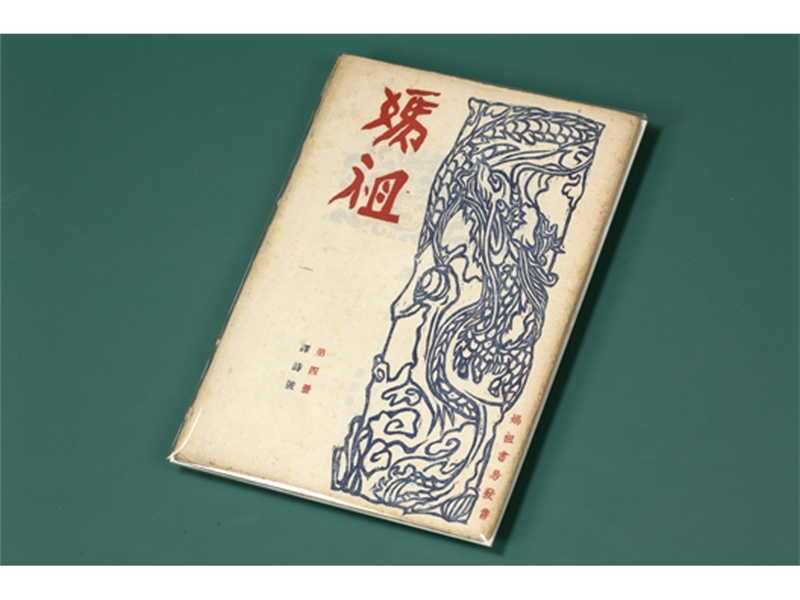
Matsu, Vol. IV, No. 4 (final issue)
Mitsuru Nishikawa (1908-1999) was from Wakamatsu (Aizuwakamatsu), Japan. He came to Taiwan with his father in 1910, where he lived, studied and was active in various literature-related events and activities. Matsu, published by Misuru’s Matsu Publishing House (founded 1934), regularly featured the lithographic art of fellow Japanese Tateishi Tetsuomi and Kanda Yataro on its cover. Matsu was published until 1938.(Maso Shobō (Matsu Publishing House), Taihoku (Taipei), 1937; journal; provided by NMTL collection)
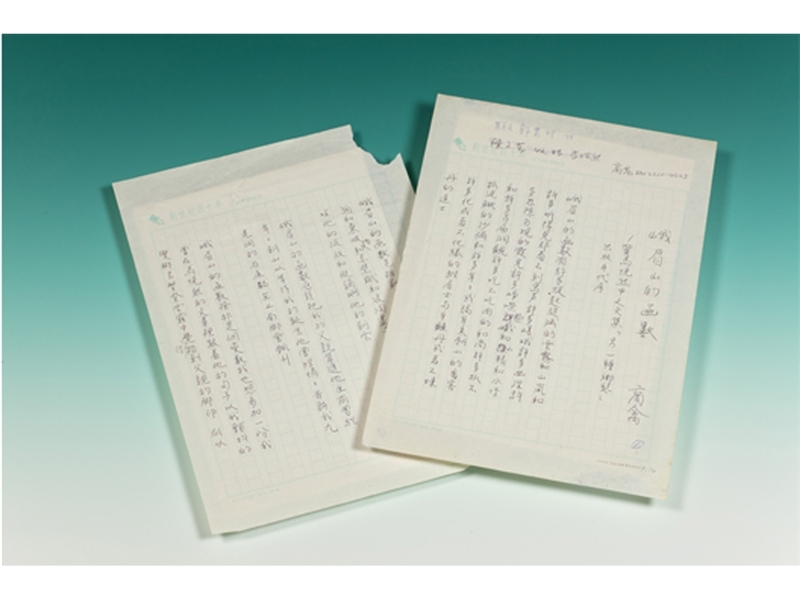
The Functional Nature of E-Mei Mountain
Shang Ch’in, aka Luo Hsien-yen (1930-2010) was a native of Gong County in Sichuan Province. Shang arrived in Taiwan with the ROC military in 1950. He wrote original poetry, was a member of the Epoch Poetry Society and influenced the development and shape of Taiwan’s modernist poetry movement. “The Functional Nature of E-Mei Mountain” was written as a preface for Swedish linguist Nils Göran David Malmqvist’s Another Nostalgia. Impressed by his poems, Malmqvist had earlier translated and published Shang’s poetic works into English and Swedish, which introduced Shang Ch’in’s works to a worldwide audience.(manuscript; provided by NMTL)
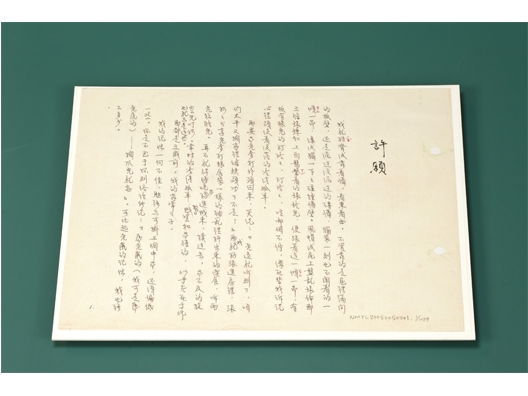
The Family of Tai-Ping Hwa
Chu Hsi-ning (1927-1998), a native of Linqu in Shandong Province, arrived in Taiwan in 1949. The Family of Tai-Ping Hwa was Chu’s last work. Set in the late Qing Dynasty, this weighty and epic novel narrates an 18-year span of time to weave the story of an average family forced to deal with the whirlwind changes sweeping their nation and personal lives.(1980s; manuscript; donated by Chu Tien-wen)
Describing Our Land
Literature helps infuse landscapes with stories and purpose. Literature not only brings to life its narrative settings, it gives poetic meaning to story details and embraces the author’s inner essence.
Authors construct their historical and personal perspective through interaction with different landscapes and spaces. They describe the nostalgic and emotional relationships individuals share with physical space, the way they interact with such space, and their practical hopes and desires. Author narratives deftly weave lives into the fabric of Taiwan’s nurturing, sustaining land.
Musings on “Heaven and Earth”
The “heaven and earth” of the author is not limited to the author’s inner world, but is the realm of poetry as well. In describing changes to village life in the face of industrialization, the distinctive landscape and voices of Taiwan’s outlying island, and the disparate cultural histories of East and West, authors seek to both recall spatial memories and paint expectations for the future. More than simply the exploring an author’s inner being, literary depictions of space embrace life’s expectations and hopes.
Life by the Water
Authors from towns along Taiwan’s rivers or on the sea enjoy yet another rich well of literary inspiration. Like forests and hills engulfed by urbanity, many today are caught between modern and traditional ways of life, caught in the din and glimmer of the big city. The life stories of many, however, continue to be written on Taiwan’s chronically poor western shoreline and the remote and mountainous East Coast. Chilly winds and nasty weather perennially plague fishing villages. The harsh existence here has served as inspiration to many authors. Yushan, Taiwan’s highest mountain, is not only a place of worship for Taiwan’s indigenous peoples, it is the source of their myths and ancestral stories. Different ethnic groups describe the world of literature in their own tongues. Authors embark on voyages of inner discovery from their own unique cultural perspectives.
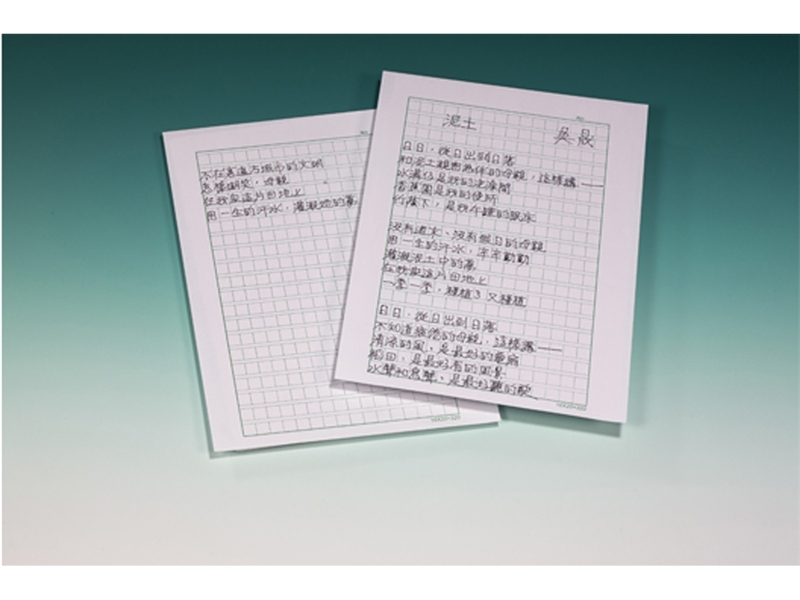
Dirt
Wu Sheng (1944 - ), aka Wu Sheng-hsiung, is a native of Changhua in Central Taiwan. His mainly poetic works reflect his personal observations on life and philosophical outlook firmly rooted in his beloved Taiwan. His works have been set to music and released by popular music artists Lo Ta-yu and Wu Zulin.(clean manuscript; provided by Wu Sheng)
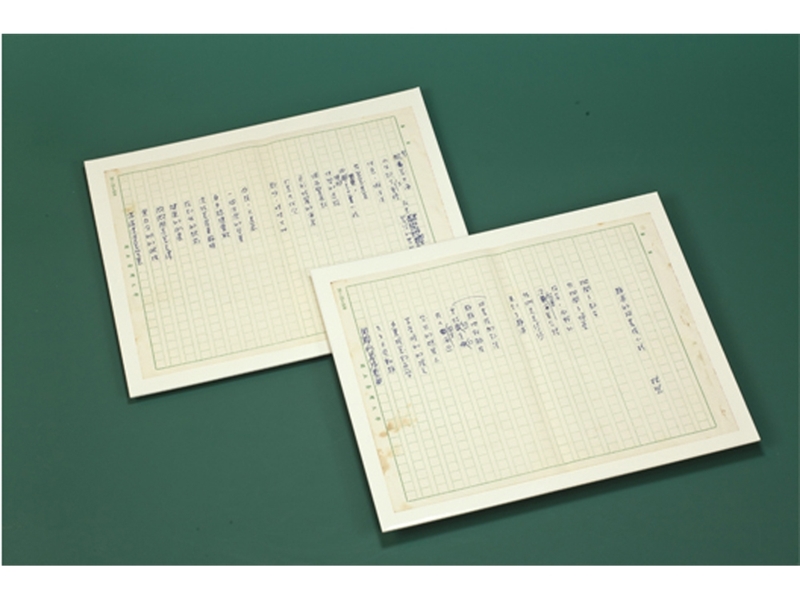
An Amis Kid from Cawi
Lin Fan (1950 - 2018), aka Lin Jui-ming, is a native of Tainan City, Taiwan. Lin is a history scholar and creative writer with a particular enthusiasm for poetry. Orchid Island of the Yami was published in 1984 at a time when indigenous literature was just starting to earn attention. Lin’s realist style produced an original work rich in symbolic imagery that painted a vibrant portrait of life on remote Orchid Island off Taiwan’s southeast coast in the Pacific.(manuscript, 1980s; provided by Lin Jui-ming)
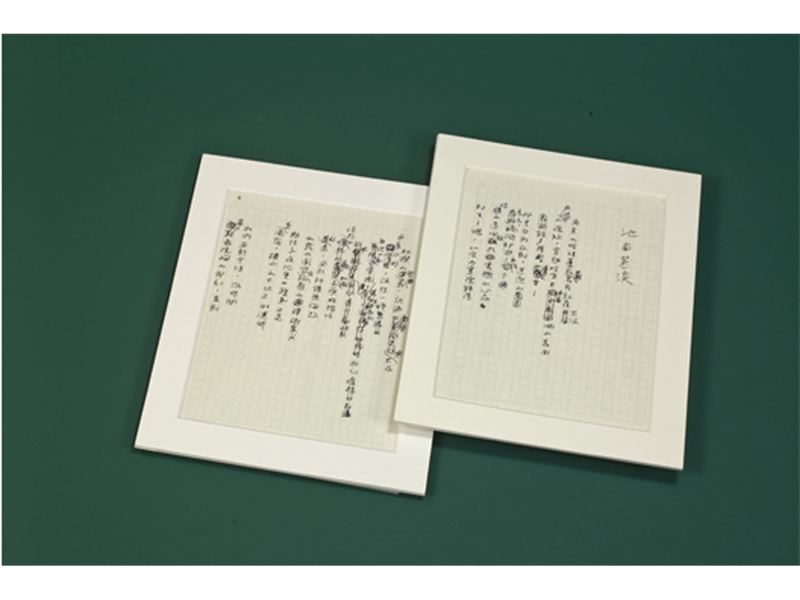
Lau Creek, Chih-Nan Village
Yang Mu (1940 - 2020), aka Wang Ching-hsien, is a native of Hualien County in East Taiwan. His poem “Lau Creek Chih-Nan Village” was included in the anthology, Mealybugs. Yang tries in this work to transform poetry into a work of music. The banks of Lau Creek near Chih-Nan Village teem with life that burst forth into unrehearsed song, which, when interwoven with the natural rustle of surrounding nature, invites the reader to become absorbed into the work on both a poetic and musical plane.(manuscript, 1980s; provided by Yang Mu)
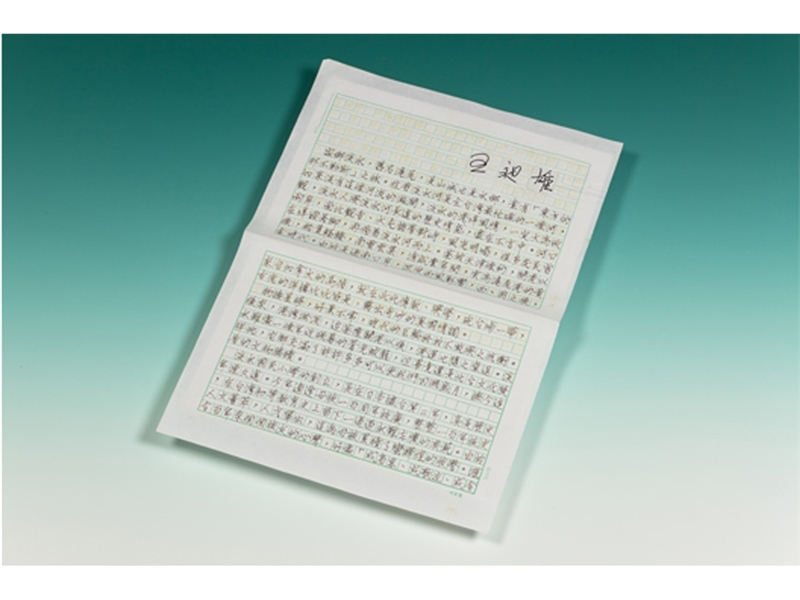
The Tamsui’s Rippling Waters
Wang Chang-hsiung (1916-2000), aka Wang Jung-sheng, is a Taipei City native. This 1939 manuscript was Wang’s first submission to the Taiwan Shinminpo (Taiwan New People’s Post). After 1945, it was translated into Chinese and serialized in the Taiwan Shin Wen Daily. The Tamsui’s Rippling Waters vividly describes life on Taiwan and conveys a comforting, homey feel.(manuscript; donated by the family of Wang Chang-hsiung)
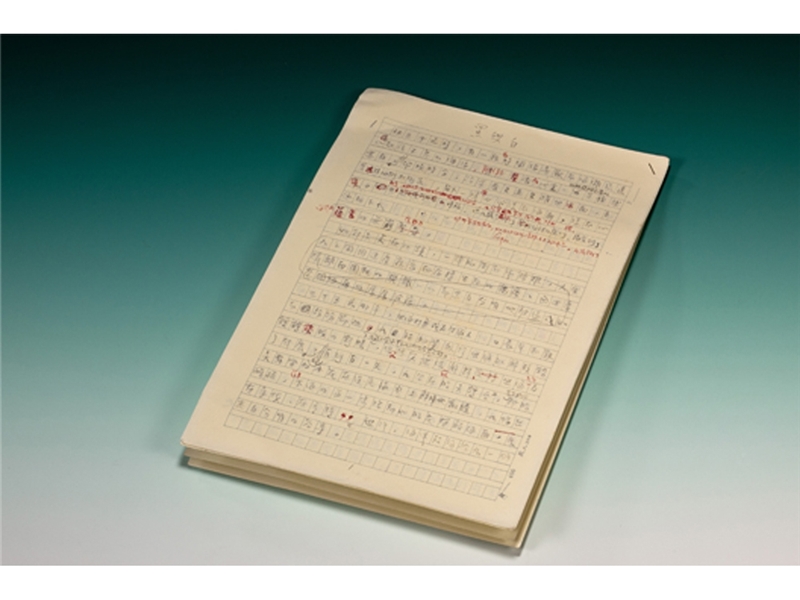
Black and White
Liao Hung-chi (1957 - ) is a native of Hualien County, East Taiwan, and long-time ocean conservation advocate and educator. Black and White describes the author’s encounters with orca whales while working on Hualien-based whale conservation programs. Black and white, the orca’s two colors, are used as a metaphor for Liao’s direct and unceremonious character.
(manuscript; provided by Liao Hung-chi)
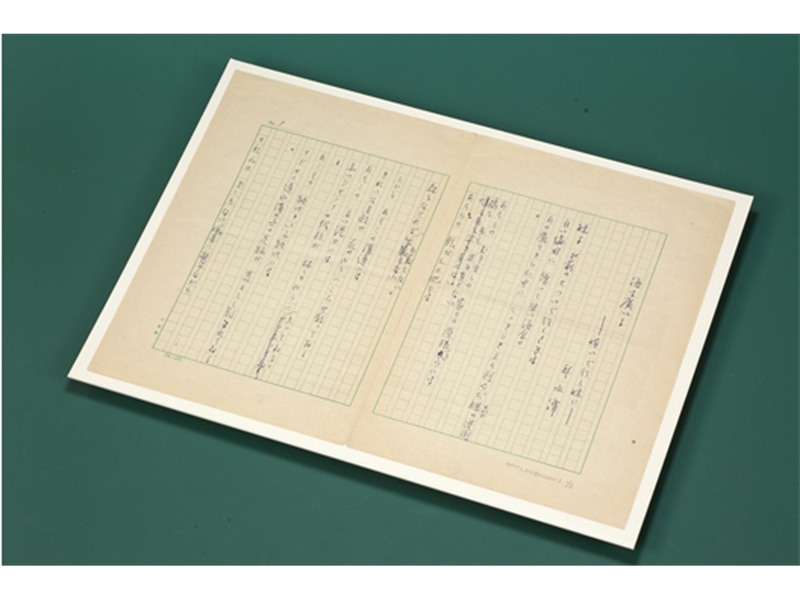
‘O Sea, So Expansive
Kuo Shui-tan (1907-1995) was a Japanese Colonial Period author from the Chiali Salt Flats in Tainan County. His modern poem ‘O Sea, So Expansive, later translated from Japanese into Chinese, is a touching introspective on the cacophony of emotions at play in sending a daughter off to marriage set against the background of Tainan’s coastal salt flats. Kuo’s work is both stark and sentimental.
(1930s; manuscript; donated by Kuo Sheng-ping)
Image shows
Source: