Home/Literary Panorama/Wandering Words, Free Spirits: A Travel Literature Exhibition/
Back
Being in Motion


Introduction
Highways, sea routes, and airways—each means of transportation, however ordinary they may seem, carries people towards their destinations. Shifting landscapes and rapid speeds fuel their imagination and anticipation while in transit.
Every trip begins with the courage to take the first step, and being in motion itself becomes its own kind of scenery. Whether winding through mountain roads, sailing across vast oceans, or soaring through the skies, these moments in motion spark countless inspirations for writing.
In such cases, what matters isn’t the destination. The experiences along the way—the thrill of discovery, the fascination over speed, and the marvels of movement itself—become some of the treasures often found in travel writing.
#OnTheWay #ByLandSeaAndAir #TheFeelingOfSpeed #MovingLandscapes

Ever-moving Scenery on the Road
American writer Jack Kerouac’s On the Road sparked a creative wave of “road literature.” Taiwan may lack the long, straight horizons characteristic of America’s interstate highways; however, its dense web of roads and railways, high speed and local alike, threads through towns and cities, weaving together its own unique landscapes. Through the words of Taiwan’s writers, bus rides, train journeys, and even bicycle trips become vivid records of ever-moving sceneries and the distinctive features of this island.
Liu Ka-shiang’s railway travels capture the charm of small towns along train tracks; Hsieh Wang-ling’s bicycle adventures chart a grand tour of the soul; and in Shu Kuo-chih’s accounts of drifting along America’s highways, we sense a shadow of Kerouac himself. While reading these works, do you feel the urge to hit the open road as well?
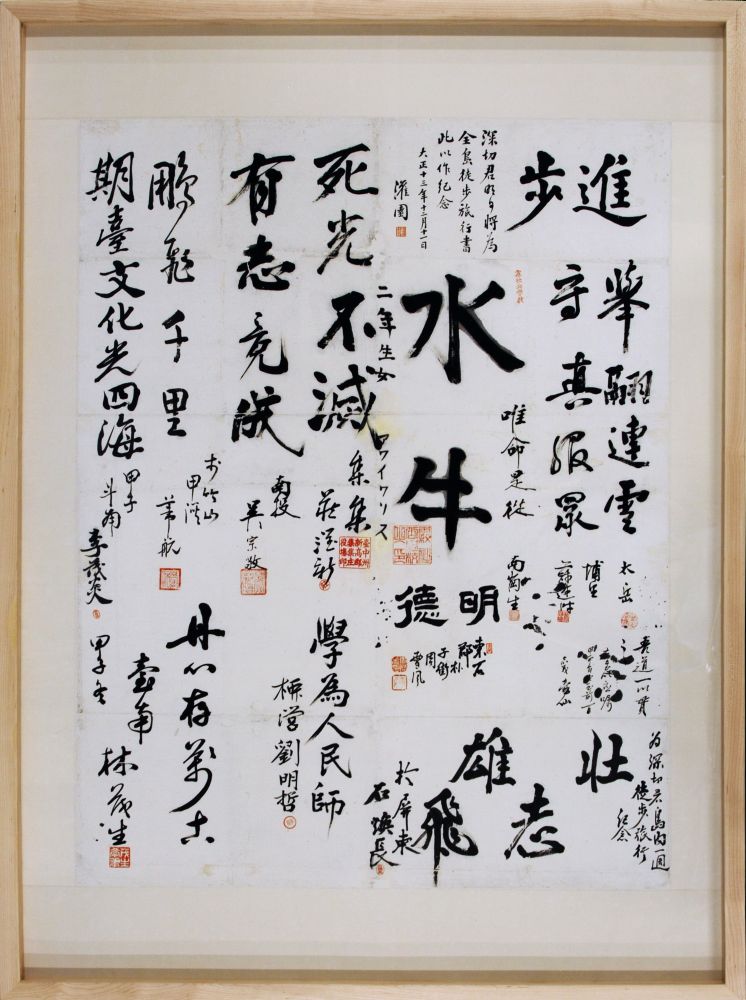
Autographs by Famous Individuals, Collected on Foot
These are the autographs and words of encouragement collected by Zhang Shen-qie during his 1924 walking tour around Taiwan. He started in Taichung and ended in Pingtung, visiting local gentry and well-known literary figures along the way.
(Collection of the National Museum of Taiwan Literature)
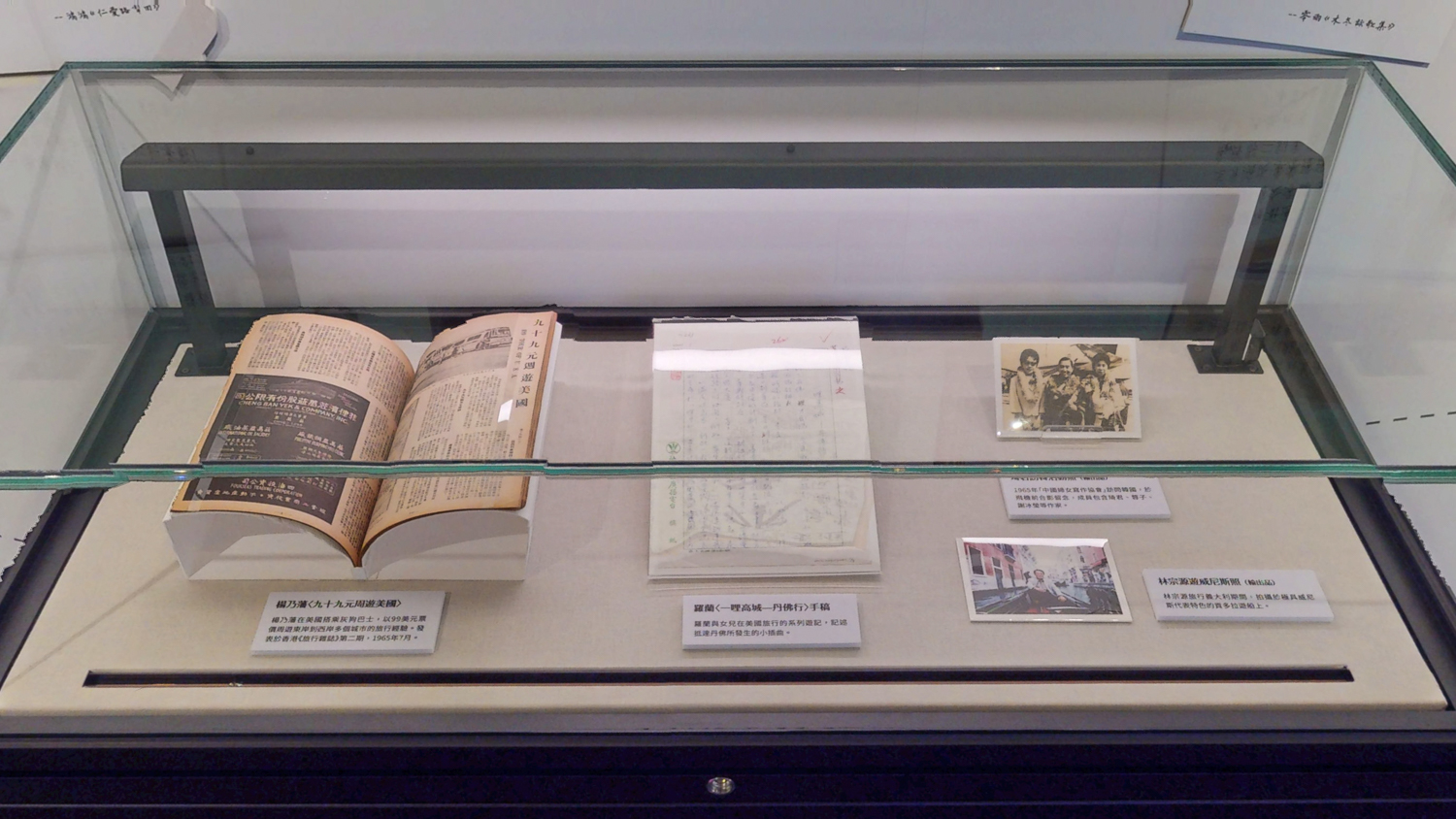
( From left to right)

Yang Nai-fan's "A 99-dollar Journey Across America"
Writer Yang Nai-fan recounts his east-west crossing of the United States by Greyhound bus for a ticket price of 99 dollars, and his stops in many cities along the way. This essay was published in the second issue of Hong Kong's Travel Magazine, July 1965.
(Collection of the National Museum of Taiwan Literature)
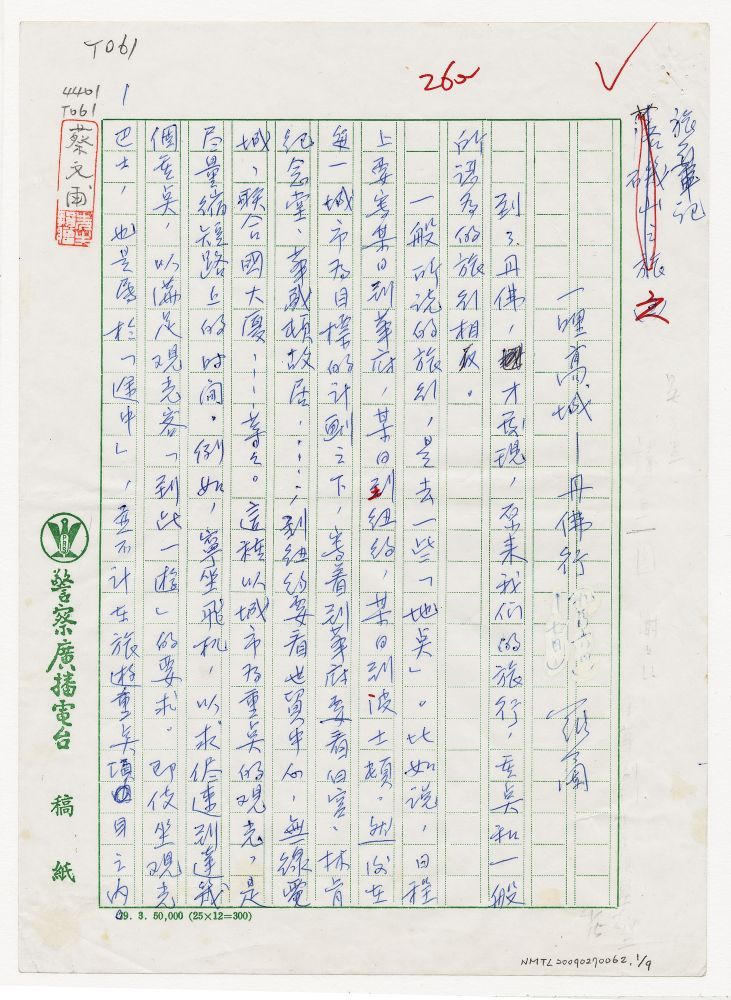
Manuscript of Luo Lan's "Denver—the Mile-high City"
While traveling throughout the United States, Luo Lan and her daughter wrote a series of travelogues. This one records the episode of their arrival in Denver, Colorado.
(Collection of the National Museum of Taiwan Literature)
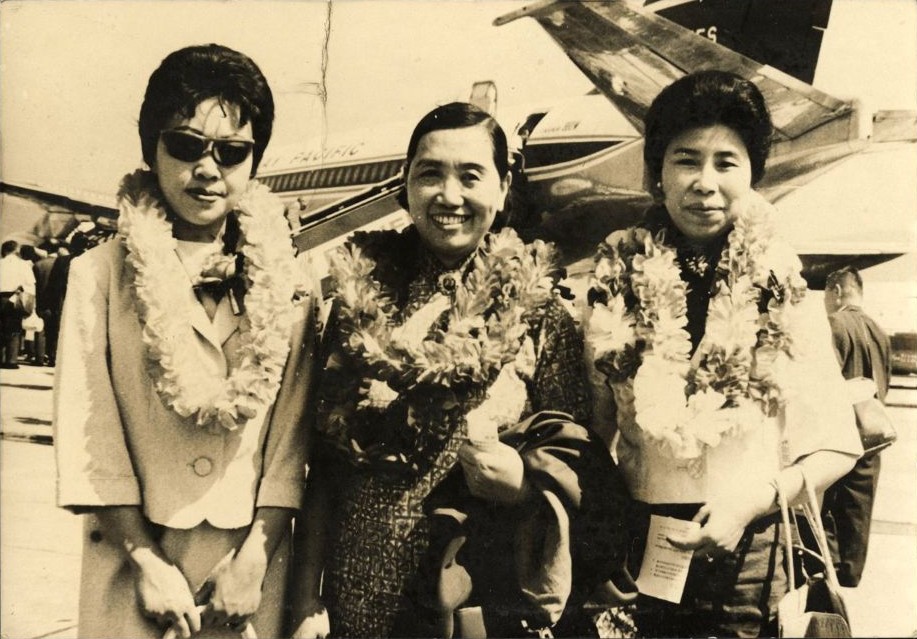
Chi Jun Visiting Korea
In 1965, members of the Chinese Women Writing Association in Taiwan, including Chi Jun, Yungtze, and Xie Bingying visited Korea. They took this commemorative photograph in front of their plane.
(Collection of the National Museum of Taiwan Literature)
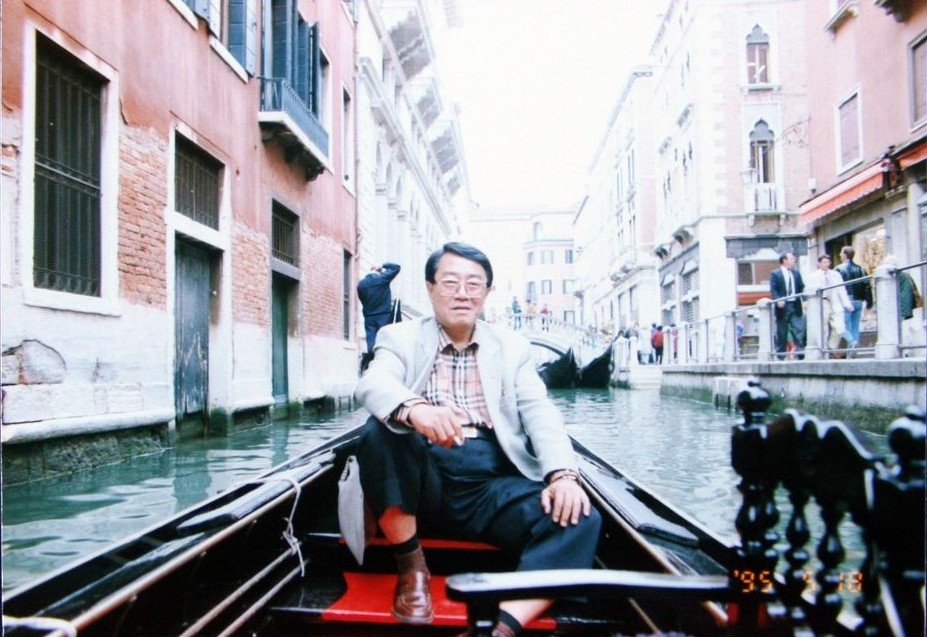
Photo of Lin Tsung-yuan in Venice
This photo shows Lin Tsung-yuan on a gondola, the symbol of Venice, during his travels in Italy.
(Collection of the National Museum of Taiwan Literature)
The Blue Highways of the Sea and Sky
For the people of Taiwan, the islands and seas of this land are an inseparable part of their identity. Whether boarding a boat for whale and dolphin-watching, taking a ferry to another harbor, or sailing the world on a cruise ship, these voyages close the distance between humans and the sea, their unhurried rhythm carrying a calm that no other mode of transport can match.
Unlike maritime or nature writing, travel literature about the sea focuses on the act of moving across waters and the experience of watching the waves. They capture sensations that land-based travel can never fully replicate. From river routes and coastal passages to close-up encounters with marine life, the sea becomes both vessel and vista. The words of these travel writers allow us to drift between ocean and sky, carried by the gentle tide of our imagination.
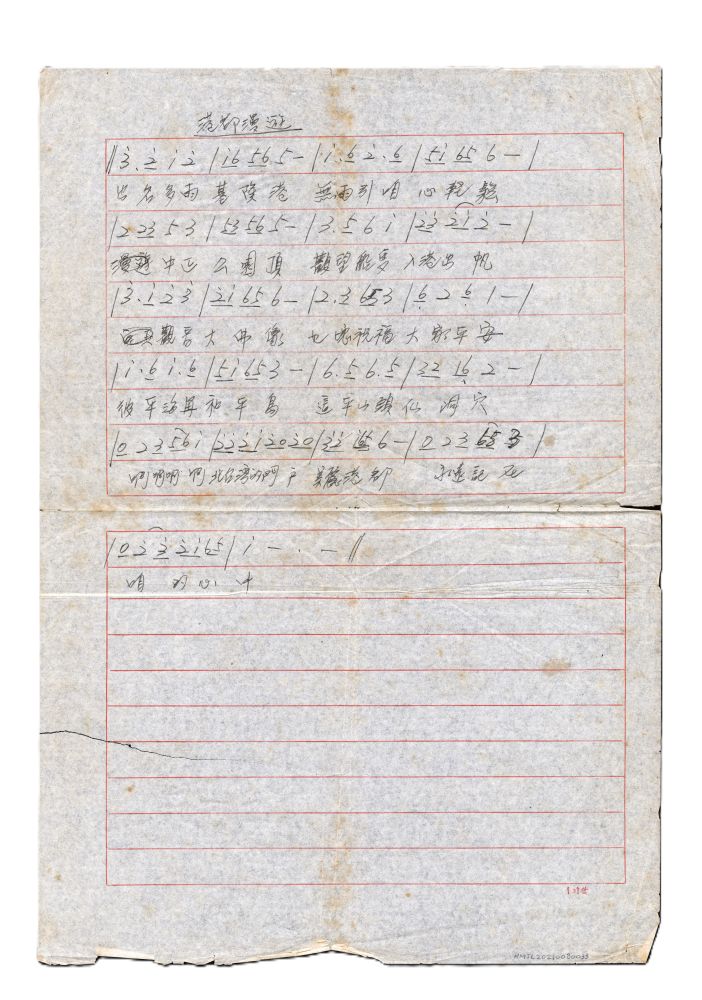
"Strolling in Keelung" Sheet Music
Ye Jun-lin composed this ode to Keelung, the "Rainy City," describing the scenery around the harbor and the atmosphere and customs of the fishing port. He later included it in his "Songs of Formosa" series.
(Collection of the National Museum of Taiwan Literature)
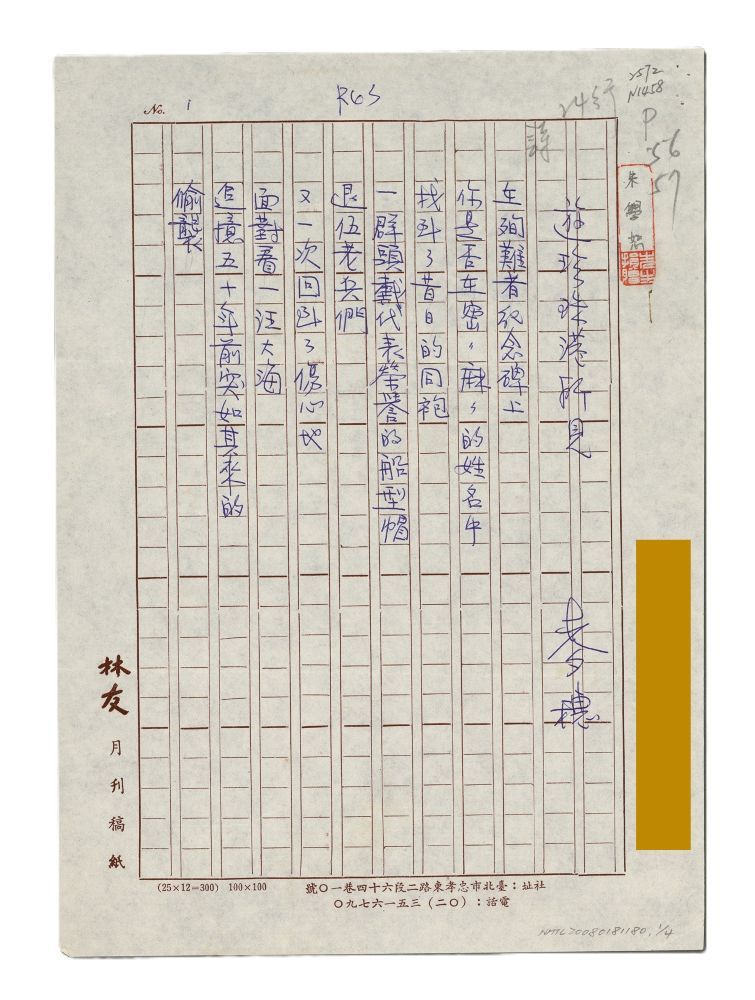
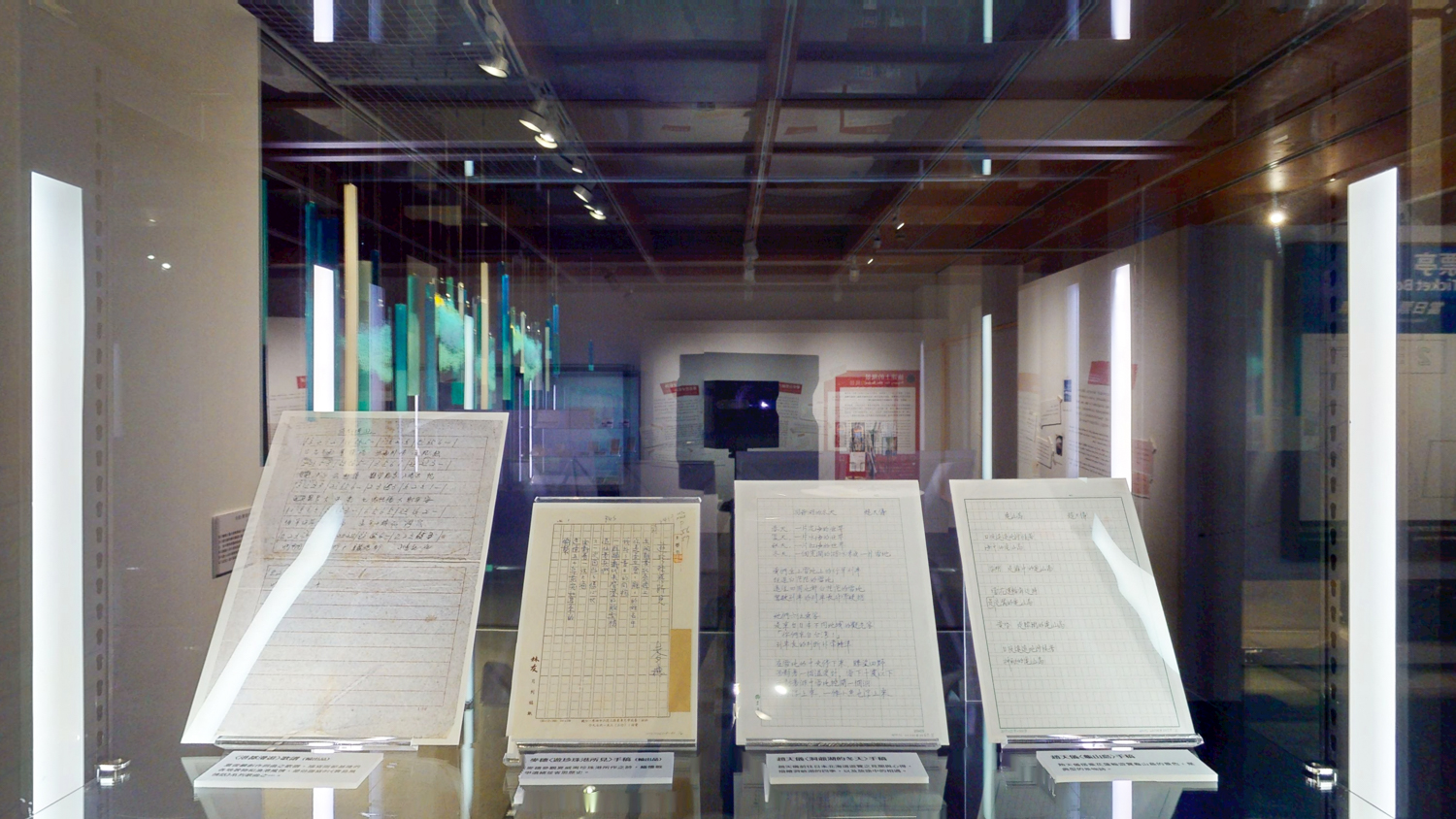
Manuscript of Mai Sui's "What I Saw in Pearl Harbor"
This poem, written by Mai Sui during his visit to Pearl Harbor in Hawaii, reflects on history and the tragic legacy of war.
(Collection of the National Museum of Taiwan Literature)
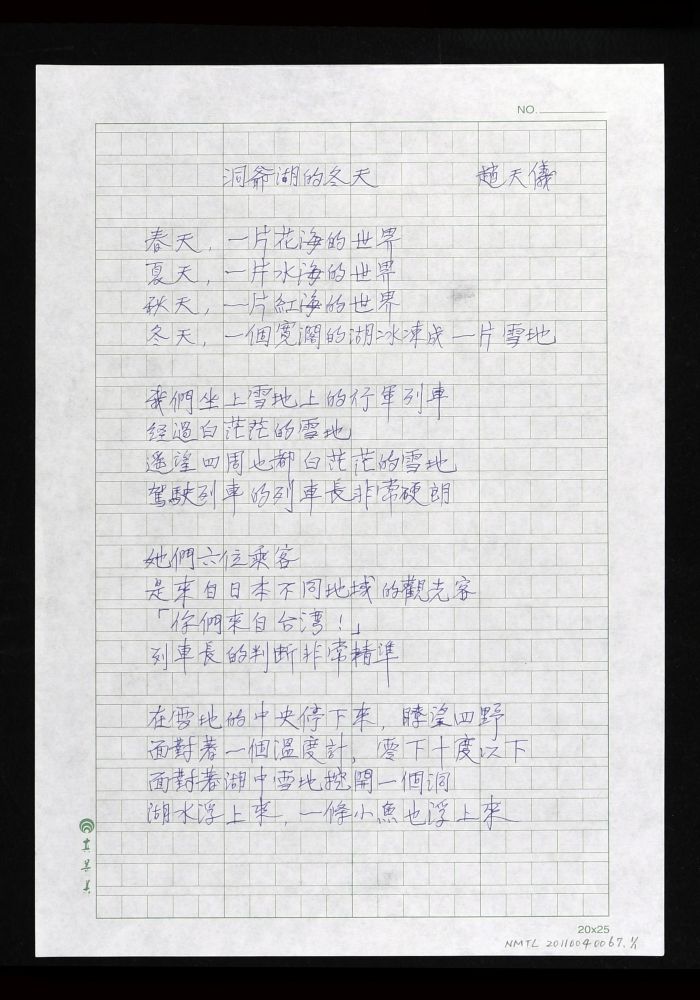
Manuscript of Chao Tien-yi's "Winter at Lake Tōya"
This passage by Chao Tien-yi describes Lake Tōya across all four seasons, and records his encounters with locals and reflections while sightseeing in Hokkaido, Japan.
(Collection of the National Museum of Taiwan Literature)
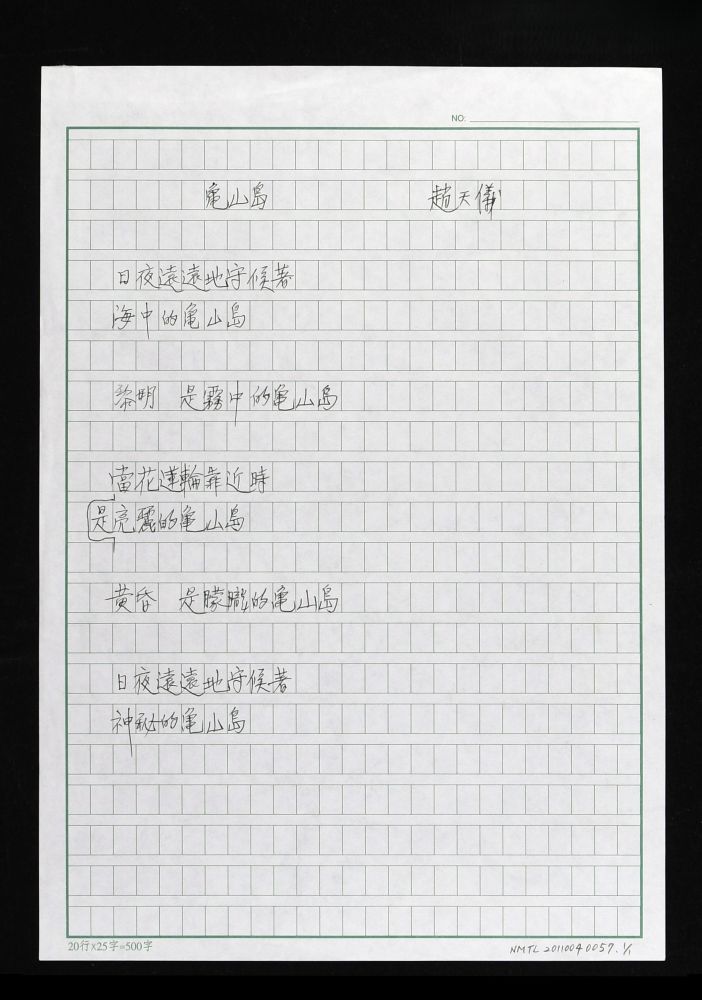
Manuscript of Chao Tien-yi's "Guishan Island"
Chao Tien-yi's poem describing a ferry journey to see Guishan Island off the coast of Hualien is a classic example of landscape poetry.
(Collection of the National Museum of Taiwan Literature)
Taking Flight to Distant Lands
Air travel only became commonplace after the mid-20th century. The exhilaration of speed and the sense of distance it creates have made flying one of the most defining symbols of modern travel.
In earlier decades, when trips abroad were difficult to make, every aspect of air travel was filled with novelty and excitement, adding to the joy of the journey. Meanwhile, airports became both the point of departure for distant travels as well as the arrival of longing and homesickness.
Flight and flying have been common motifs in essays, novels, and poems across time and can be considered the most apt representations of contemporary travel.
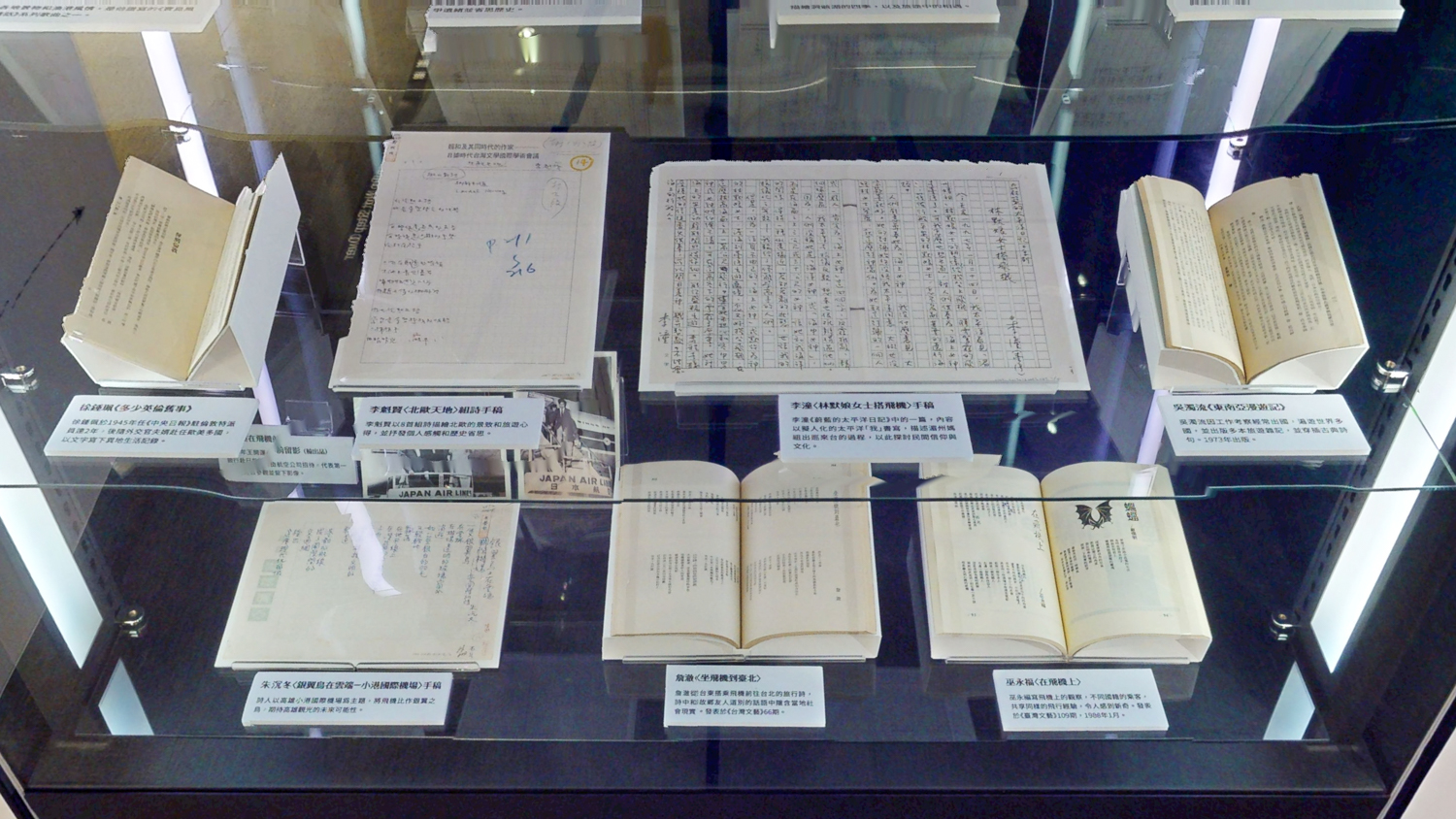
(From left to right, From top to bottom)
Hsu Chung-pei's "Many Old Stories of England"
Hsu Chung-pei served as the London correspondent for Central Daily News for two years starting in 1945. Later, she accompanied her husband, a diplomat, to several European and American countries, where she wrote down her experiences of living abroad.
(Collection of the National Museum of Taiwan Literature)
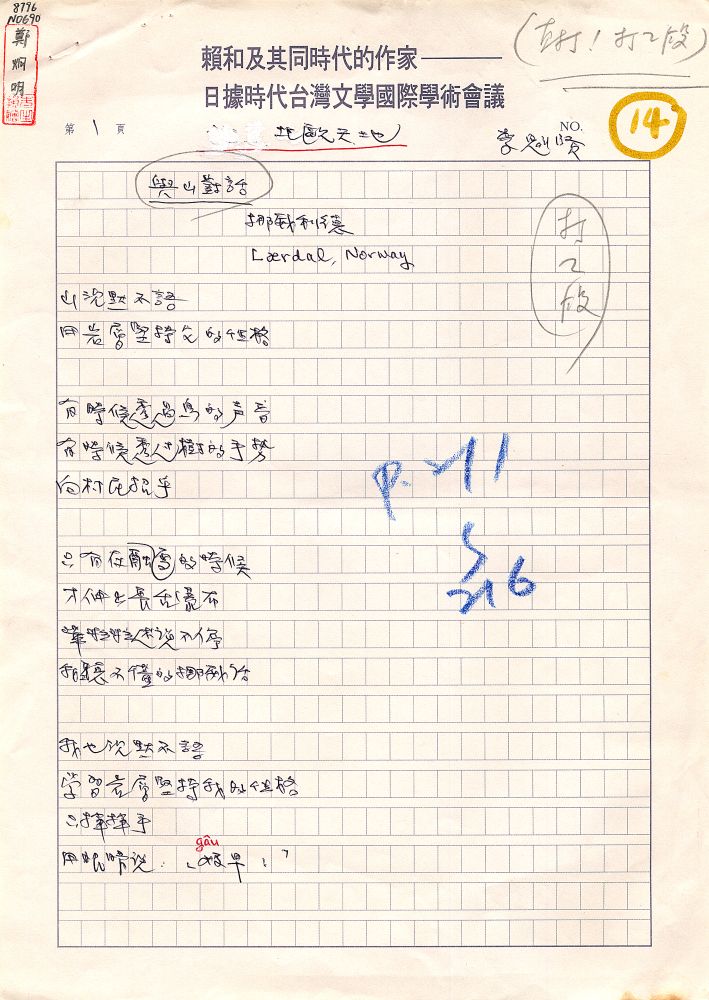
Manuscript of Lee Kuei-shien's Poem Series "Nordic World"
Across eight poems, Lee Kuei-shien describes the scenery of northern Europe, and gives voice to the impressions, feelings, and reflections on history evoked by its landscapes.
(Collection of the National Museum of Taiwan Literature)
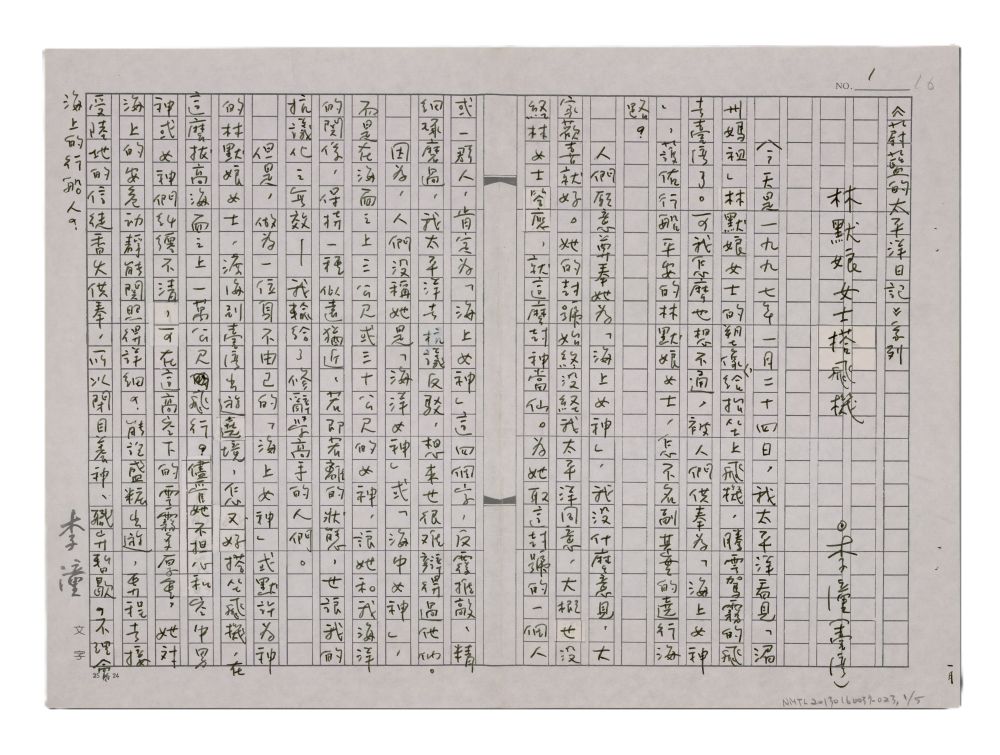
Manuscript of Li Tung's "Lady Matsu Takes a Plane"
This piece is one of several in Li Tung's Diary of the Sky-blue Pacific. Narrated by the Pacific Ocean itself, the reader watches the goddess Matsu arrive in Taiwan during a tour of the Pacific coast, thereby exploring local folk beliefs and culture.
(Collection of the National Museum of Taiwan Literature)
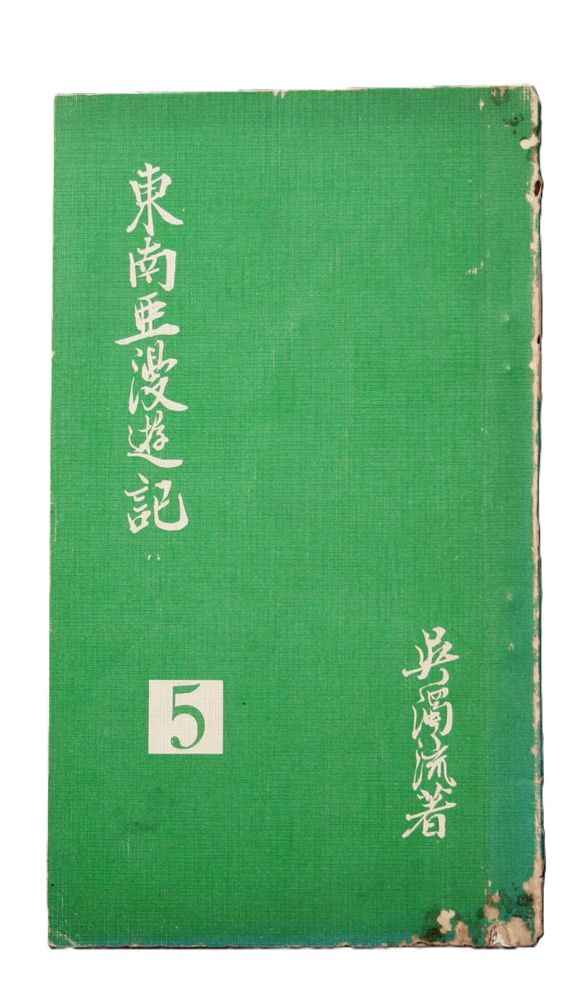
Wu Cho-liu's Roaming Around Southeast Asia
Wu Cho-liu often had to go abroad for work, and traveled through many different countries. In 1973, he published many of his travel notes, which were interlaced with lines of classical poetry.
(Collection of the National Museum of Taiwan Literature)
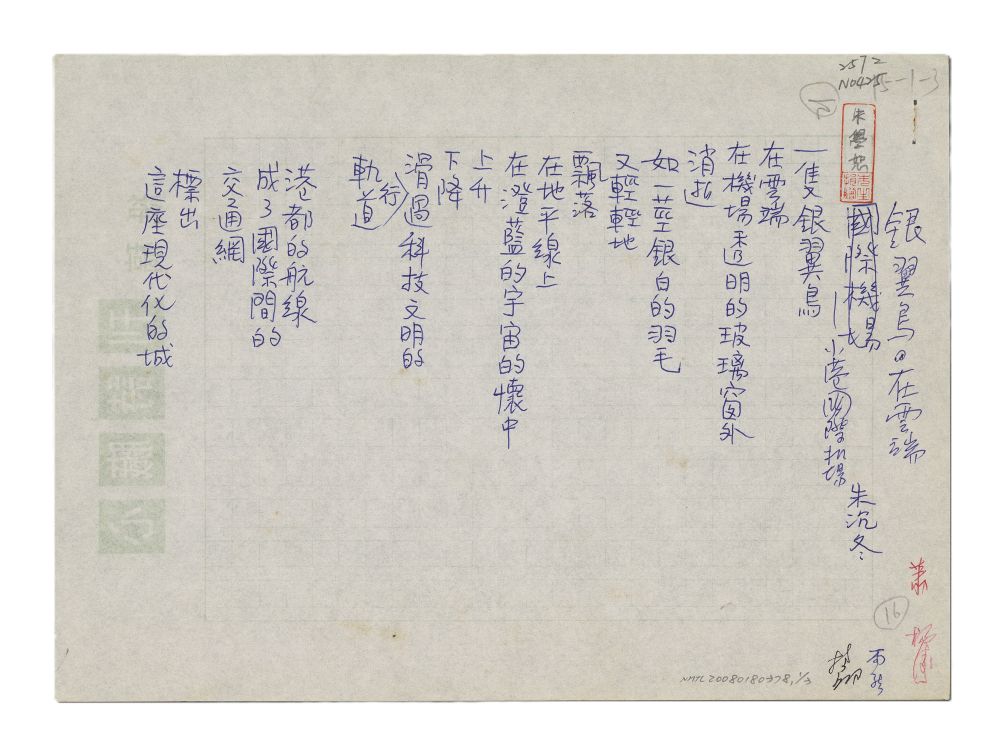
Manuscript of Chu Chen-tong's "Silver-winged Birds Among the Clouds-Siaogang Airport"
Kaohsiung's Siaogang Airport takes center stage in this poem, in which airplanes are written as silver-winged birds, with the poet looking forward to the influx of tourism they will bring to Kaohsiung.
(Collection of the National Museum of Taiwan Literature)
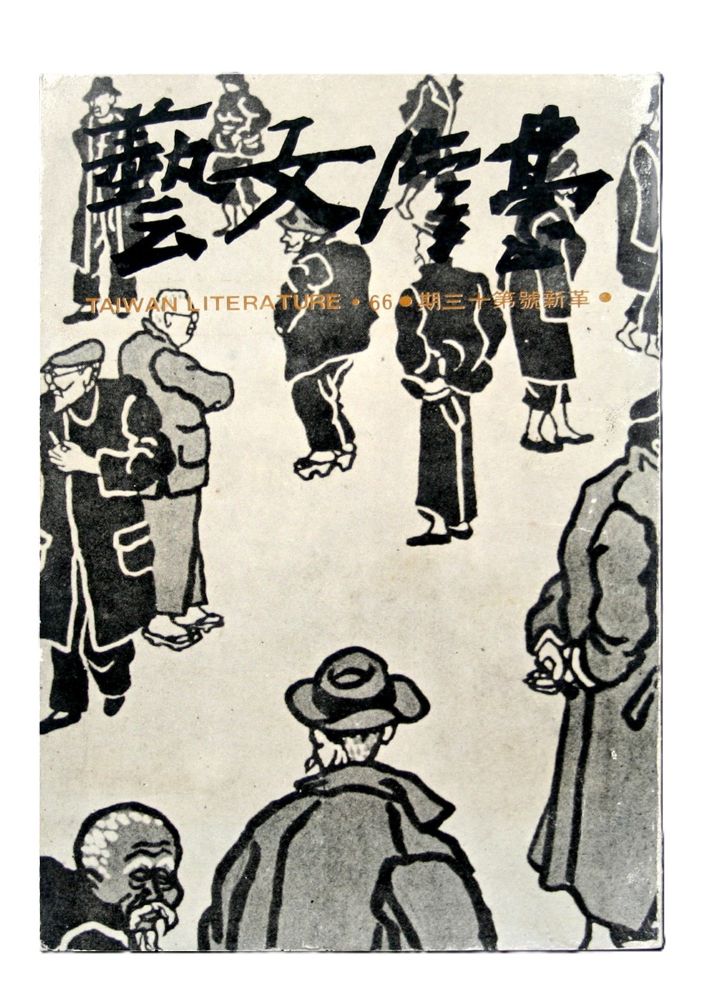
Chan Che's "A Flight to Taipei"
This poem, published in the 66th issue of Taiwan Literary, describes a tourist flight which Chan Che took from Taitung to Taipei. The farewells he gives to his hometown friends are laden with hidden commentary on contemporary society.
(Collection of the National Museum of Taiwan Literature)
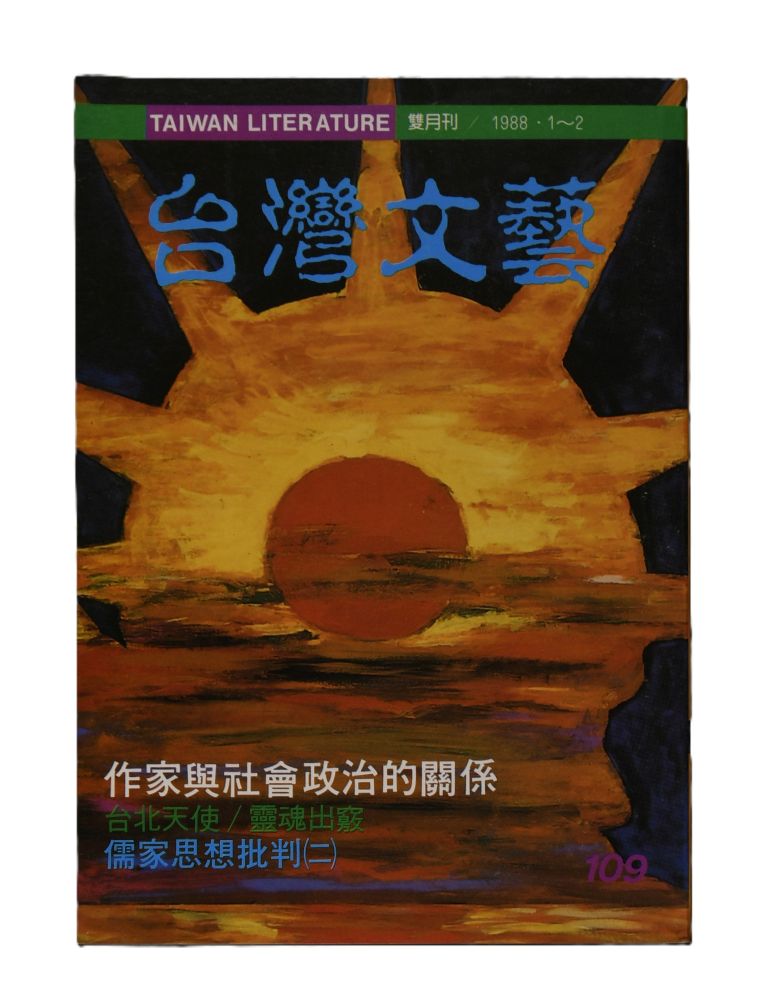
Wu Yong-fu's "On an Airplane"
Wu Yong-fu found it fascinating that after boarding a plane, travelers of all different nationalities experienced the same flight. This exploration of that concept was published in January 1988, in the 109th issue of Taiwan Literary.
(Collection of the National Museum of Taiwan Literature)
1. Privacy protection policy.
Personal privacy has become the main concern of users when browsing in the online world. The National Museum of Taiwan Literature (hereinafter referred to as the museum) has specially created a privacy protection policy. How to collect and use data", "Cookies, IP address", and "Protection and Use of Personal Data" to explain and declare:
(1) How to collect and use personal data:
In order to provide you with the best on this website The website service, according to different pages, will ask you to provide relevant personal information. The scope is as follows: This website is when you use the system function forms such as e-newslet subscription, group tour reservation, event registration, joining literary friends and publishing seminar information , Will retain the name, email address, contact method and usage time you provided.
(2) Cookies and IP Address:
When a user visits this website, the server will record relevant behaviors by itself, including the IP address of the connected device, time of use, browser used, browsing and click data records Etc., as a reference for us to improve our website services, this record is an internal application and will never be published.
(3) Protection and utilization of personal data:
The hosts of this website are equipped with various information security equipment such as firewalls, anti-virus systems and necessary safety protection measures to protect the website and your personal data. We adopt strict protection measures. Only authorized personnel can access your personal data. The relevant processing personnel have signed confidentiality contracts. Anyone who violates confidentiality will be punished by relevant laws.
Although this website will do its utmost to maintain the user’s personal data (not misused or disclosed), because the transmission of network data cannot ensure 100% security, this website cannot be sure or guarantee that the user’s or The data we send to users is completely secure. Regarding the above risks, users must be asked to bear them.
Unless you obtain your consent or other special provisions of laws and regulations, this website will never expose your personal data to a third party or use it for other purposes than the collection purpose.
2. Information Security Policy
The National Museum of Taiwan Literature (hereinafter referred to as the museum) respects and protects your security and privacy protection while using the Internet, in order to help you understand how the "National Museum of Taiwan Literature Global Information Network" protects your use of various services on this website For security, and how to collect, apply and protect the personal information you provide, please read the privacy protection and security policy of the "National Taiwan Literature Museum Global Information Network". Please read the following instructions carefully. You are also welcome to tell us your thoughts. If you have any comments or questions, please E-mail to twp@nmtl.gov.tw for
any unauthorized attempts to upload or modify the information provided by the library All services and related information activities are strictly prohibited and may violate the law. For site security purposes and to ensure that the service will continue to serve all Internet users, this site provides the following security measures:
. Use a network intrusion detection system to monitor network traffic to identify unauthorized attempts to upload or change, web page information, or sabotage.
. Install a firewall to prevent illegal intrusion, destruction, or theft or destruction of data, to avoid illegal use of the website, and to protect the rights of users.
. Install anti-virus software to scan for viruses regularly to provide users with a safer web browsing environment.
. Simulate hacker attacks from time to time, exercise system response procedures when security incidents occur, and provide appropriate security defense levels.