Home/Literary Panorama/Wandering Words, Free Spirits: A Travel Literature Exhibition/
Back
Scenery for the Senses


Scenery for the Senses
After departing and arriving, your trip is just about to begin. What do you look forward to seeing along the way? Is it majestic landscapes, sites steeped in history, or a leisurely stroll through the city? Or will you open up all your senses, letting sounds, scents, and flavors create lasting memories as you go?
Such unforgettable moments are the perfect subject material for writers. Depictions of external scenery and sensory details can become portrayals of a traveler’s internal journey. Beyond describing the beauty of distant lands, travel writers record their reflections on history, culture, and the spirit of the cities they visit. Their experiences through the senses enrich imaginations of travel, allowing readers to see a different side to various scenery.
#NaturalLandscapes #CulturalAndHistoricTakes #TheFlâneur #FiveSensesOfTravel

Bask in Nature‘s Beauty
Taiwan’s diverse geography and breathtakingly unique natural landscapes have long been an endless source of literary inspiration. As urban life grows ever more fast-paced, people increasingly yearn for the open countryside, seeking the simple freedom of wandering through nature’s embrace and finding renewal through travel.
From towering mountains to sweeping coastlines, every vista is a vessel full of stories that invite awe and reflection. These encounters with nature have given rise to a vibrant body of ecological and nature writing in Taiwan brimming with life.
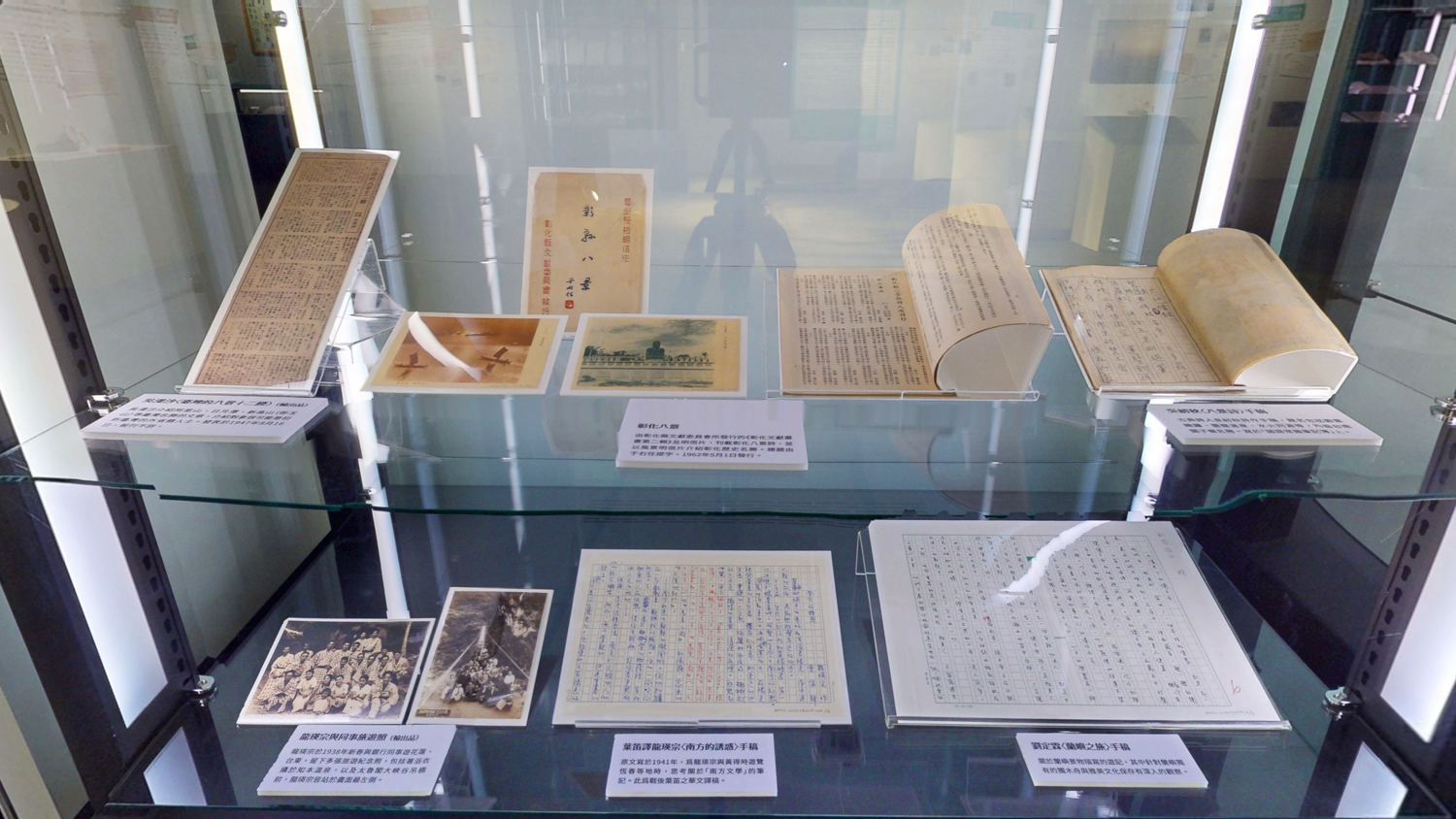
(From left to right, From top to bottom)
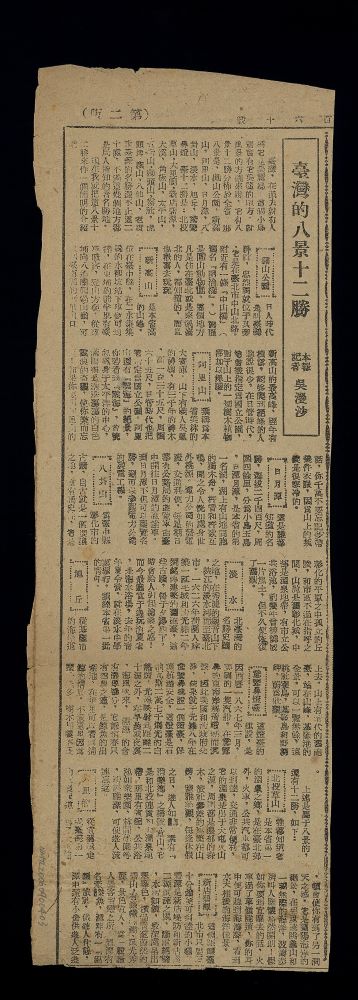
Wu Man-sha's "Eighty-two Famous Sights of Taiwan"
This article by Wu Man-sha introduces Alishan, Sun Moon Lake, Yushan, and other famous locations in Taiwan. His target audience was probably mainlanders who had just arrived in Taiwan. It was published on August 16, 1947, although the publication itself is unknown.
(Collection of the National Museum of Taiwan Literature)

Eight Views of Changhua
。Changhua Literature Series, Vol. 2 and postcards released by the Changhua Literature Committee both featured poems on the "Eight Views of Changhua," which introduce the historical sites of the area. The label was inscribed by Yu Youren. Published on May 1, 1962.
(Collection of the National Museum of Taiwan Literature)
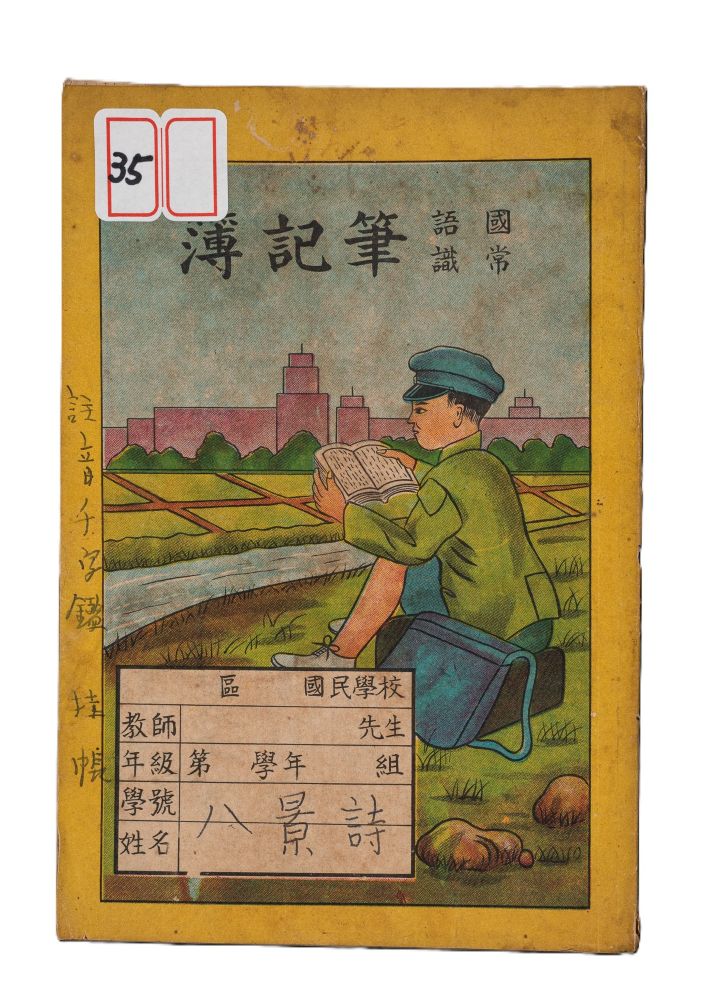
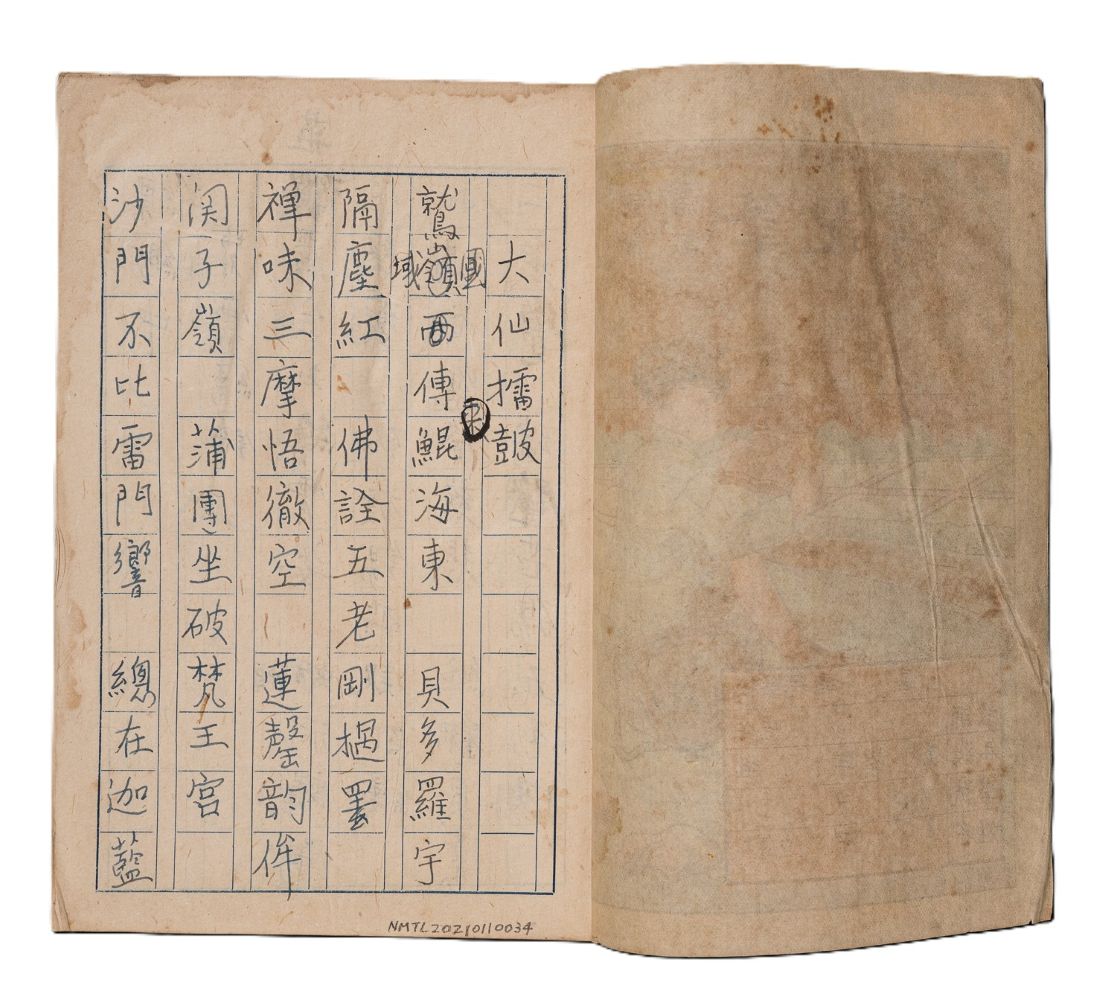
Manuscript of Wu Ren-chiu's "Eight Views"
This manuscript by classical poet Wu Ren-chiu introduces locations such as Biyun Temple, Guanziling hot springs, and Fire and Water Cave, and Fire and Water Cave, all famous spots around Tainan's Guanziling. It is written in a "Standard Mandarin Composition Notebook."
(Collection of the National Museum of Taiwan Literature)
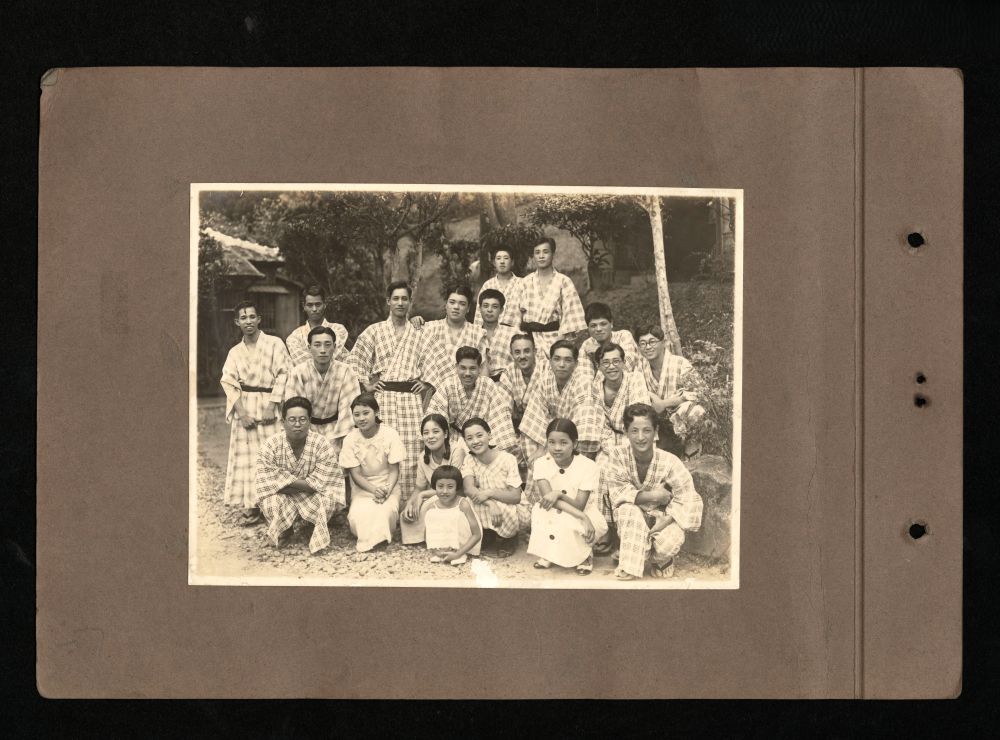
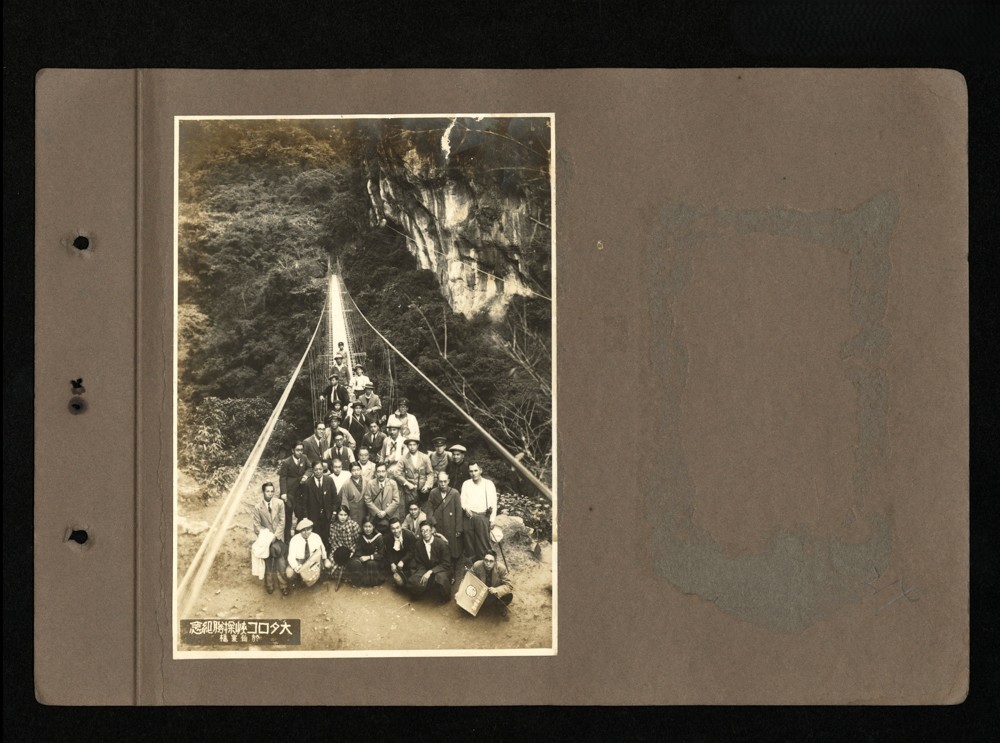
Photos of Lung Ying-tsung and Coworkers Traveling
In 1938, Lung Ying-tsung traveled with his bank coworkers to Hualien and Taitung. They took many photos along the way, at places like the Zhiben hot springs and the suspension bridge across the Taroko Gorge. Lung Ying-tsung is first from left in each of these photos.
(Collection of the National Museum of Taiwan Literature)
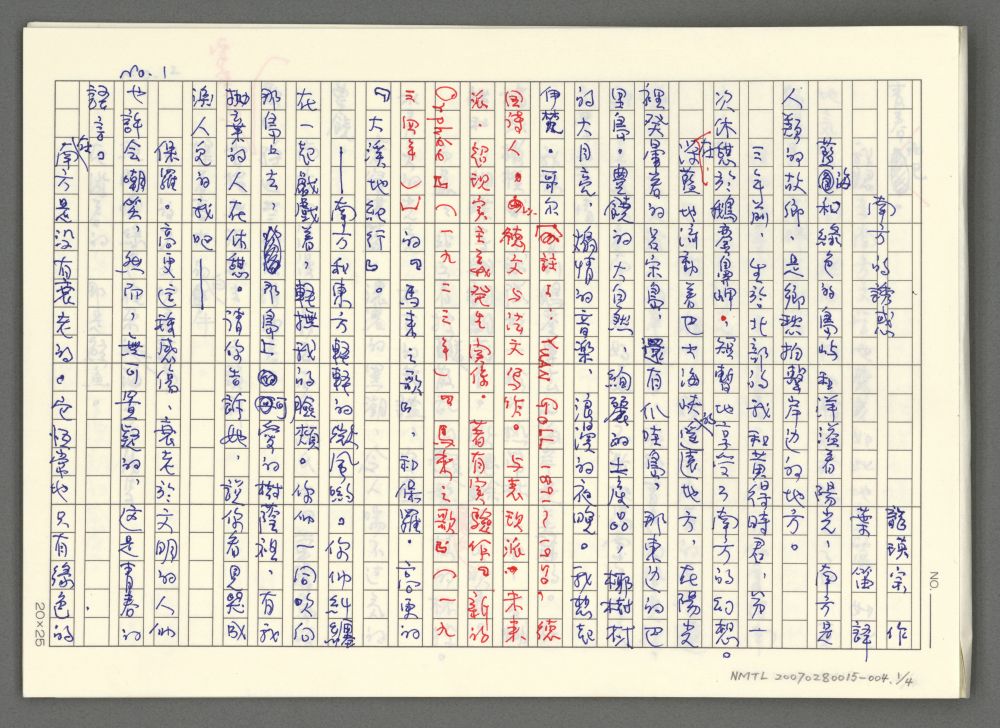
Manuscript of Yeh-ti's Translation of Lung Ying-tsung's "Allure of the South"
Originally written in 1941 while Lung Ying-tsung and Huang Te-shih were touring Hengchun and nearby areas, this piece discusses "southward literature," which romanticized Southeast Asia and the South Seas. It was reprinted after World War II in Mandarin.
(Collection of the National Museum of Taiwan Literature)
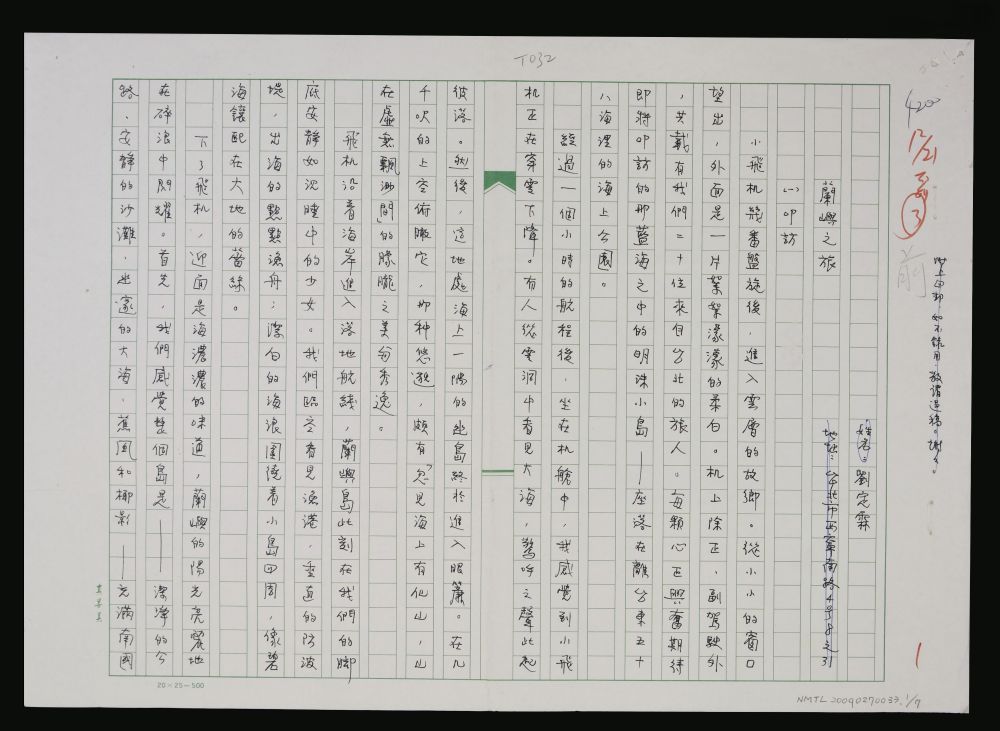
Manuscript of Liu Ding-lin's "Journey to Orchid Island"
This travelogue describes the landscapes of Orchid Island, but pays special attention to the preservation of local Yami culture and their unique dugout canoes.
(Collection of the National Museum of Taiwan Literature)
Exploring Traces of History
Historic sites, cultural heritage, and the observation of local traditions are a different kind of landscape that draws travelers in with its own distinct charm. Exploring traces of the past in depth transforms a trip from mere sightseeing into meaningful discoveries that allow visitors to form closer connections with the land and its culture.
Through the words of writers, history is redrawn and reimagined. The roads they travel down become a crossing where the past and present meet.
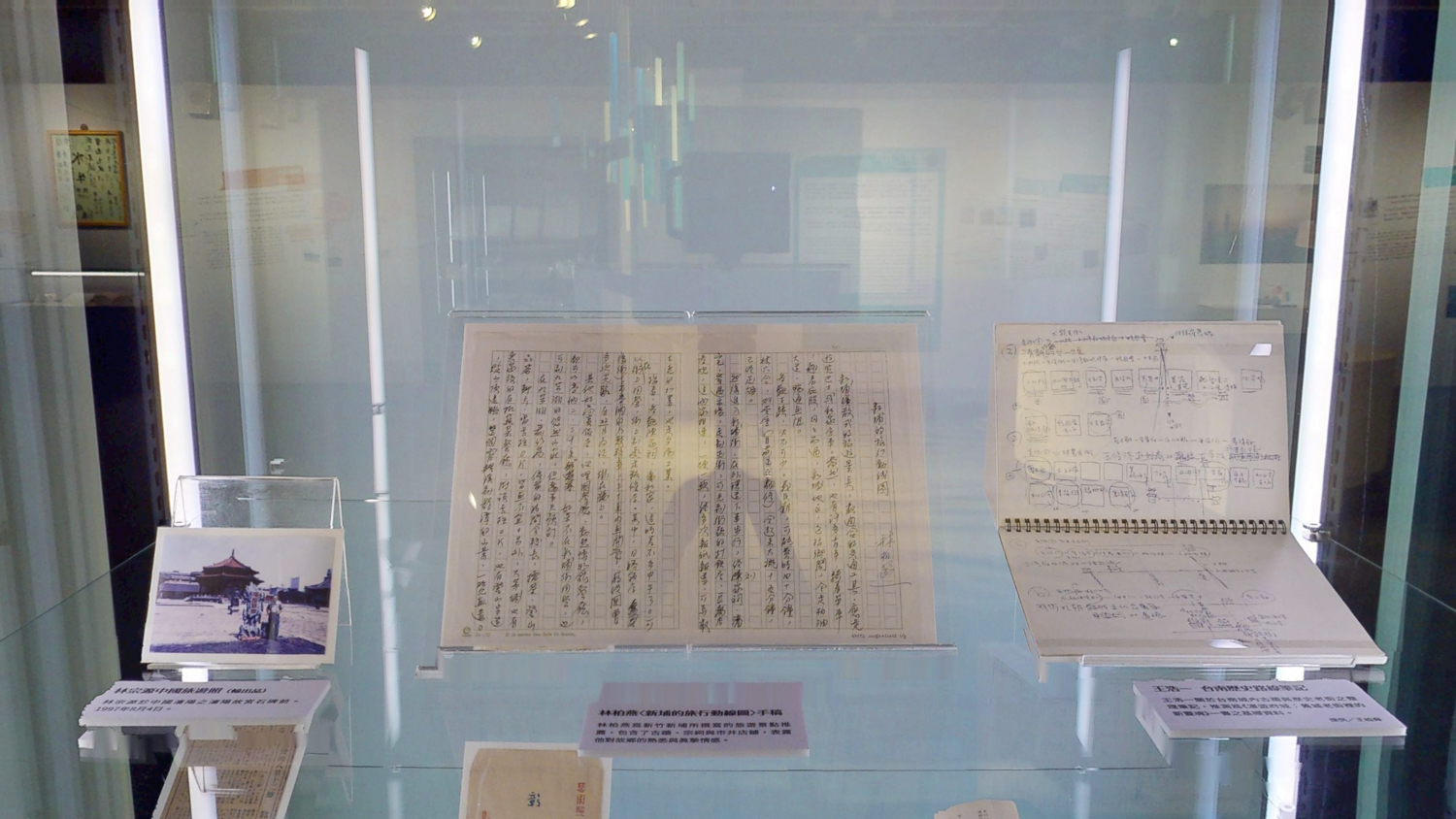
( From left to right)
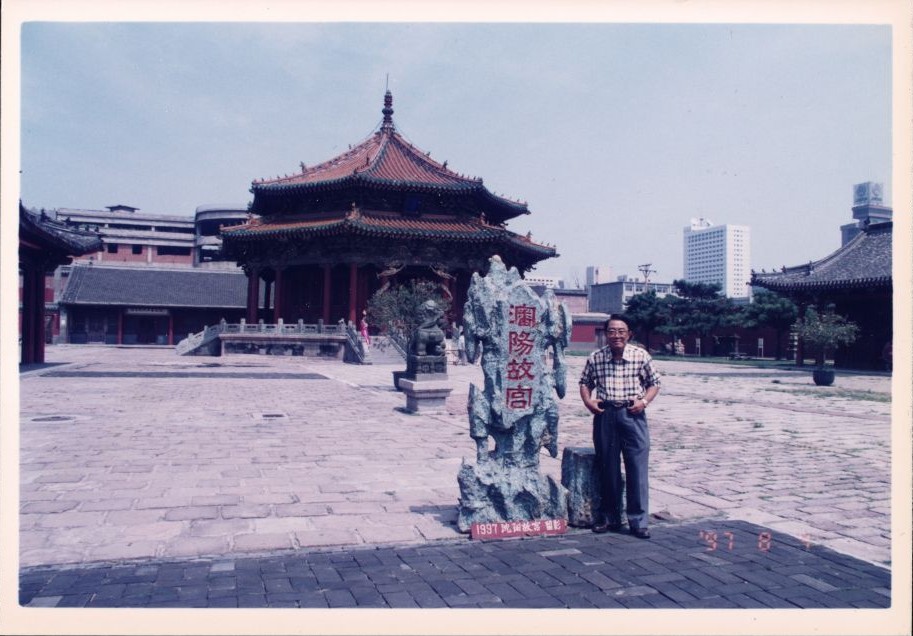
Photo of Lin Tsung-yuan Traveling in China
This photo, taken August 4, 1997, shows Lin Tsung-yuan by the entrance to the Mukden Palace in Shenyang.
(Collection of the National Museum of Taiwan Literature)
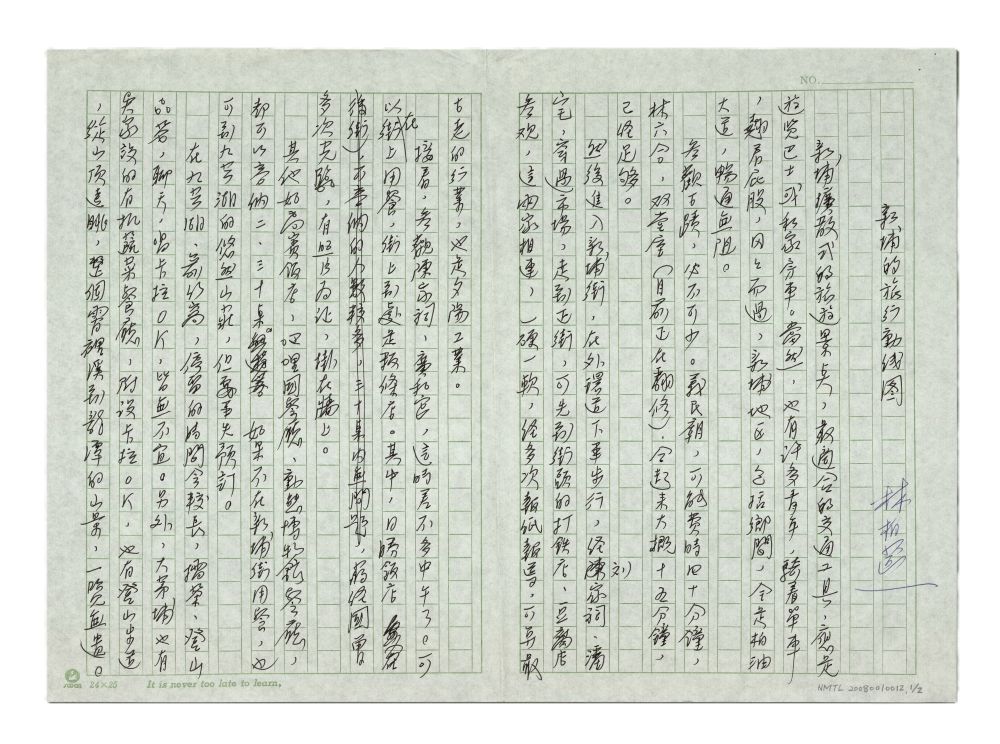
Manuscript of Lin Bai-yan's "Xinpu Sightseeing Itinerary"
Lin Bai-yan's familiarity with and fondness for his hometown shine through in this recommended sightseeing itinerary for Xinpu, Hsinchu, which includes historic locations, ancestral halls, and famous markets and shops.
(Collection of the National Museum of Taiwan Literature)
Wang Hao-yi: Notes on Historic Routes through Tainan
These are Wang Hao-yi's notes on the historic sites and old streets of Tainan, which probably formed the basis for his book Slow Travel in Tainan: New Life in the Streets of an Old City.
Provided by Wang Bai-shun.
The Flâneur
The flâneur is a cultural concept that originated from 19th-century Paris. Strolling aimlessly through the streets, the flâneur became part of its cityscape, being both an observer and a spectacle.
In contemporary Taiwanese literature, the flâneur emerges through explorations of city blocks, alleyways, and living histories. What may seem like idle wandering often transforms into deep textual reflections on culture and history. This distinct form of travel writing has gradually become a facet of Taiwan’s urban literature.
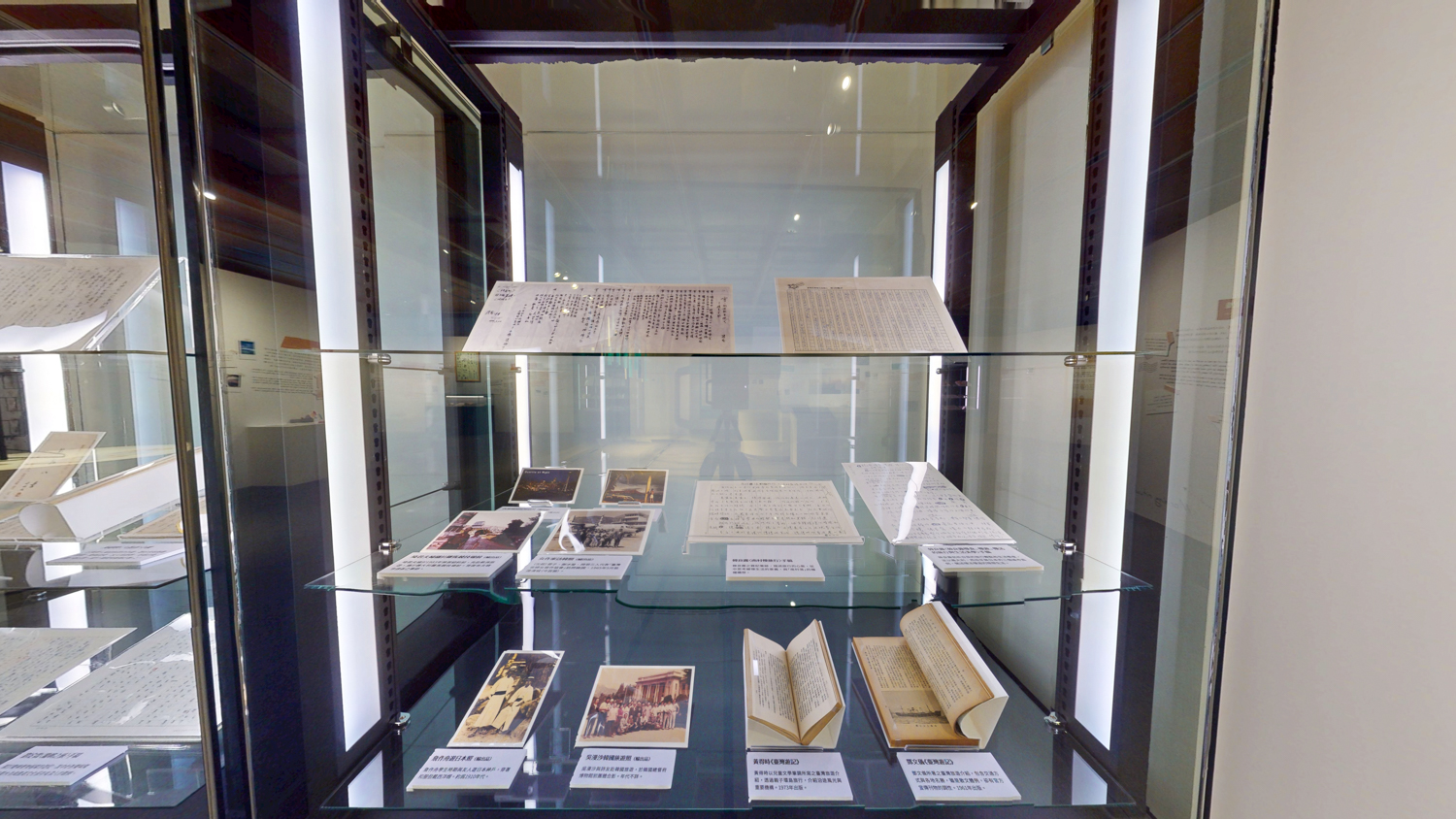

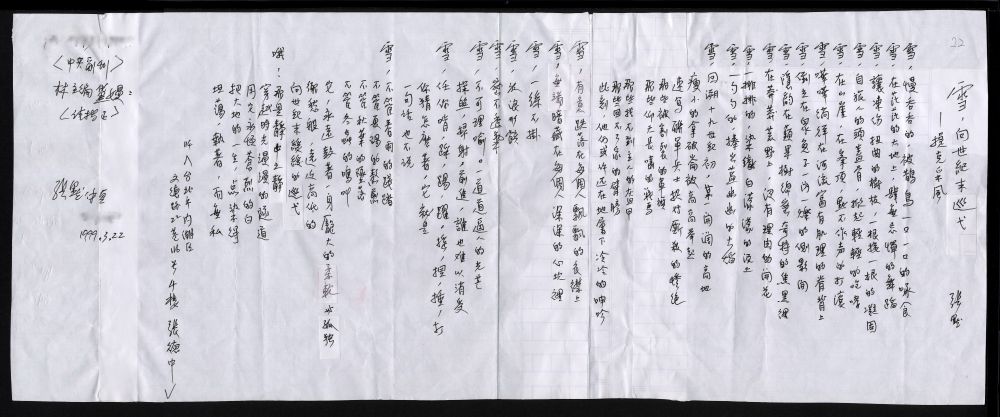
Manuscript of Chang Mo's "Snow, Cruising Towards the Close of the Century"
Chang Mo traveled to Czechia in February 1999. This prose poetry is the result of the reflections sparked by the snowy scenery he saw there.
(Collection of the National Museum of Taiwan Literature)
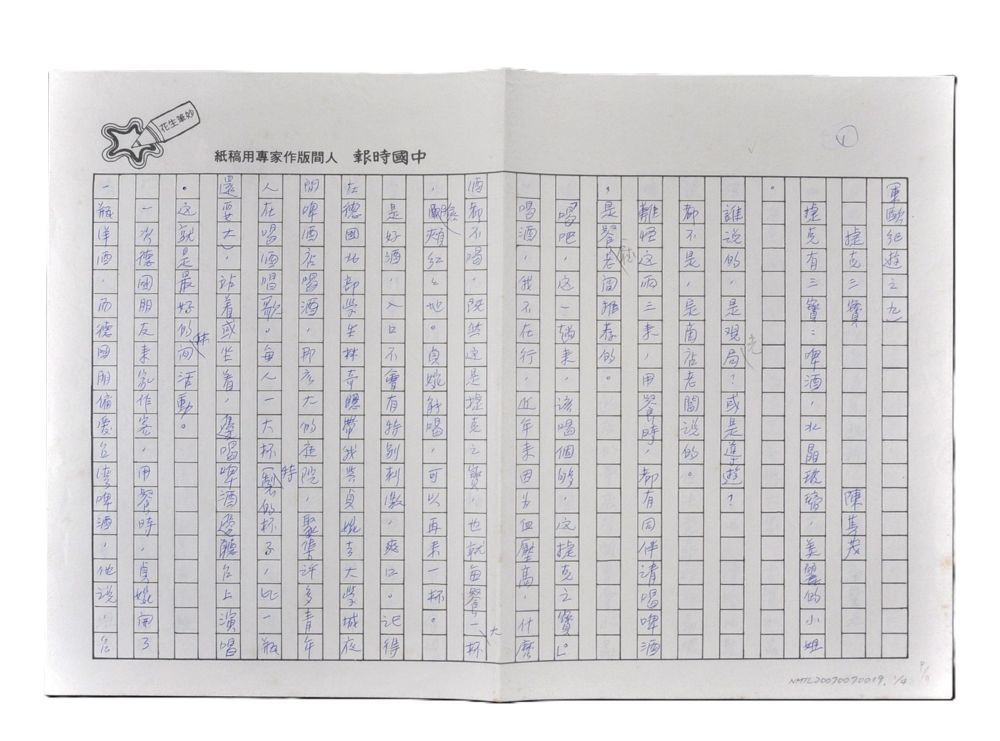
Manuscript of Chen Chi-mao's "Three Jewels of Czechia"
This essay is part of comic book artist Chen Chi-mao's "Eastern Europe Travel Diary" series, highlighting the Czech specialties of beer, crystal glass, and more.
(Collection of the National Museum of Taiwan Literature)
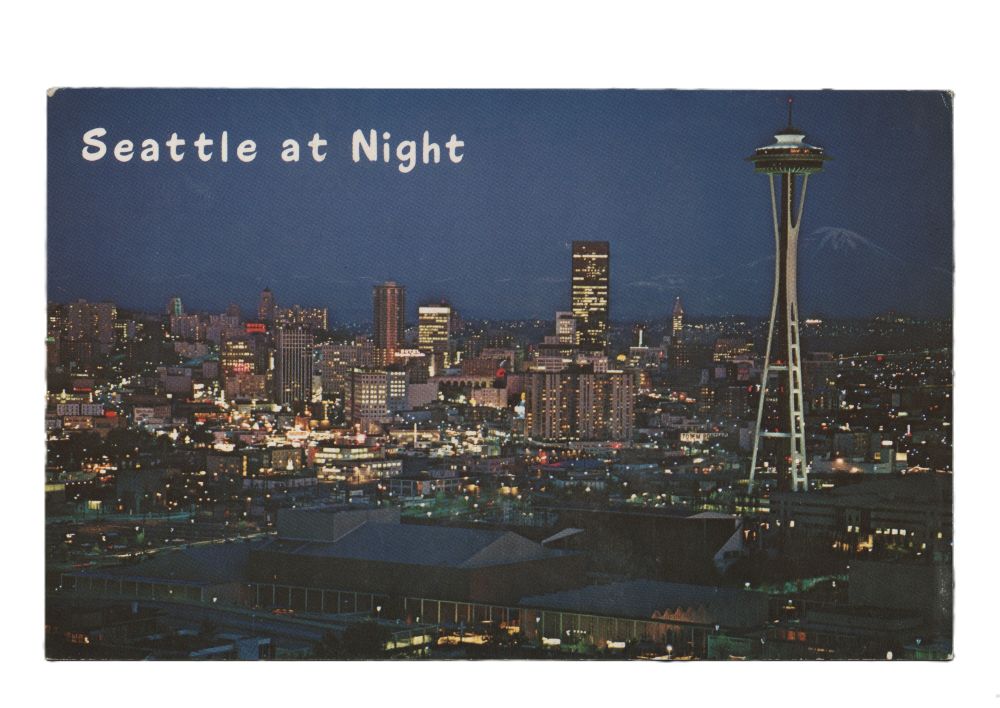
Postcard of Downtown Seattle
A postcard of Seattle from Hsiao Pai's collection. On the back is written "I'll go skiing in the winter," in Hsiao Pai's handwriting.
(Collection of the National Museum of Taiwan Literature)
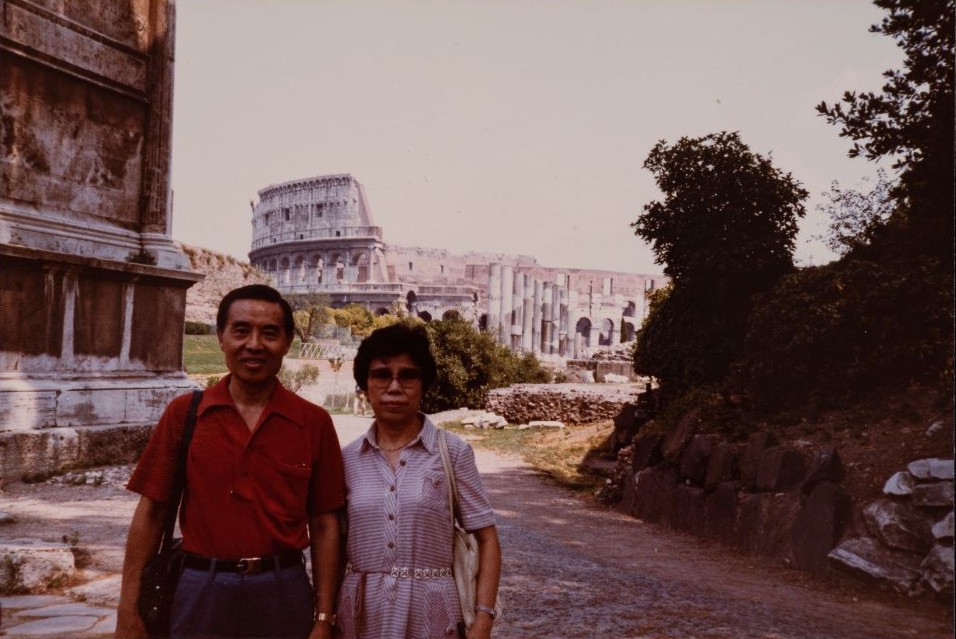
Photo of Chi Jun at the Colosseum
Before Chi Jun moved to New York in 1983, she first visited Europe, as seen here before the Colosseum in Rome, Italy. On the back of the photo is a note written by her husband, Li Tang-ji.
(Collection of the National Museum of Taiwan Literature)
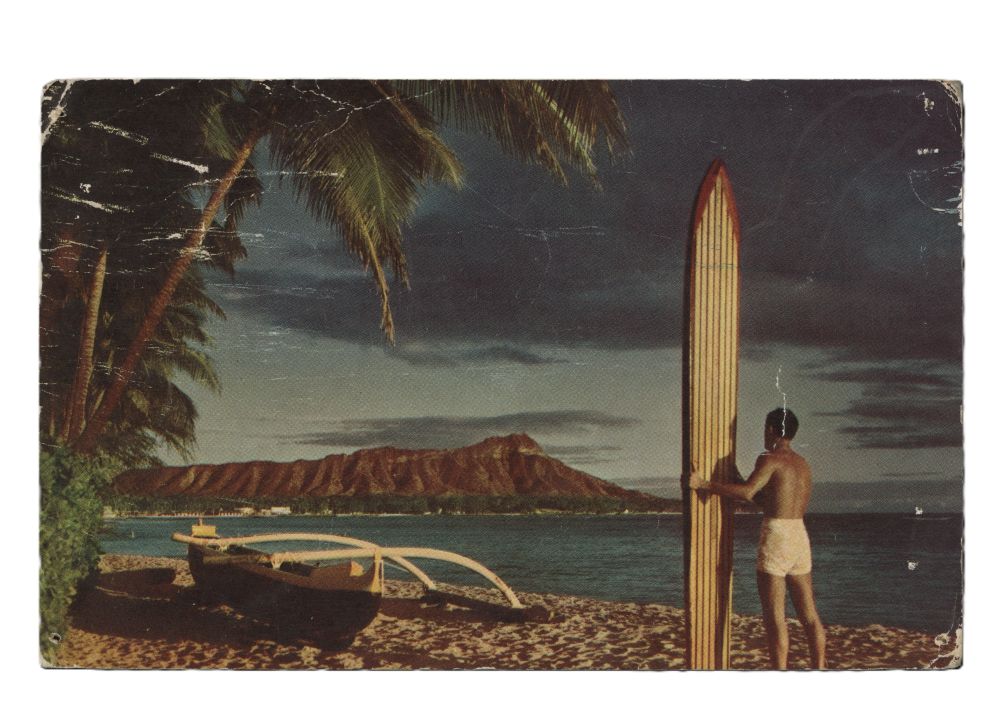
Yu Li-hua's Postcard to Amy Lin
When Yu Li-hua arrived in Hawaii by ship in 1953, she sent this postcard, with a vivid Hawaiian landscape on the back, to Lin Hai-yin.
(Collection of the National Museum of Taiwan Literature)
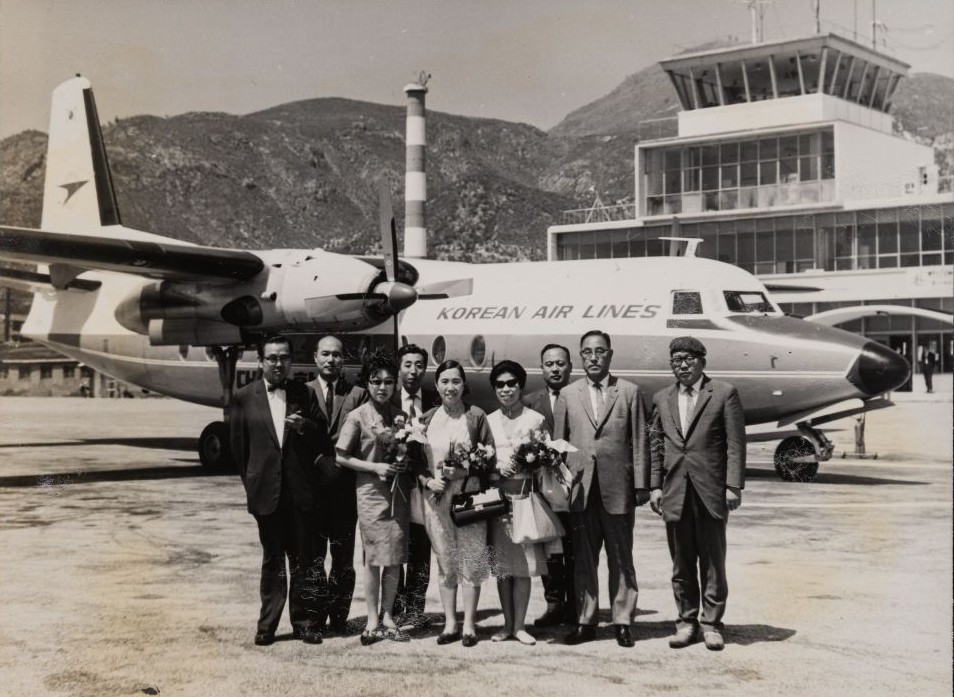
Female Writers Visiting Korea
(From left) Yungtze, Xie Bingying, and Chi Jun, who represented the Women Writers' Association of Taiwan on its May 1965 trip to Seoul.
(Collection of the National Museum of Taiwan Literature)
Memories of the Senses
Travel is not only what we see with our eyes—it is also a symphony of flavors and aromas. When traveling, we seek out sounds, smells, tastes, and textures that awaken our every sense, immersing our bodies into unfamiliar surroundings and experiencing the meaning of travel in the most visceral way.
Travel writing can be a record of foods and scenery, but it can also be an evoker of the five senses. Through layers of sensory detail, travel writers enrich their journeys, piecing words together to form a multi-sensory adventure.
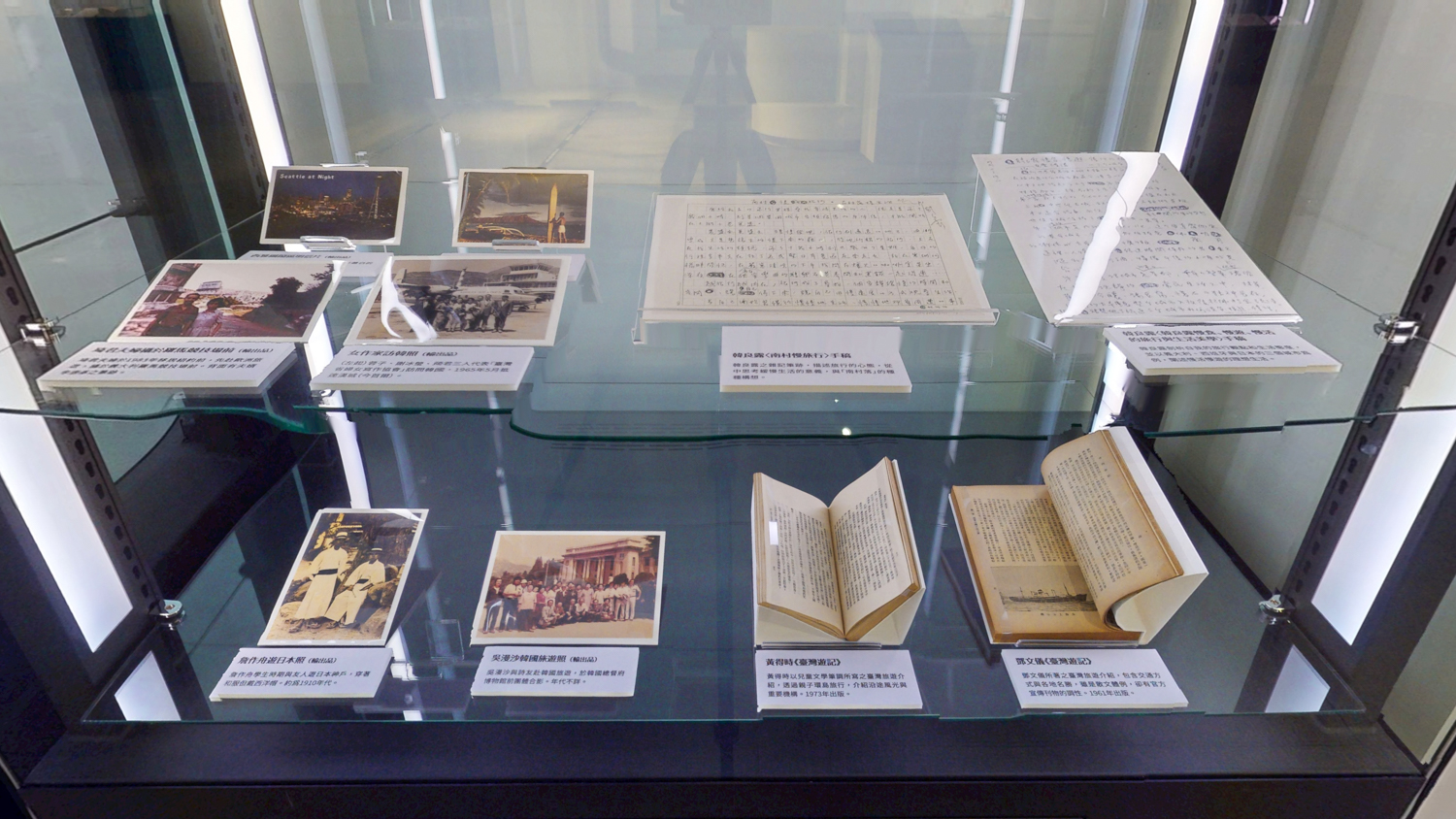
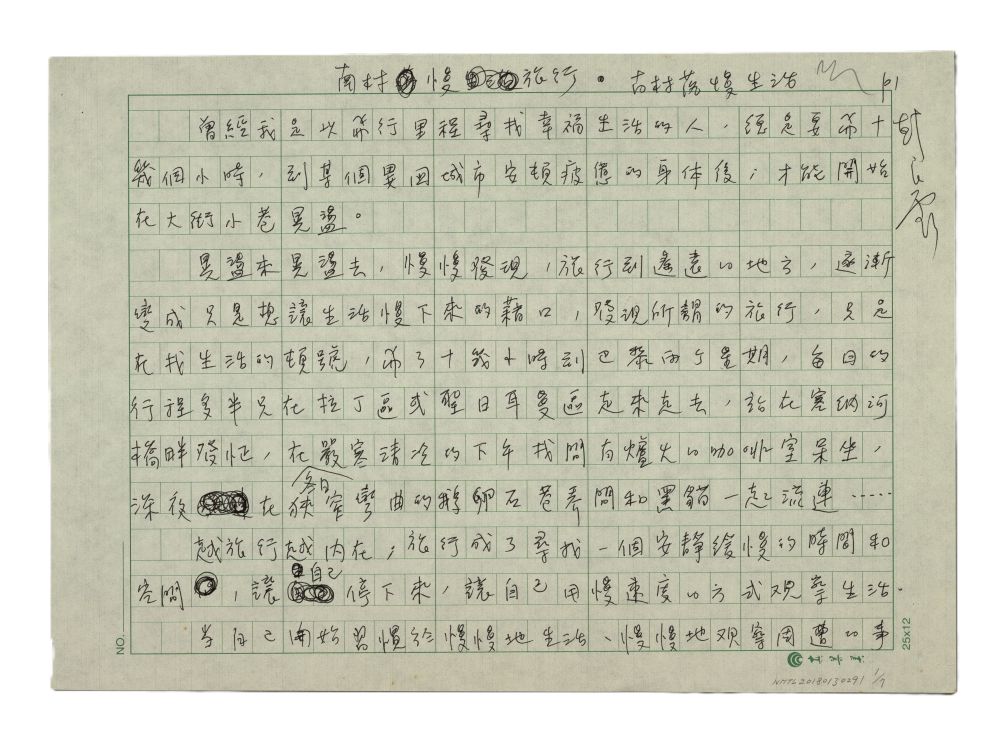
Manuscript of Han Liang-lu's "Slow Travel in the Southern Village"
Han Liang-lu's notes illustrate her mindset around travel, reflecting on the meaning of a slow-paced life and the conception of the "Southern Village," the name of her residence in Taipei.
(Collection of the National Museum of Taiwan Literature)
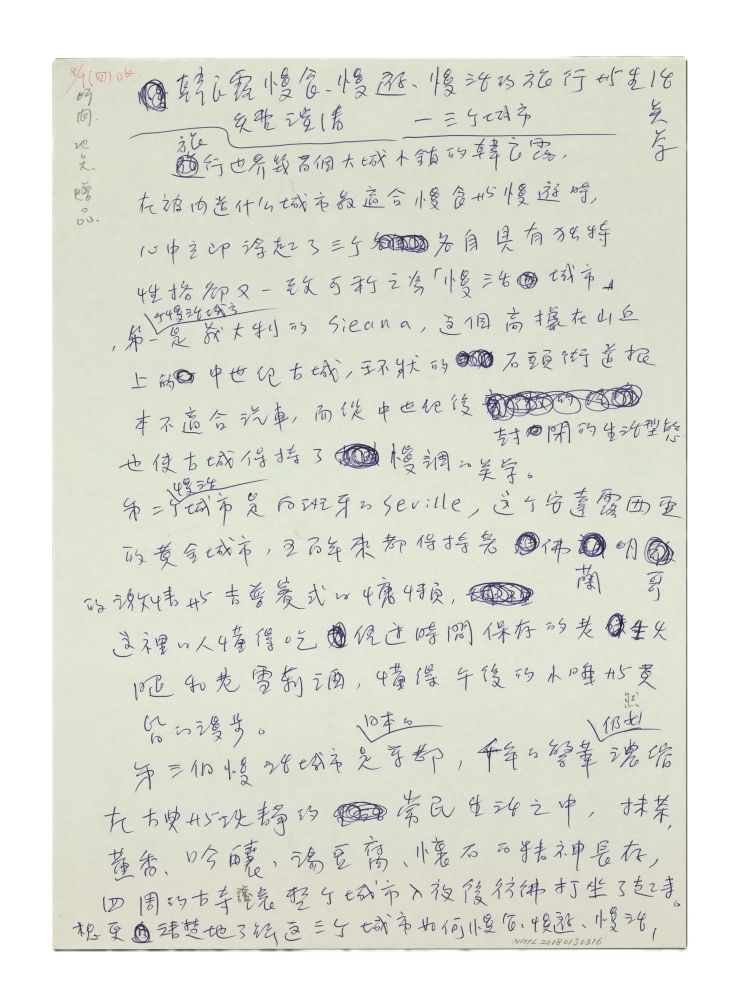
手稿Manuscript of Han Liang-lu's "Slow Food, Slow Travel, Slow Living: My Aesthetics of Travel and Life"
In this manuscript, Han Liang-lu analyzes her own attitude towards life and views on travel, and uses three cities in Italy, Spain, and Japan to illustrate her ideals of "living and traveling slowly."
(Collection of the National Museum of Taiwan Literature)
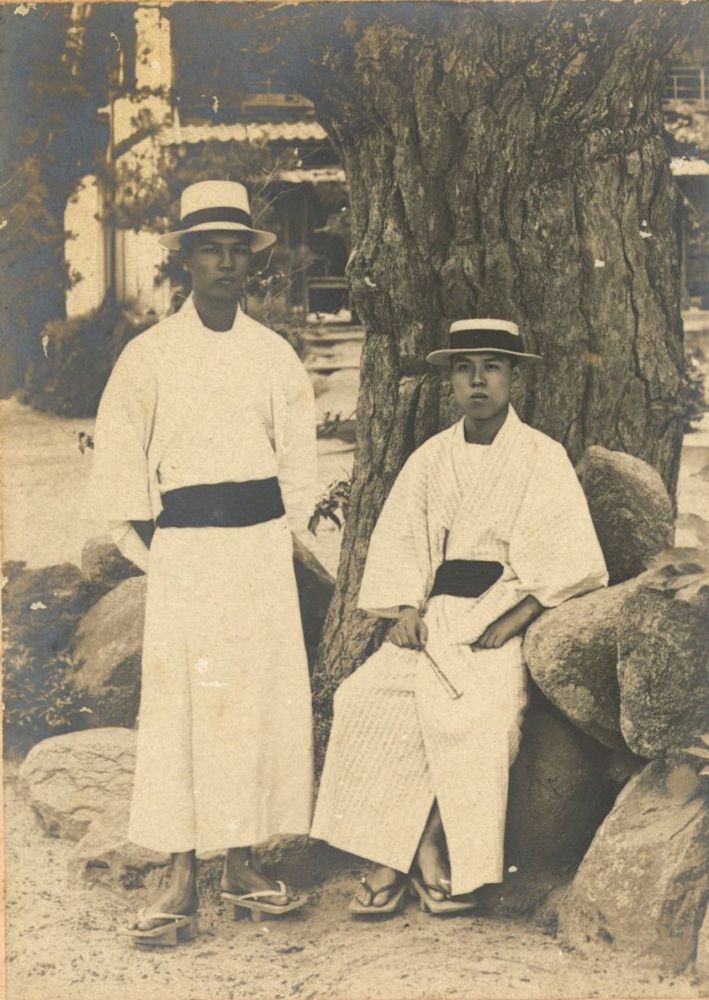
Chan Tso-chou in Japan
Around 1910, during his student years, Chan Tso-chou traveled with his friends to Kobe, Japan. This photo shows them wearing both kimonos and Western-style hats.
(Collection of the National Museum of Taiwan Literature)
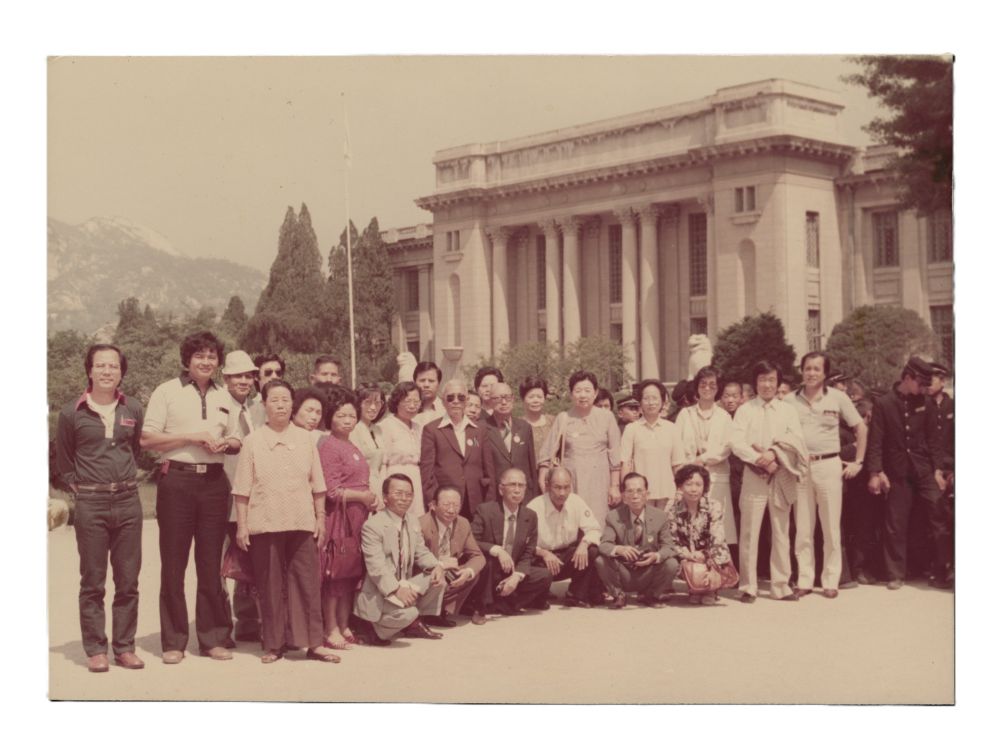
Photo of Wu Man-sha in on Holiday in Korea
When Wu Man-sha and his poet friends traveled abroad to Korea, they took this group photo in front of the Japanese General Government Building, which housed the National Museum of South Korea from 1986 to 1996. Exact date unknown.
(Collection of the National Museum of Taiwan Literature)
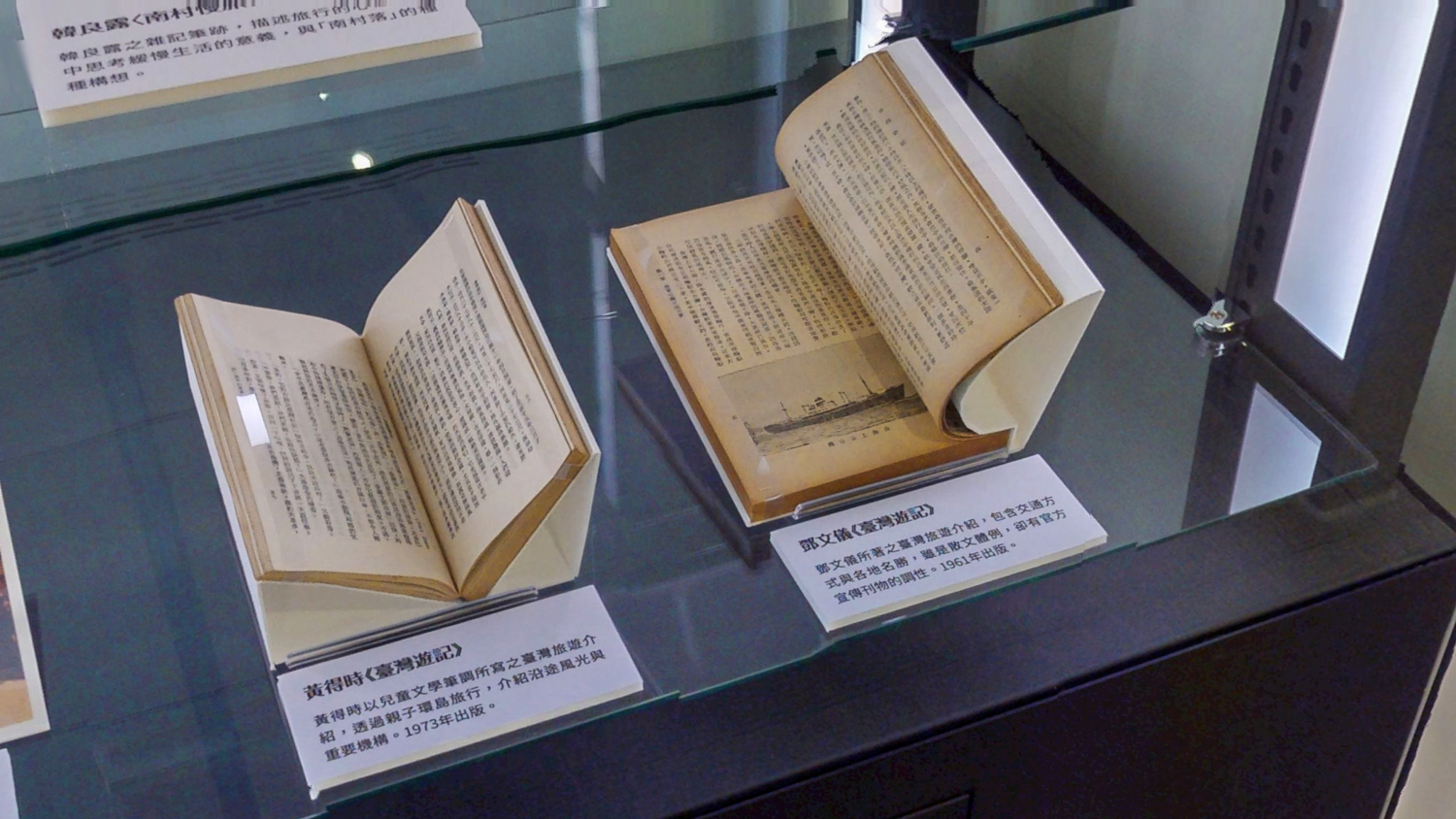
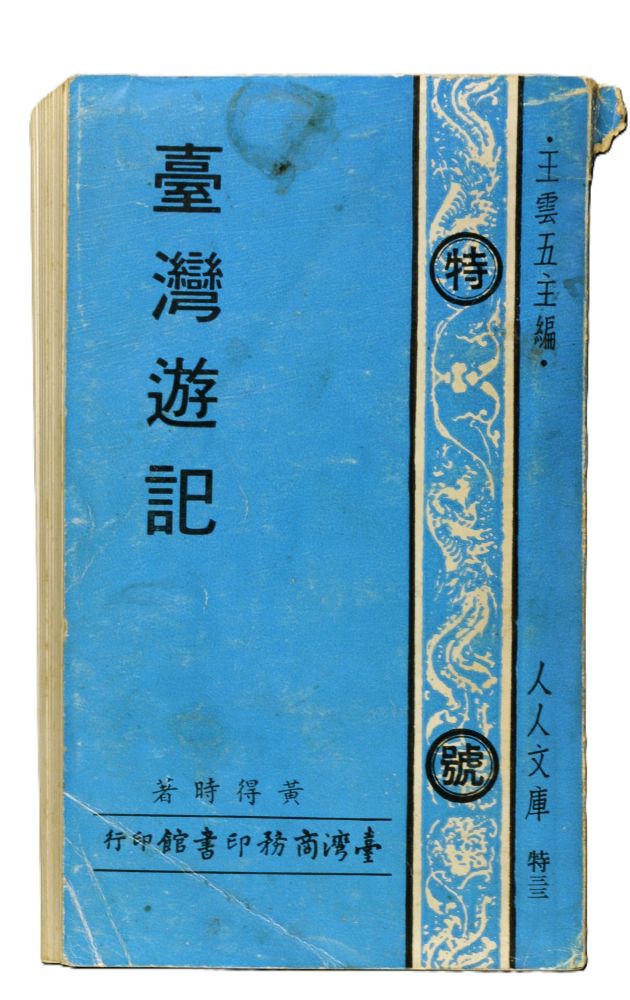
Huang Te-shih's Travelogue of Taiwan
Written in the tone of a children's book, Huang Te-shih's Travelogue of Taiwan introduces local scenery and historical sites through a trip around the island. Published 1973.
(Collection of the National Museum of Taiwan Literature)
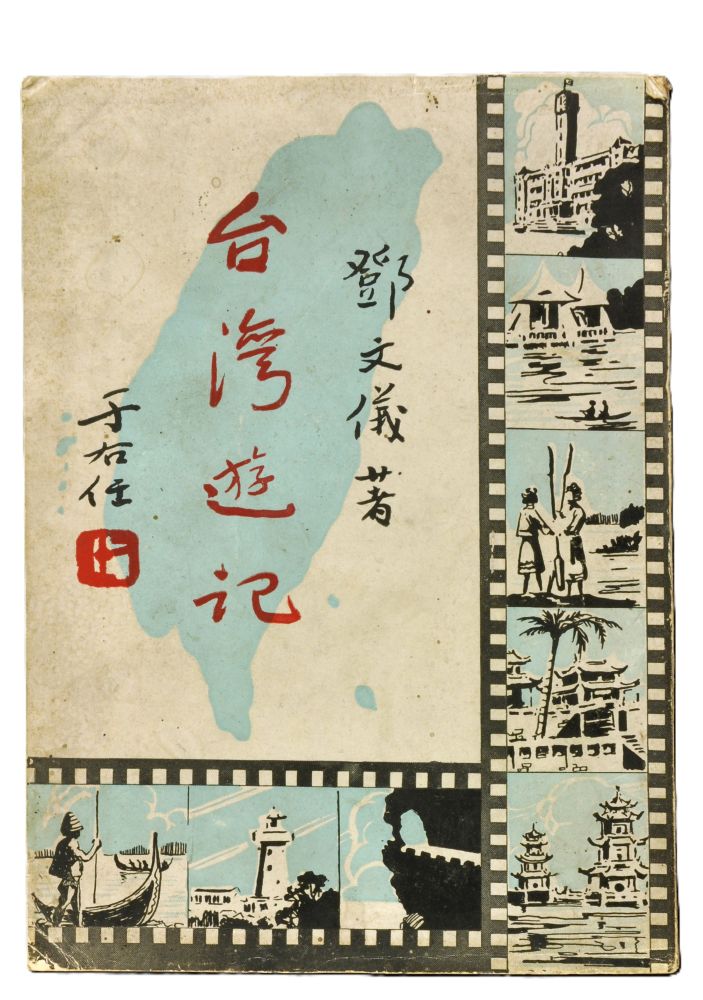
Deng Wen-yi's Travelogue of Taiwan
Deng Wen-yi's 1961 travel guide to Taiwan, which includes information on transportation and local attractions, is written in prose style, yet reads like an official promotional publication.
(Collection of the National Museum of Taiwan Literature)
1. Privacy protection policy.
Personal privacy has become the main concern of users when browsing in the online world. The National Museum of Taiwan Literature (hereinafter referred to as the museum) has specially created a privacy protection policy. How to collect and use data", "Cookies, IP address", and "Protection and Use of Personal Data" to explain and declare:
(1) How to collect and use personal data:
In order to provide you with the best on this website The website service, according to different pages, will ask you to provide relevant personal information. The scope is as follows: This website is when you use the system function forms such as e-newslet subscription, group tour reservation, event registration, joining literary friends and publishing seminar information , Will retain the name, email address, contact method and usage time you provided.
(2) Cookies and IP Address:
When a user visits this website, the server will record relevant behaviors by itself, including the IP address of the connected device, time of use, browser used, browsing and click data records Etc., as a reference for us to improve our website services, this record is an internal application and will never be published.
(3) Protection and utilization of personal data:
The hosts of this website are equipped with various information security equipment such as firewalls, anti-virus systems and necessary safety protection measures to protect the website and your personal data. We adopt strict protection measures. Only authorized personnel can access your personal data. The relevant processing personnel have signed confidentiality contracts. Anyone who violates confidentiality will be punished by relevant laws.
Although this website will do its utmost to maintain the user’s personal data (not misused or disclosed), because the transmission of network data cannot ensure 100% security, this website cannot be sure or guarantee that the user’s or The data we send to users is completely secure. Regarding the above risks, users must be asked to bear them.
Unless you obtain your consent or other special provisions of laws and regulations, this website will never expose your personal data to a third party or use it for other purposes than the collection purpose.
2. Information Security Policy
The National Museum of Taiwan Literature (hereinafter referred to as the museum) respects and protects your security and privacy protection while using the Internet, in order to help you understand how the "National Museum of Taiwan Literature Global Information Network" protects your use of various services on this website For security, and how to collect, apply and protect the personal information you provide, please read the privacy protection and security policy of the "National Taiwan Literature Museum Global Information Network". Please read the following instructions carefully. You are also welcome to tell us your thoughts. If you have any comments or questions, please E-mail to twp@nmtl.gov.tw for
any unauthorized attempts to upload or modify the information provided by the library All services and related information activities are strictly prohibited and may violate the law. For site security purposes and to ensure that the service will continue to serve all Internet users, this site provides the following security measures:
. Use a network intrusion detection system to monitor network traffic to identify unauthorized attempts to upload or change, web page information, or sabotage.
. Install a firewall to prevent illegal intrusion, destruction, or theft or destruction of data, to avoid illegal use of the website, and to protect the rights of users.
. Install anti-virus software to scan for viruses regularly to provide users with a safer web browsing environment.
. Simulate hacker attacks from time to time, exercise system response procedures when security incidents occur, and provide appropriate security defense levels.