Home/Literary Panorama/Rewriting the Script: Unexpected Twists in Taiwan Literature and Screen Media /
Back
The Arrival of the Silver Screen

 The Arrival of the Silver Screen


 Film Enters Taiwan
In December 1895, at the dawn of Japanese rule in Taiwan, something extraordinary was unfolding far away in France. In a Paris café, the Frères Lumière screened their own short films – such as Workers Leaving the Factory, each lasting barely a minute – captivating audiences and heralding the dawn of cinema’s first century.
It didn’t take long for the magic of film to reach Japan, and soon after, Taiwan. In the early days, the Japanese called films “moving photographs”, before the term gradually gave way to “movies”. In 1901, Takamatsu TOYOZIROU arrived in Taiwan, touring the island to screen films. By 1907, he had produced Taiwan’s first documentary, An Introduction to the Actual Condition of Taiwan. In 1911, with the opening of Yoshinotey in Ximending, cinema began to weave itself into the fabric of Taiwanese life, becoming an essential part of entertainment, education, and even political propaganda.
The 1920s brought a global boom in the film industry. Movies were still black-and-white and silent, so a benshi, or a live narrator, would stand beside the screen to explain the plot as it unfolded. In 1925, Taiwanese filmmakers achieved a milestone with Whose Fault, the first film produced collectively by local talent. Created by the Taiwan Film Research Association, led by Liu Hsi-yang and others, the film marked a bold leap forward for film-making in Taiwan.
 《2023 Image Film - The Hidden Figure》(Authorized screening by the Taiwan Film and Audiovisual Institute)
Date of Creation: 2023 / Length: 3 min 42 sec
Starring Tsai Chen-nan, this short pays tribute through role-playing to eight classic films: Brother Wang and Brother Liu on the Roads in Taiwan (1959), The Fantasy of Deer Warrior (1961), Dangerous Youth (1969), Foolish Bride, Naive Bridegroom (1967), Dust in the Wind (1986), A Brighter Summer Day (1991), Dust of Angels (1992), Yi Yi (2000). The films celebrates and continues Taiwan’s audiovisual cultural heritage.
《Light and Shadow - Takamatsu Toyojirō》(Authorized screening by Academia Historica)
Date of Creation: 2010 / Length: 25 min
Takamatsu TOYOZIROU (1872–1952), a native of Fukushima, Japan, was invited to Taiwan by Goto SHINPEI, Minister of Civil Affairs under the Taiwan Governor-General’s Office. In 1907, under official commission, he filmed Taiwan’s first documentary, An Introduction to the Actual Condition of Taiwan, capturing Taipei, Keelung Port, Jinshan, railway travel, local scenes, Indigenous life, and the Japanese military’s campaigns against Indigenous resistance. From the following year, he began establishing theaters across Taiwan, laying the foundation for a systematic film distribution network and leaving an important mark on Taiwan’s cinematic history.
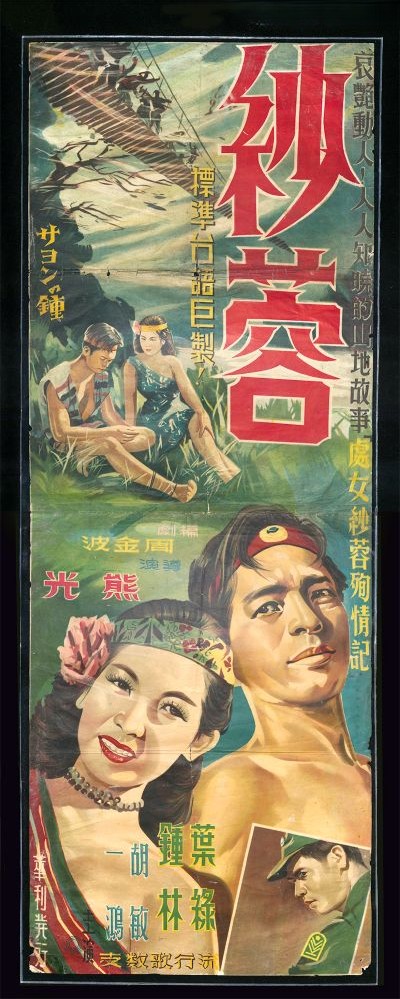
Sayon (Film Poster, Date Unknown)/ Collection of the National Museum of Taiwan Literature
Chou Chin-po(1920 - 1996) adapted his novel (Sayon’s Bell) into a stage script, which was later filmed as Sayon (1958). Sayon’s story has been retold over decades, including in the 2007 film Island Etude, which featurea the “Sayon’s Bell” site in Su-ao.

The Peach Girl (Vinyl Record, 1932) / Collection of the National Museum of Taiwan Literature
The record features the theme song for the film The Peach Girl, lyrics by Chan Tien-ma, music by Wang Yun-fen, sung by Chun-chun.The song was hugely popular and made Chun-chun the first star of Taiwanese pop music.
The Peach Girl Songbook (Songbook, 1934) / Collection of the National Museum of Taiwan Literature
When Lianhua Film Company (Shanghai) produced and brought the 1932 silent film The Peach Girl to Taiwan, Chan Tien-ma wrote lyrics based on the story for promotion. The song became a hit and part of Taiwan’s musical heritage.
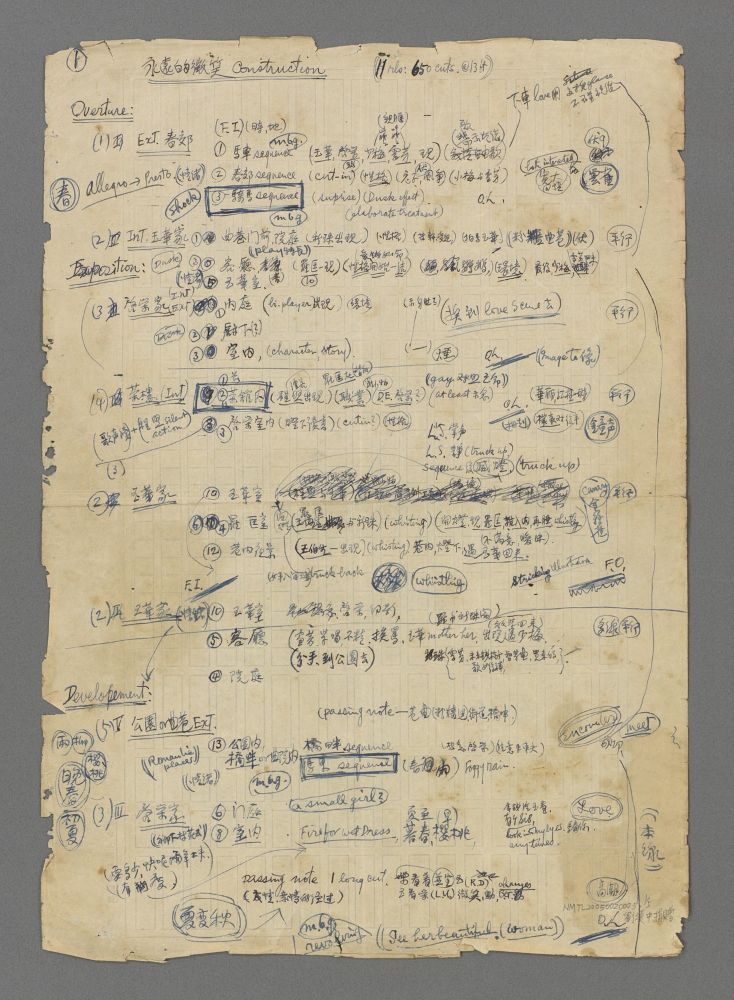
Liu Na-ou Forever Smiling - Film Structure Chart (Manuscript, ca. 1936) / Collection of the National Museum of Taiwan Literature
A draft sketch outlining scenes, props, characters, lines, and shot-by-shot breakdowns. The author used boxes and curves to highlight emphasis and rearrangements.
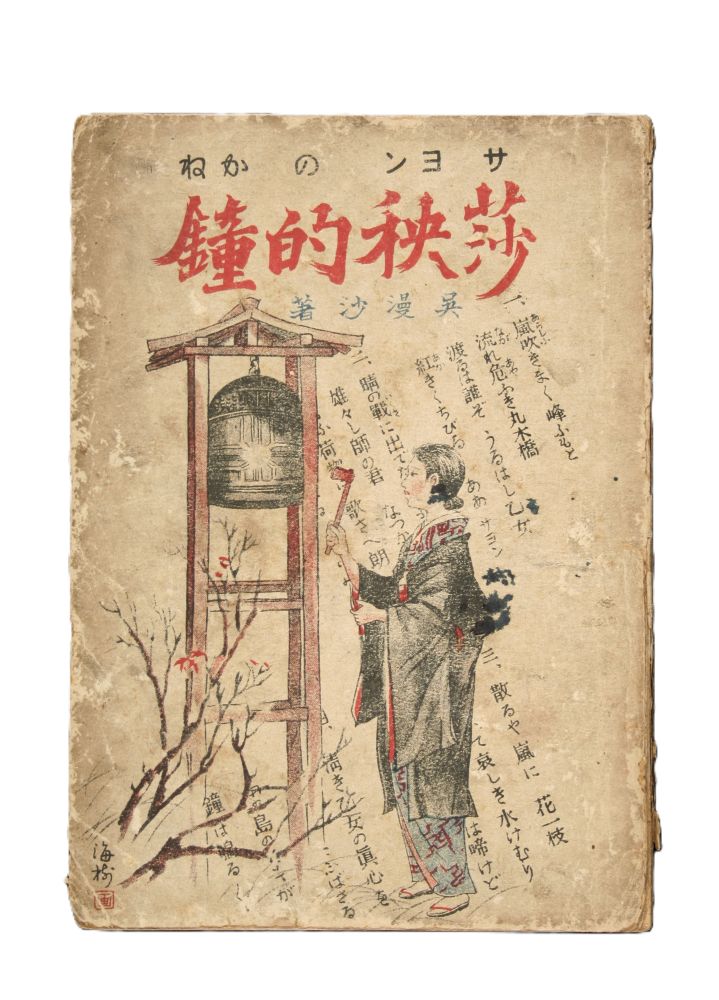
Wu Man-sha Sayon’s Bell (Novel, 1943)/ Collection of the National Museum of Taiwan Literature
 Shingeki and Cultural Enlightenment
In October 1921, Lin Hsien-tang, Chiang Wei-shui, Lai Ho, and others established the “Taiwan Cultural Association” with the aim of igniting a cultural awakening across the island. Beyond organizing reading clubs and lectures, the association launched its Moving Picture Team in April 1926. Backed in part by Tsai Pei-huo – who funded the purchase of a projector and promotional films – the team toured Taiwan, screening movies to enthusiastic crowds wherever they went. After the association split, Tsai Pei-huo founded the “Meitai Troupe”, which continued screening films and even composed a “troupe anthem”. Before each showing, audiences would sing together: “Meitai Troupe loves Taiwan, loves its fine weather and noble people. Evergreen island, beautiful village, with ocean vast and mountains lofty – let us all be earnest together”.
In the same decade, a new style of modern drama called “shingeki” was becoming popular. Members of the association used it as a vehicle for cultural enlightenment, raising the art form to new creative heights. In 1943, during the Pacific War, Wang Ching-chuan, Lin Tuan-chiu, and others formed the Kosei Theater Society. That September, at the Yongle Theater in Dadaocheng, they staged The Capon, adapted by Lin Tuan-chiu from a novel by Chang Wen-huan. Folk musician Lu Chuan-sheng composed music for the play, including the now-classic songs “Clinking Coins” and “Such a Life”. Performed in Taiwanese, the premiere became a groundbreaking cross-genre production, blending traditional culture, literature, and modern drama for the first time in Taiwan. But wartime censorship was unforgiving: during one performance, the stage lights were abruptly cut, and at one point the play was even banned outright.
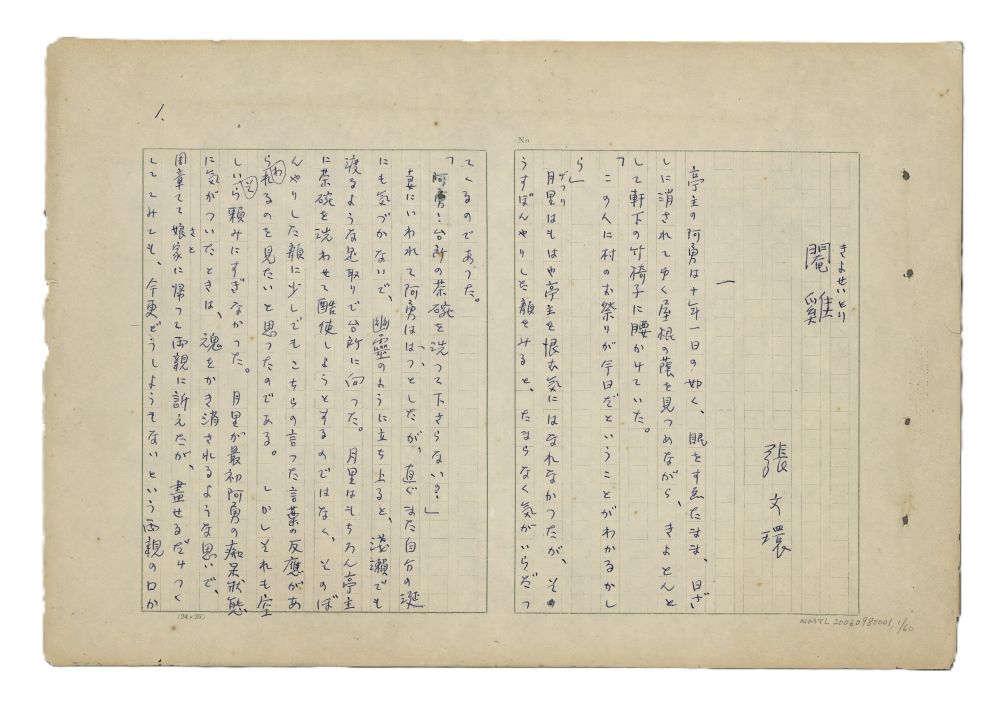
Chang Wen-huan The Capon (Manuscript, 1942) / Collection of The National Museum of Taiwan Literature
One of Chang’s representative works, depicting the strong, brave female protagonist Yue-li, who refuses to bow to fate. Yue-li became a significant archetype in Taiwanese literature and a symbol of Taiwanese people under Japanese colonial rule.
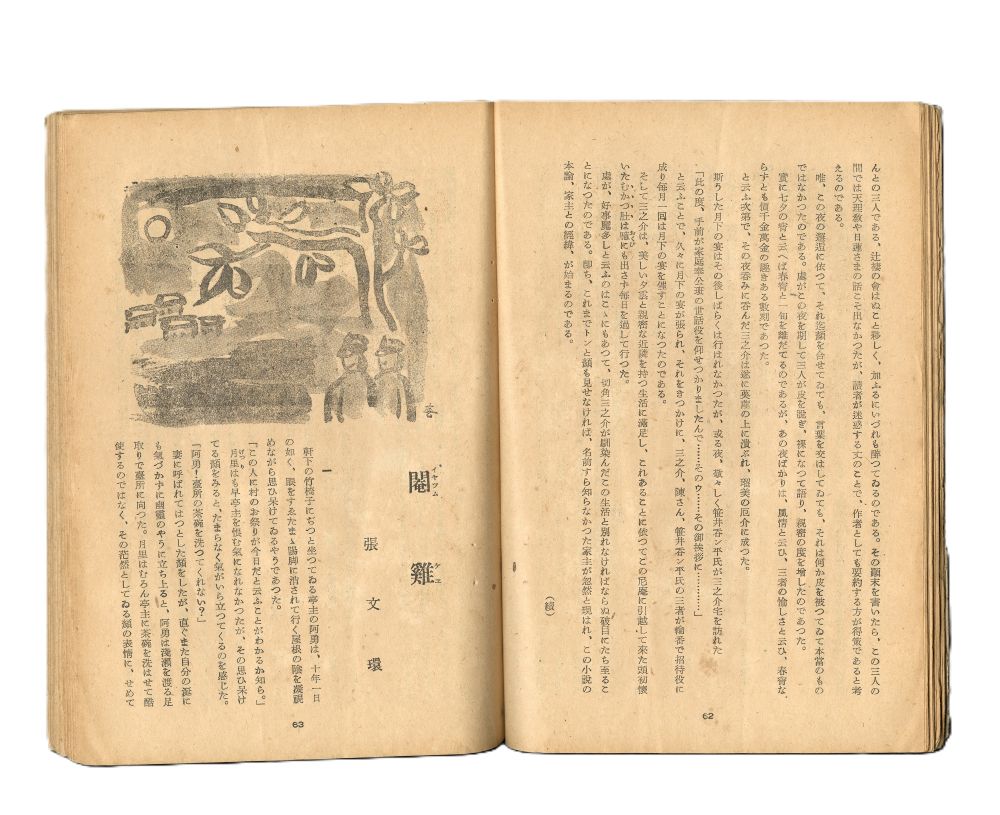
Chang Wen-huan “The Capon”, Taiwan Literature Vol. 2, No. 3, 1942 / Collection of The National Museum of Taiwan Literature
The Japanese original was first published in the July 1942 issue of Taiwan Literature
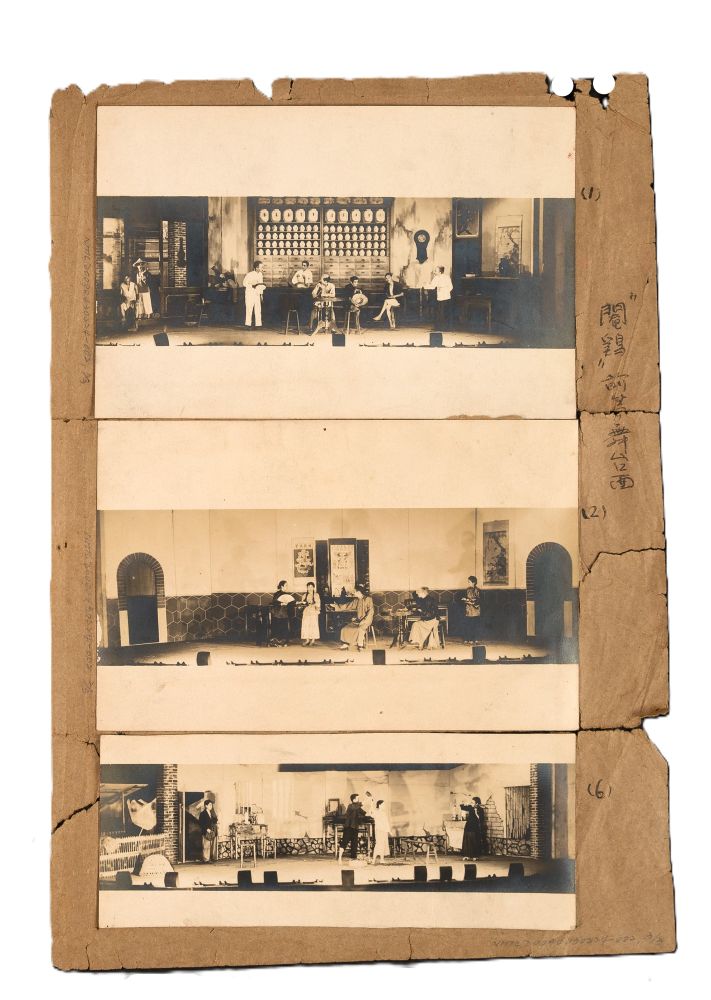
Stage Play The Capon (Part One), Production Stills, Date Unknown. / Collection of National Museum of Taiwan Literature
In 1943, playwright Lin Tuan-chiu adapted the work into a stage play performed at Taipei’s Yongle Theater. Sixty-five years later, in 2008, the Tainaner Ensemble revived the play, presenting it at the National Theater & Concert Hall in Taipei.
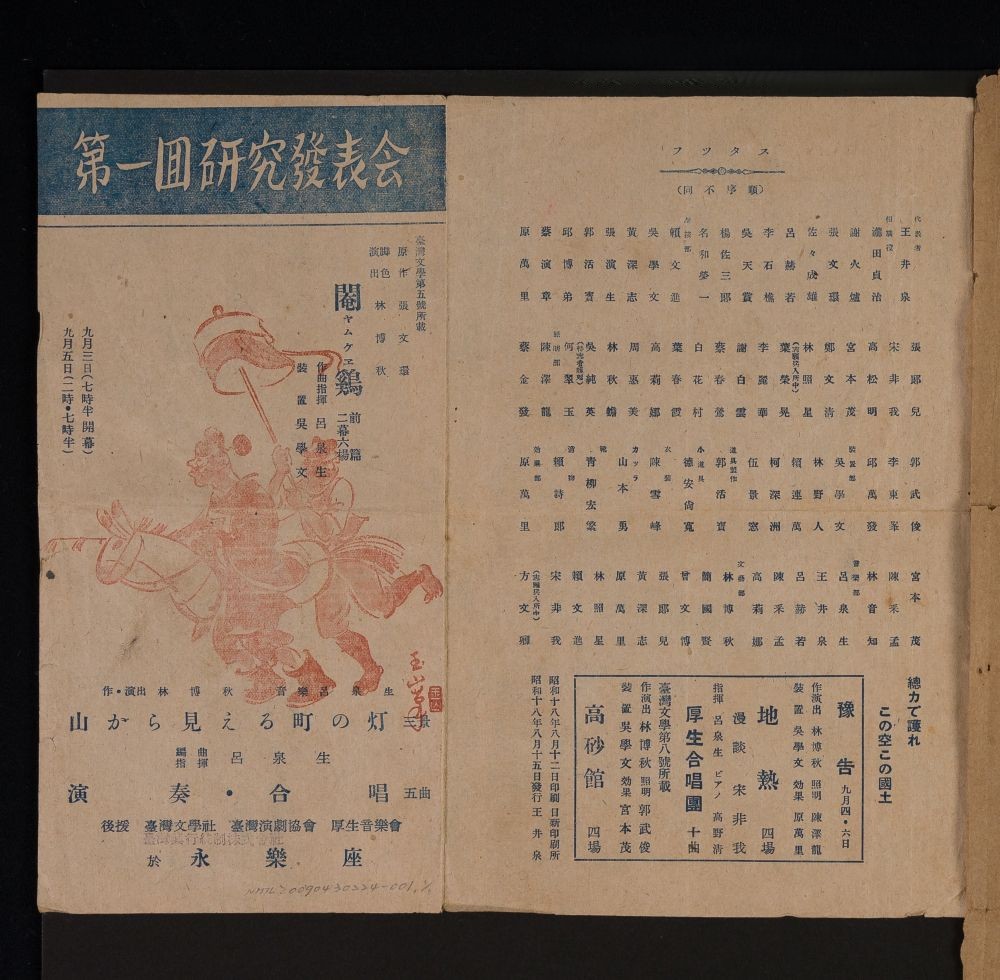
Program for The Capon (Part One, Two Acts, Six Scenes), 1943. / Collection of National Museum of Taiwan Literature
Issued for the first research presentation of the Kosei Theater Society, the program lists the characters, cast, and crew. Performance venue: Yongle Theater.
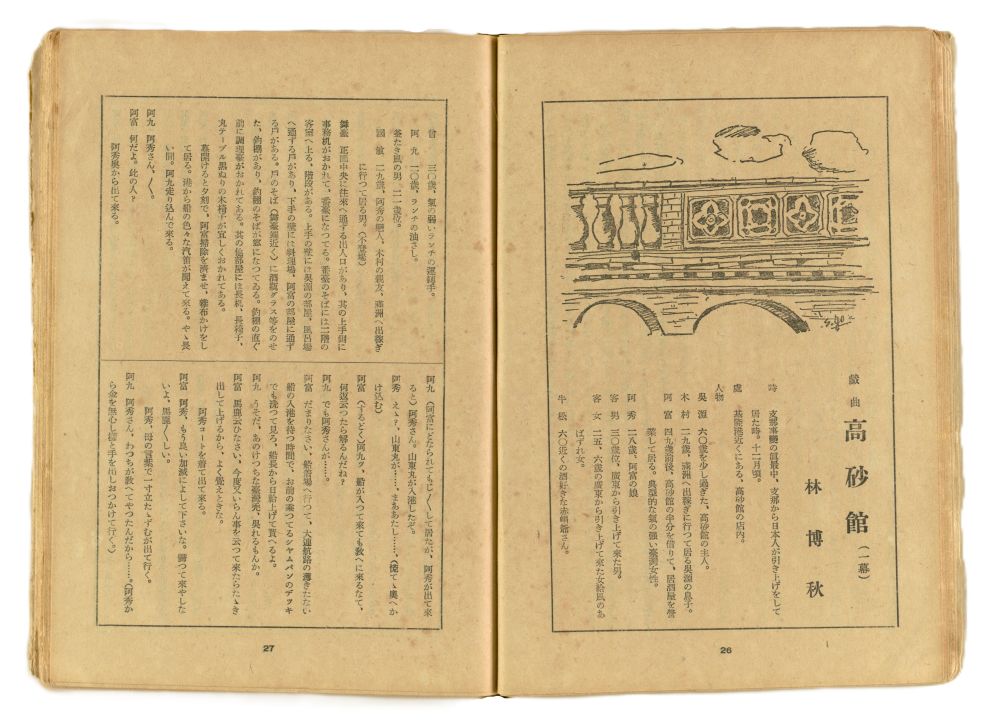
Lin Tuan-chiu (Author) / Huang Shu-chien (Translator), Takasago Inn, Taiwan Literature Vol. 3, No. 2 (Summer, 1943)
/ Collection of National Museum of Taiwan Literature
The stage play Takasago Inn was written by Lin Tuan-chiu in Japanese and published in Taiwan Literature in 1943. It premiered on September 2, 1943, at the Taipei Yongle Theater, performed by the Kosei Theater Society. The story centers on the owner of Takasago inn and the daughter of the restaurant manager, each awaiting the return of a son or lover who has gone to North China and Manchuria, while various subplots unfold among the characters at Takasa Go. Concise yet poignant, the drama vividly portrays the sorrows of ordinary people amid turbulent times. The author’s original name was Lin Tuan-chiu, which he changed to Lin Po-chiu during the Japanese colonial period before reverting to his original name. The Chinese manuscript was translated by Huang Shu-chien in 1998.
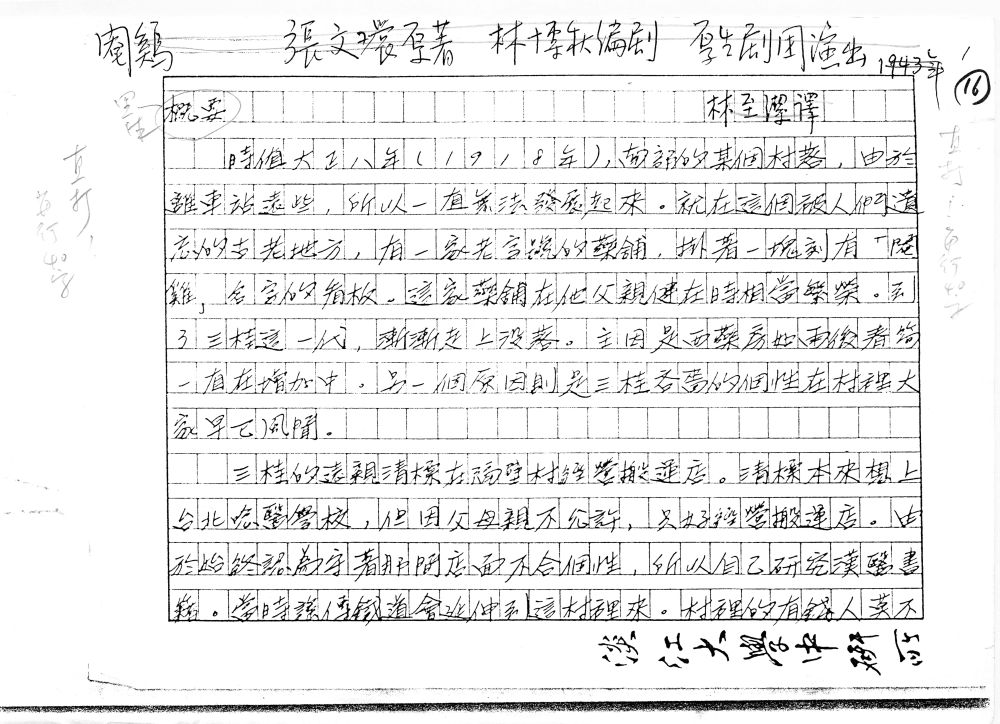
Lin Tuan-chiu (author) / Lin Chih-chieh (translator), The Capon (Script, Photocopy), 1943 / Collection of The National Museum of Taiwan Literature
The stage play The Capon, adapted by Lin Tuan-chiu from Chang Wen-huan’s original novel, was performed by the Kosei Theater Company in 1943. The story portrays the rise and fall of a southern Taiwanese traditional medicine shop named The Capon. Misled by false intelligence, the owner San-kuei trades land with Ching-piao from a neighboring village. Ching-piao’s business prospers while San-kuei’s investments collapse after the planned railway is canceled. San-kuei dies, followed by his wife, leaving their son A-yung and daughter-in-law Yue-li to face a challenging future together.
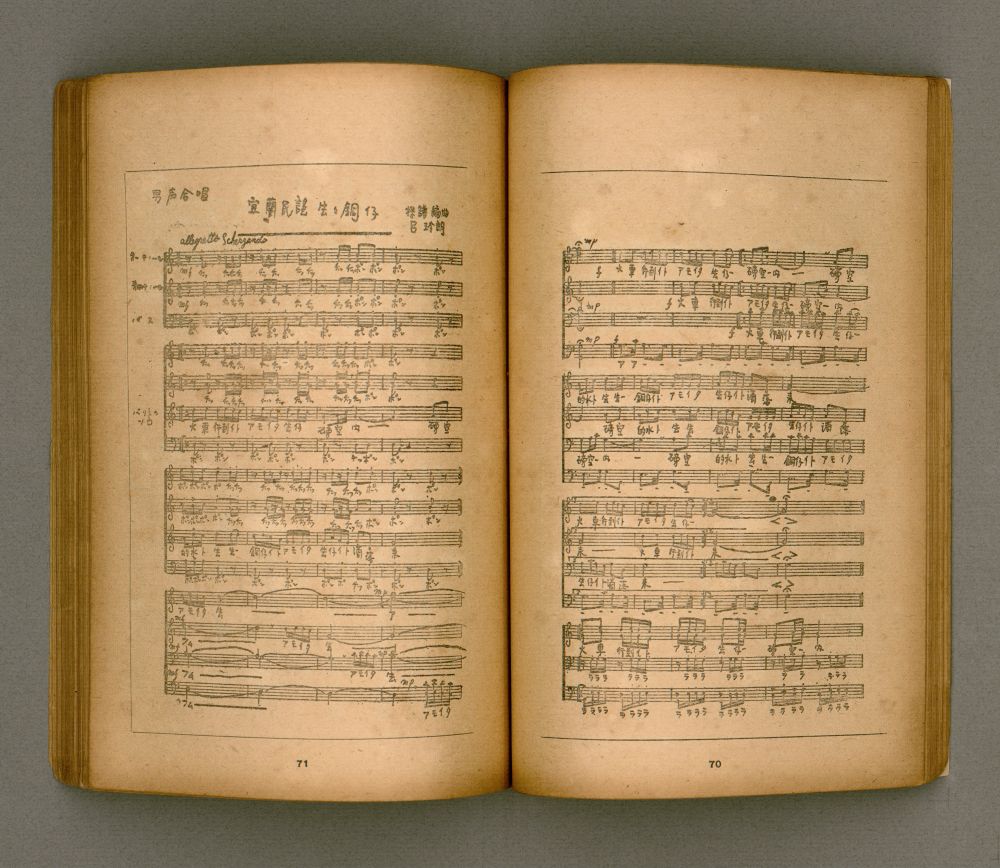
Lu Ling-lang “Clinking Coins” (also known as Tiu-Tiu-Tong-A), Taiwan Literature Vol. 3, No. 3 (Autumn 1943)
/ Collection of National Museum of Taiwan Literature
One of the songs from the stage play The Capon. Originally a Yilan folk tune, it was transcribed and rearranged by Lu Chuan-sheng, who used the pen name Lu Ling-lang.

1. Privacy protection policy.
Personal privacy has become the main concern of users when browsing in the online world. The National Museum of Taiwan Literature (hereinafter referred to as the museum) has specially created a privacy protection policy. How to collect and use data", "Cookies, IP address", and "Protection and Use of Personal Data" to explain and declare:
(1) How to collect and use personal data:
In order to provide you with the best on this website The website service, according to different pages, will ask you to provide relevant personal information. The scope is as follows: This website is when you use the system function forms such as e-newslet subscription, group tour reservation, event registration, joining literary friends and publishing seminar information , Will retain the name, email address, contact method and usage time you provided.
(2) Cookies and IP Address:
When a user visits this website, the server will record relevant behaviors by itself, including the IP address of the connected device, time of use, browser used, browsing and click data records Etc., as a reference for us to improve our website services, this record is an internal application and will never be published.
(3) Protection and utilization of personal data:
The hosts of this website are equipped with various information security equipment such as firewalls, anti-virus systems and necessary safety protection measures to protect the website and your personal data. We adopt strict protection measures. Only authorized personnel can access your personal data. The relevant processing personnel have signed confidentiality contracts. Anyone who violates confidentiality will be punished by relevant laws.
Although this website will do its utmost to maintain the user’s personal data (not misused or disclosed), because the transmission of network data cannot ensure 100% security, this website cannot be sure or guarantee that the user’s or The data we send to users is completely secure. Regarding the above risks, users must be asked to bear them.
Unless you obtain your consent or other special provisions of laws and regulations, this website will never expose your personal data to a third party or use it for other purposes than the collection purpose.
2. Information Security Policy
The National Museum of Taiwan Literature (hereinafter referred to as the museum) respects and protects your security and privacy protection while using the Internet, in order to help you understand how the "National Museum of Taiwan Literature Global Information Network" protects your use of various services on this website For security, and how to collect, apply and protect the personal information you provide, please read the privacy protection and security policy of the "National Taiwan Literature Museum Global Information Network". Please read the following instructions carefully. You are also welcome to tell us your thoughts. If you have any comments or questions, please E-mail to twp@nmtl.gov.tw for
any unauthorized attempts to upload or modify the information provided by the library All services and related information activities are strictly prohibited and may violate the law. For site security purposes and to ensure that the service will continue to serve all Internet users, this site provides the following security measures:
. Use a network intrusion detection system to monitor network traffic to identify unauthorized attempts to upload or change, web page information, or sabotage.
. Install a firewall to prevent illegal intrusion, destruction, or theft or destruction of data, to avoid illegal use of the website, and to protect the rights of users.
. Install anti-virus software to scan for viruses regularly to provide users with a safer web browsing environment.
. Simulate hacker attacks from time to time, exercise system response procedures when security incidents occur, and provide appropriate security defense levels.