Home/Literary Panorama/Player Login – Children's Literature Special Exhibition/
Back
Hop Into the Time Machine: A Journey Through Children’s Literature

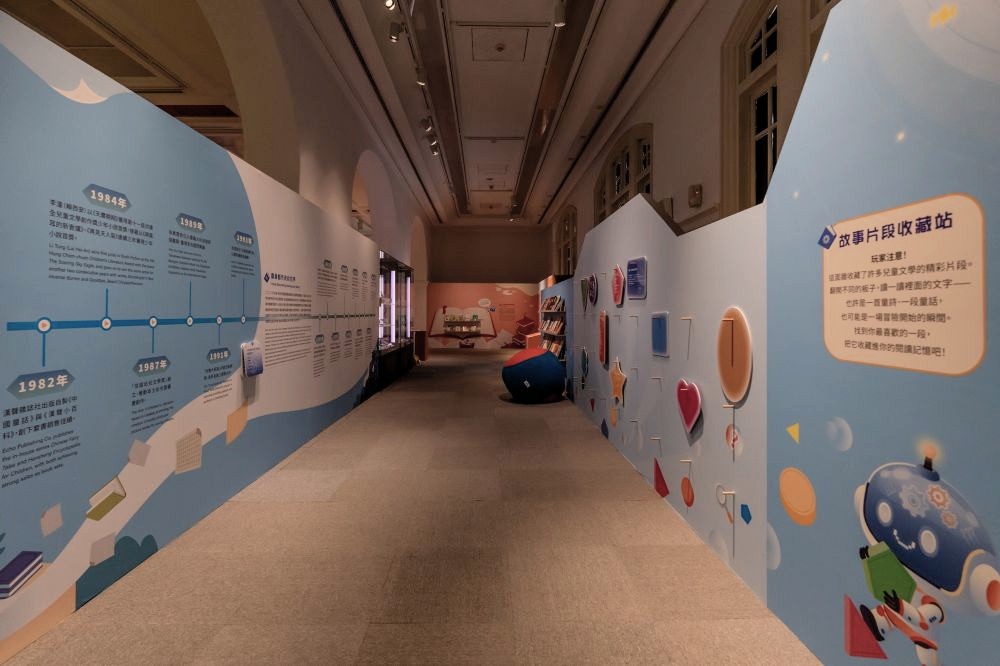
The Seeds of Stories Begin to Grow » Starting Over in a New Language » Children’s Literature Blooms » Limitless Imagination Takes Flight » Visual Storytelling Reaches the World
Let’s take a look at Taiwan in the 1890s through the 1940s. Back then, some people wrote children’s stories, ballads, folktales, and novels in Japanese, while others wrote in classical Chinese or Taiwanese. In school, children read Japanese books and also learned to write nursery rhymes in Japanese.
After World War II, Mandarin Chinese became the new official language. People worked hard to learn the language. Some created children’s reading materials to help with language learning and also taught children to write their own poems.
As Taiwan’s economy grew, more writers, editors, and illustrators began creating children’s literature that were even more fun to read. There were nursery rhymes and poems filled with rhythm and music, as well as imaginative fairy tales filled with fantasy and surprise. There were also young adult novels that explored growing up, learning about themselves, connecting with others, and understanding the world around them. Picture books made for building reading comprehension skills and encouraging visual imagination were also very popular. Some of these books even traveled beyond Taiwan and won international awards!
Now let’s hop into the time machine! It’s time to travel through the history of children’s literature!
The Seeds of Stories Begin to Grow
During this period, Japanese residents in Taiwan first introduced children’s literature to local children through oral storytelling and nursery rhymes. Later, people gradually began writing children’s literature in Japanese, Chinese, and Taiwanese. Even children wrote their own works: N̂g Hōng-Chu, who was only eleven or twelve years old at the time, wrote prose and folktales about Taiwan. During her years at public school, she published Tshit-niû-má-senn (Qiniangma’s Birthday), The 7th and 8th Lord, and Taiwan Girls.
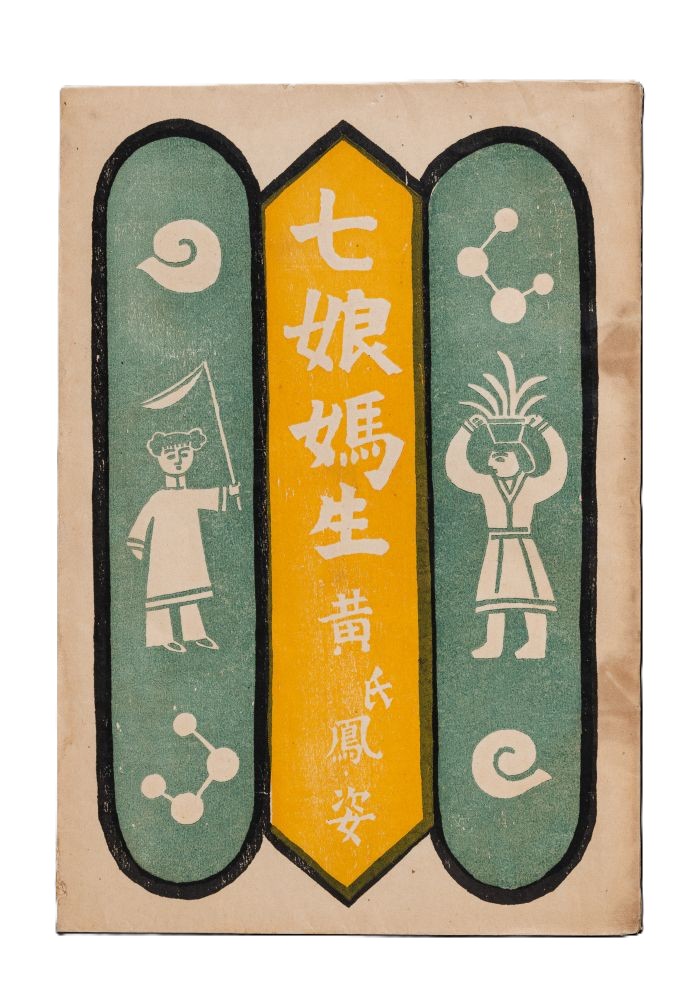
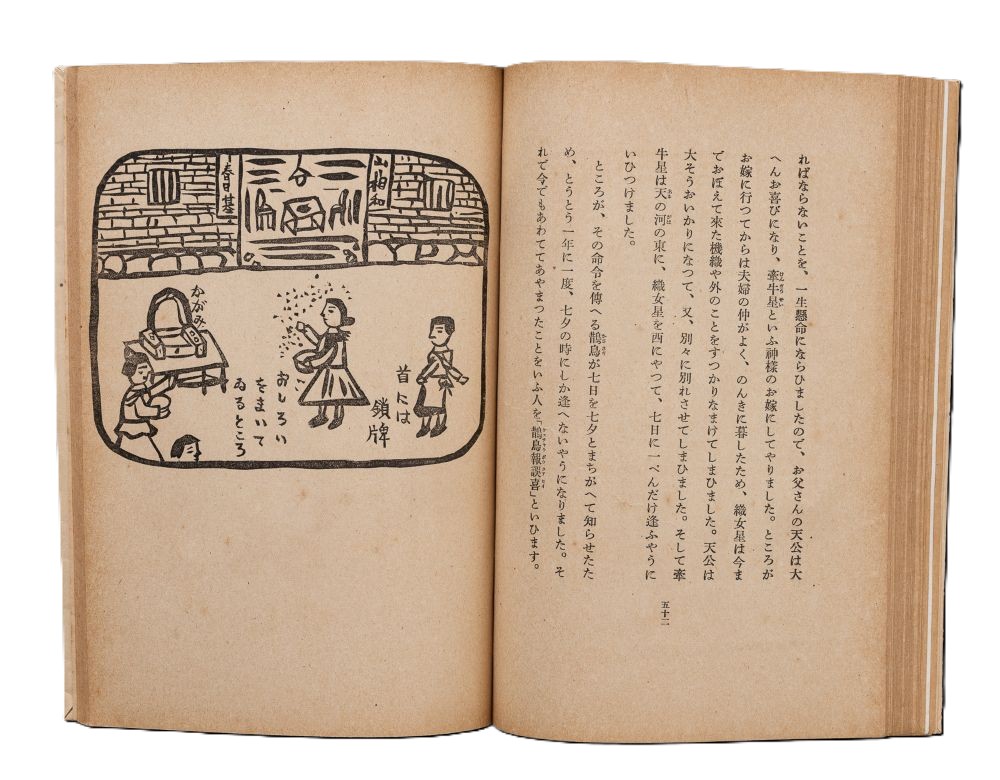
◧ Tshit-niû-má-senn (Qiniangma’s Birthday)
N̂g Hōng-Chu
Published in 1940 by Nichikosanbo, this work was written when N̂g Hōng-Chu was only eleven or twelve years old while attending Longshan Public School. The book collects essays on Taiwanese customs and folktales written in Japanese during her early years. The cover and design were created by Tesshin Tateishi. (Collection of the National Museum of Taiwan Literature)
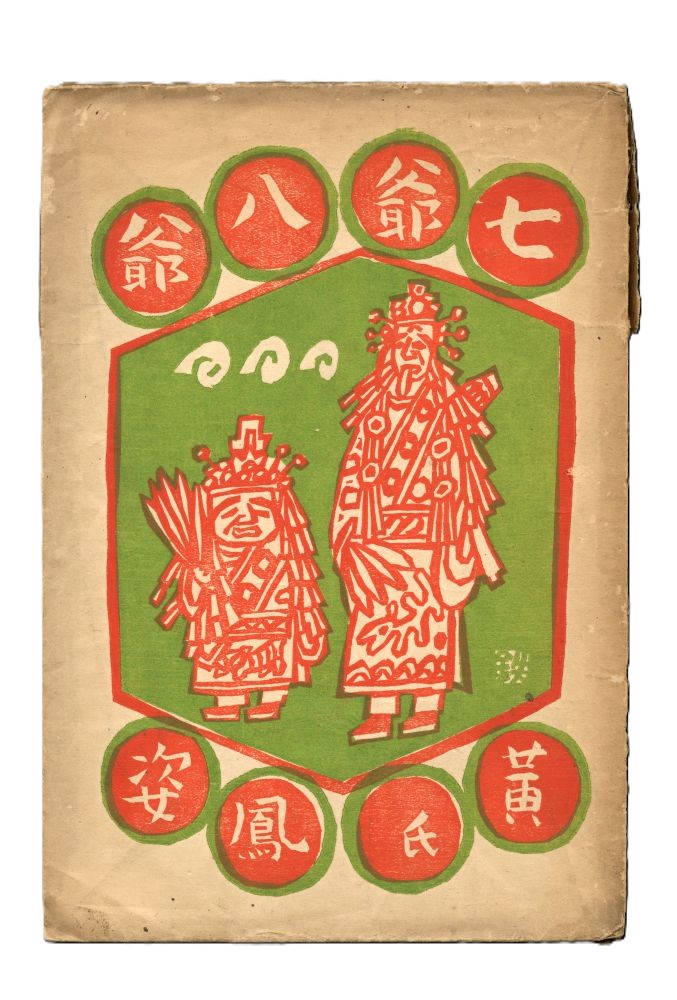
◧ The 7th and 8th Lord
N̂g Hōng-Chu
Published in 1940 by Tokyo Books, Taipei, this volume is a companion to Tshit-niû-má-senn (Qiniangma’s Birthday). It includes seventeen essays by N̂g Hōng-Chu as well as six letters written during her graduation trip in Japan. The cover and book design were created by Tesshin Tateishi. (Collection of the National Museum of Taiwan Literature)
Starting Over in a New Language
After World War II, the Nationalist government came to Taiwan, and people began learning Mandarin, the new “national language.” Economic conditions were difficult at the time, printing technology and paper quality were also much less advanced compared to today. However, there were still many writers and illustrators who continued to create for young readers. Through newspapers, children’s magazines, and books, they wrote stories and drew illustrations to provide children with engaging reading materials outside the classroom.
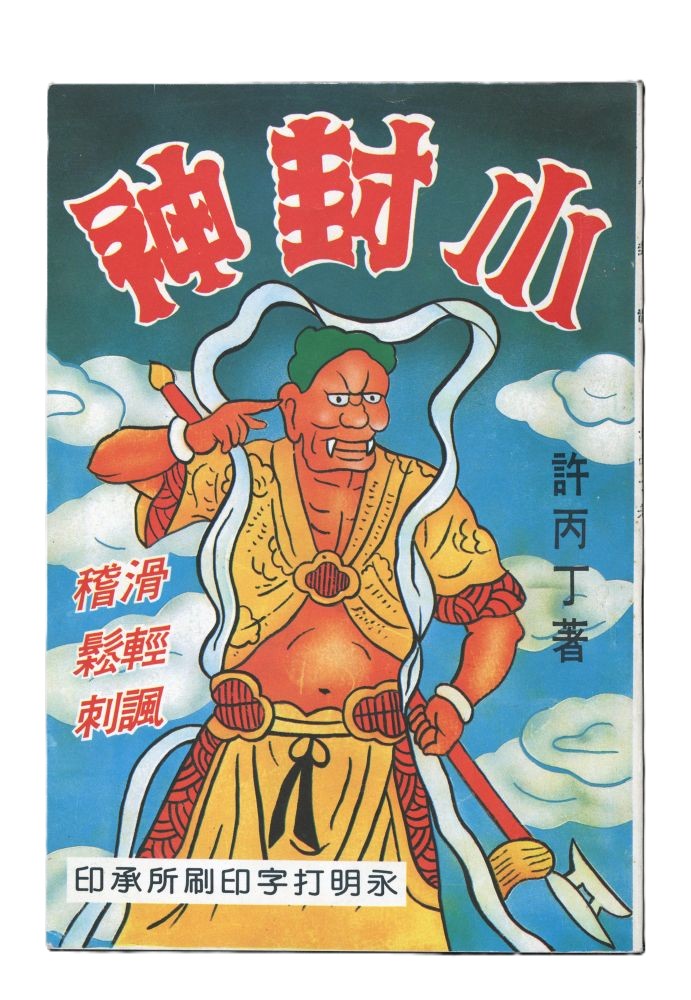
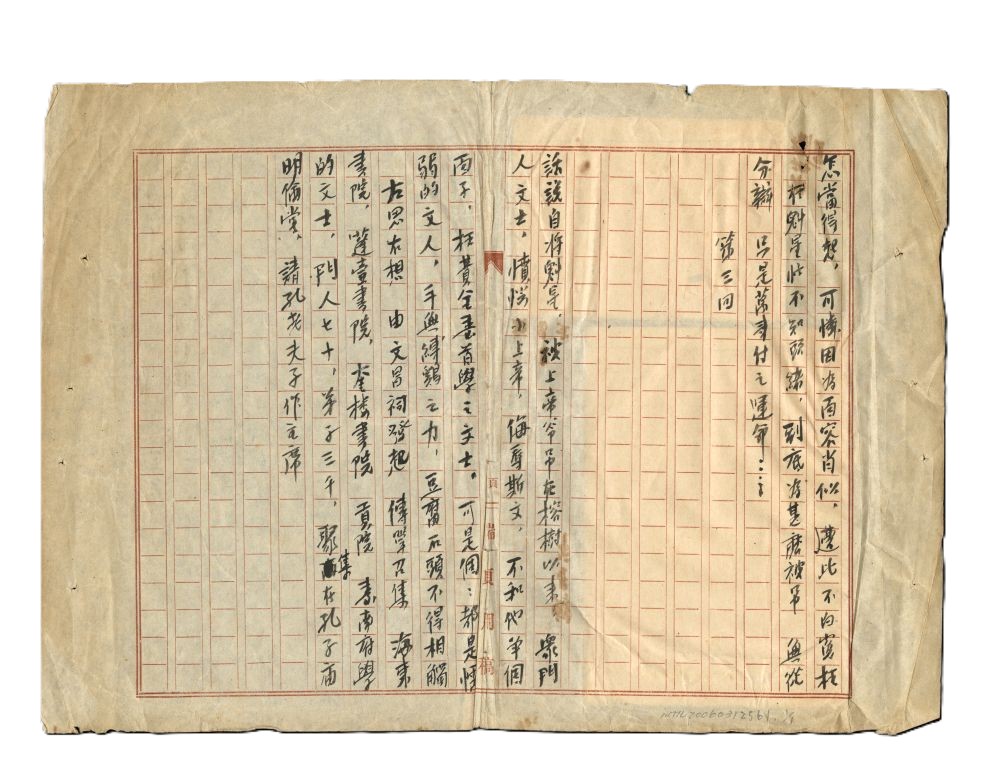
◧ Little Investiture of the Gods and Manuscript (Reproduction)
Hsu Ping-ting
A writer during the Japanese ruling period, Hsu Ping-ting set his stories in the temples of Tainan, bringing deities and spirits from the original The Investiture of the Gods into a modern setting. The result is a lively and imaginative work enjoyed by readers of all ages. (Collection of the National Museum of Taiwan Literature)
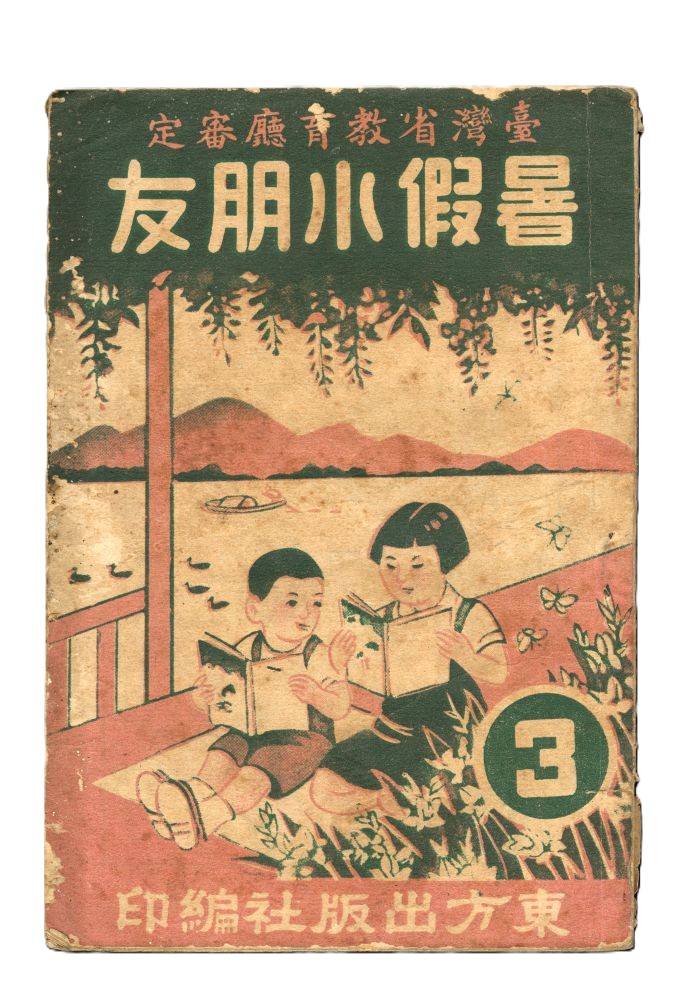
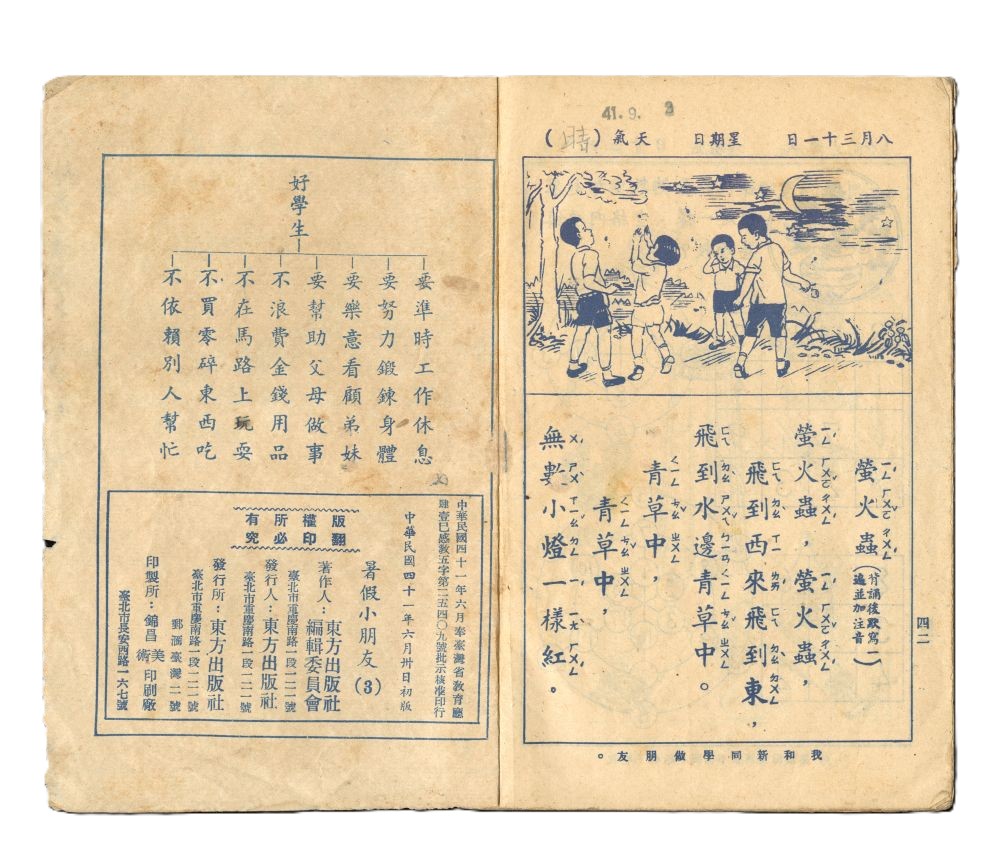
◧ “Summer Vacation Workbook for Children”
Approved by the Taiwan Provincial Department of Education and published in 1952 by Eastern Publishing Co., this workbook includes exercises across multiple subjects, along with short children’s poems and essays accompanied by illustrations and phonetic annotations. Dedicated to promoting Mandarin language education, Eastern Publishing initially focused on producing elementary school supplementary materials as well as its “Summer Vacation Workbook for Children” and “Winter Vacation Workbook” series for students across Taiwan. (Collection of the National Museum of Taiwan Literature)
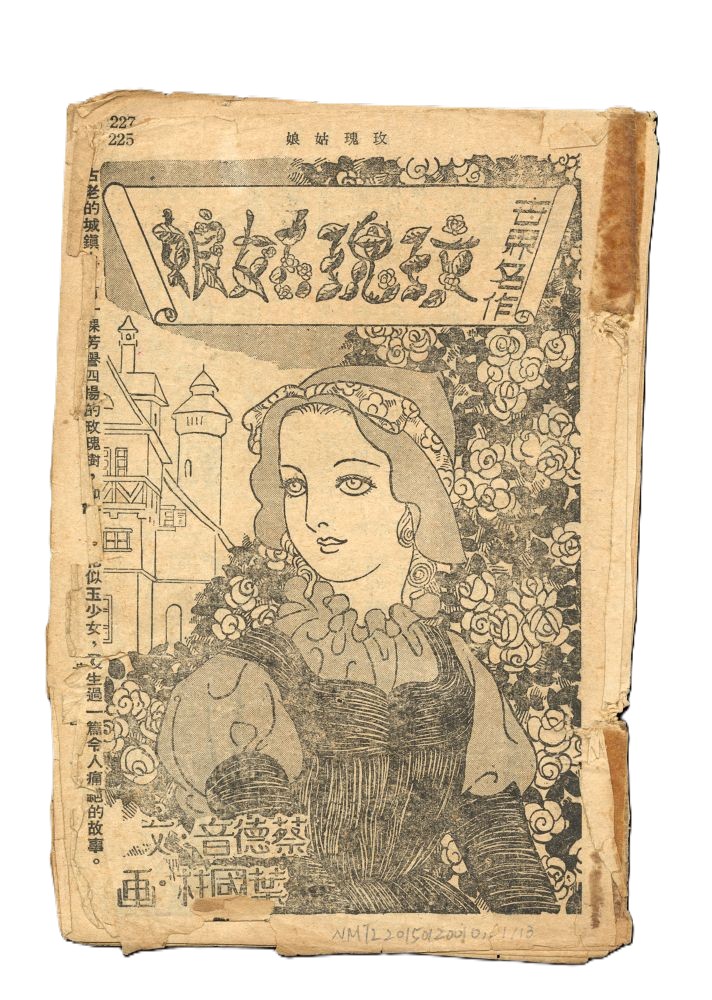
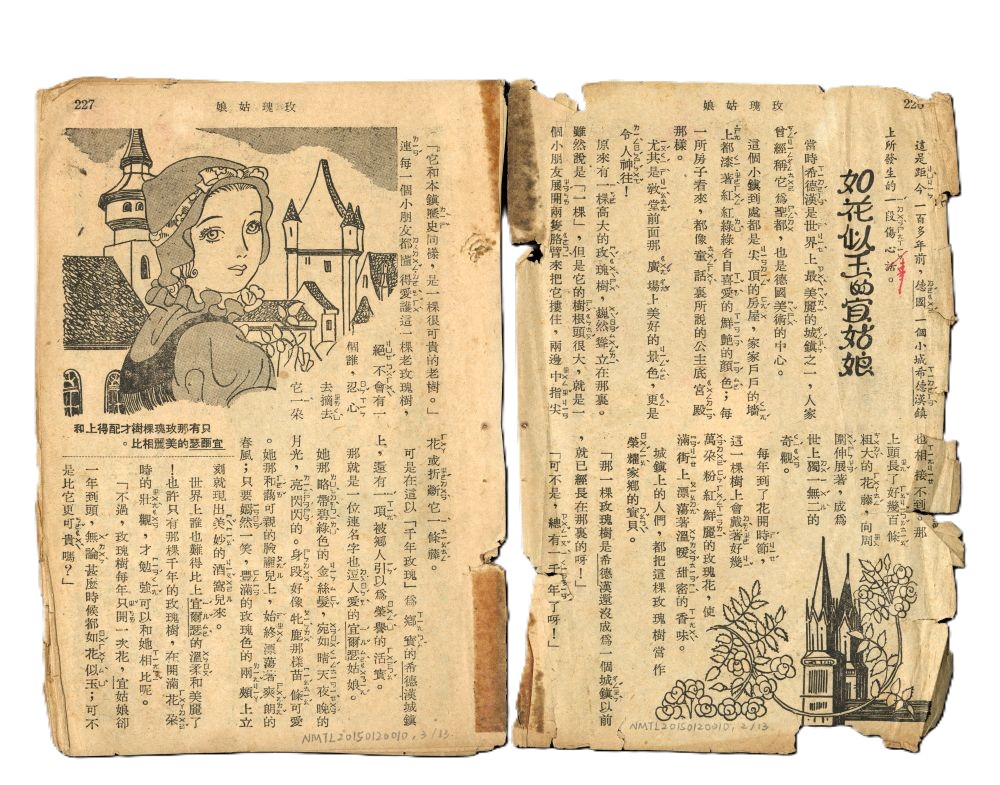
◧ “The Rose Maiden”
Student Magazine
This story was adapted from “The Princess Who Became a Jewel,” originally published in the Japanese manga magazine Shōjo Club, written by Susumu Hanamura and illustrated by Kōji Fukiya. The original itself was based on the fairy tale The Ruby by the German writer Friedrich Hebbel. Student Magazine, founded in 1953, was a children’s magazine that helped popularize serialized comics and also published fiction. It ceased publication in 1959. (Collection of the National Museum of Taiwan Literature)
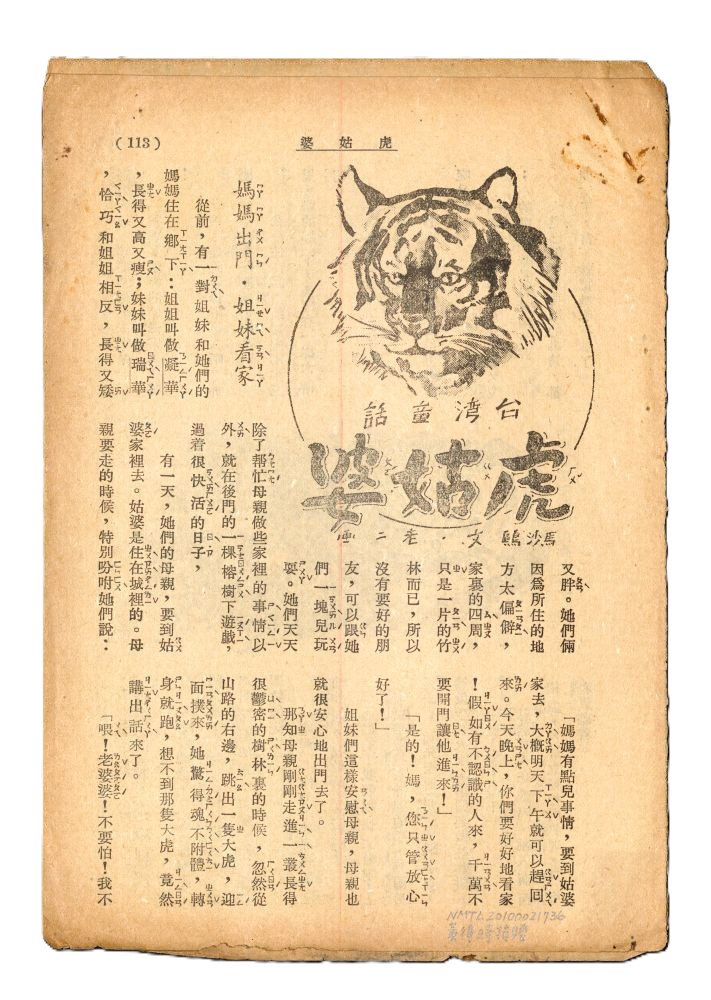
◧ “Taiwanese Folktale—The Tiger Aunt”
Eastern Youth
Ma Sha-ou
Eastern Youth was published by Eastern Youth Monthly and first issued in January 1954. Its founder, Yu Mi-chien—then Mayor of Taipei and Chairman of the Taiwan Provincial Education Association—helped establish Eastern Publishing Co. to promote Mandarin language education. After ceasing publication in 1960, it was adapted into a book series known as the widely popular Eastern Youth Library. (Collection of the National Museum of Taiwan Literature)
Children’s Literature Blooms
As Taiwanese writers adjusted to writing in Mandarin Chinese, children’s poetry began to bloom. The creation of the Hung Chien-Chuan Children’s Literature Award also encouraged many people to pick up their pens once again. New works and poems for young readers began appearing in poetry journals and newspapers. In schools, teachers encouraged children to write and share their own poems. Together, these developments helped create a golden age for children’s poetry.
During this time, the Taiwan Provincial Department of Education launched the Chinese Children’s Book Series, which provided extracurricular reading materials for students in different grade levels. The series included nursery rhymes, children’s poetry, fairy tales, and novels for young readers.
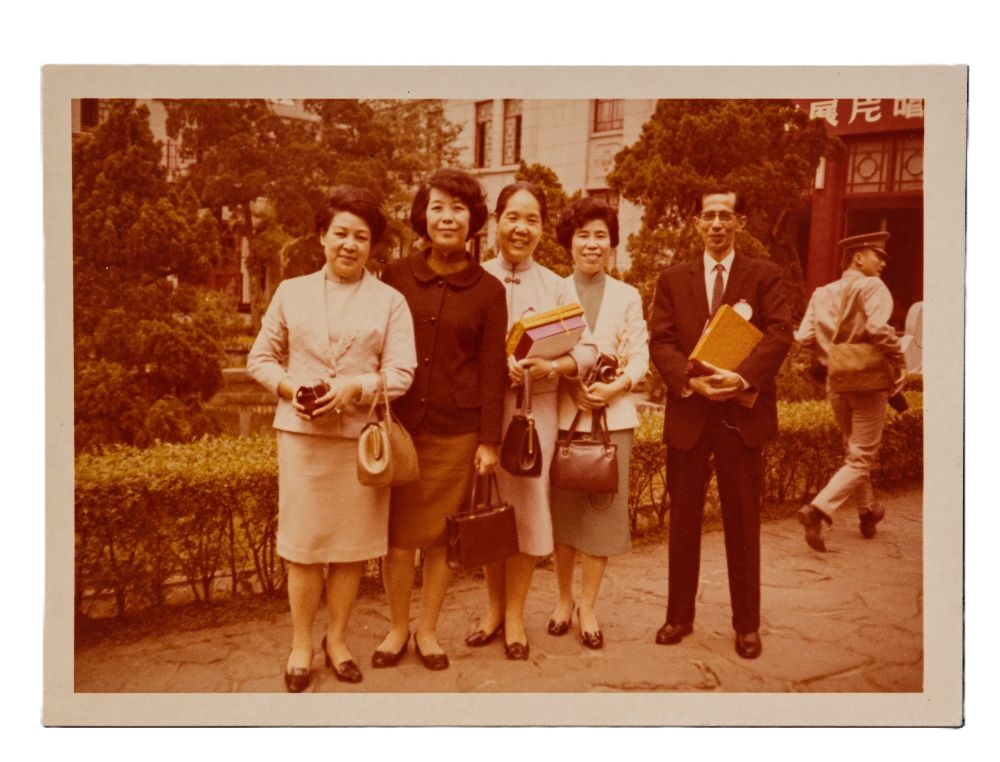
◧ Group Photo from the First “Chinese Children’s Book Awards” Ceremony
From left to right: Lin Hai-yin, Pan Renmu, Hua Hsia-ling, Chi Chun, and Lin Liang. The building in the background is the former National Central Library (now the National Library) on Nanhai Road. In 1971, Hua Hsia-ling received the Best Writer Award for Little Muddlehead, while Lin Liang received the Best Publication Award for Little Qi’s Room. (Collection of the National Museum of Taiwan Literature)
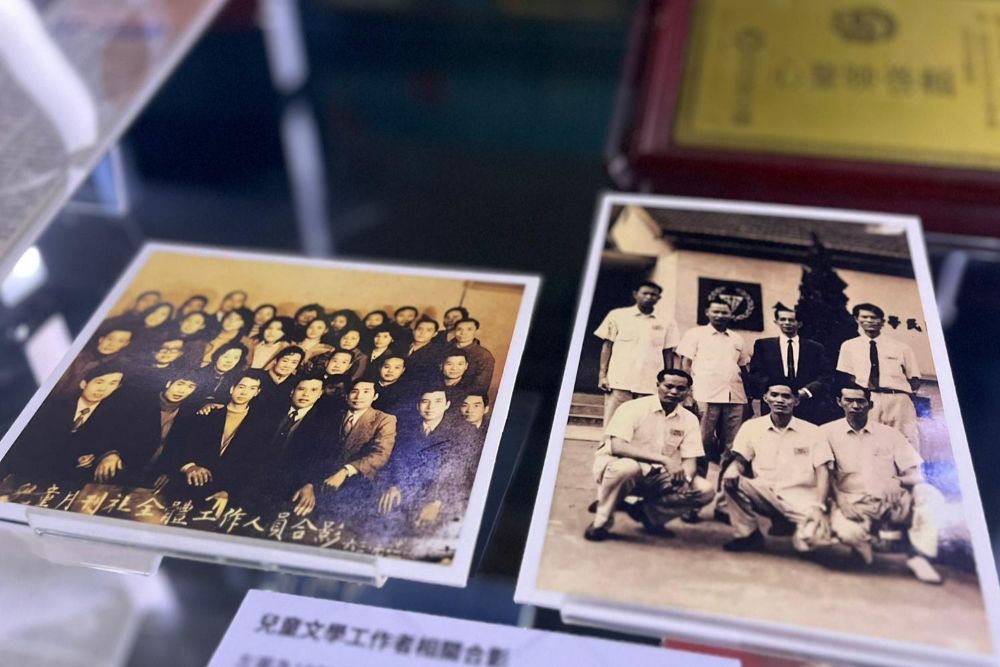
◧ Group Photo from the First “Chinese Children’s Book Awards” Ceremony
The photograph on the left shows instructors and participants from the Children’s Book Writing Workshop held in Banqiao in 1971. In the front row (from right): Chang Yen-hsun, Tseng Chin-mu, and Fu Lin-tung. In the back row (from right): Huang Yu-wen, Lin Liang, Hsu Han-chang, and Hsu Cheng-ping. The photograph on the right shows the full staff of Children’s Monthly in 1974. (Collection of the National Museum of Taiwan Literature)
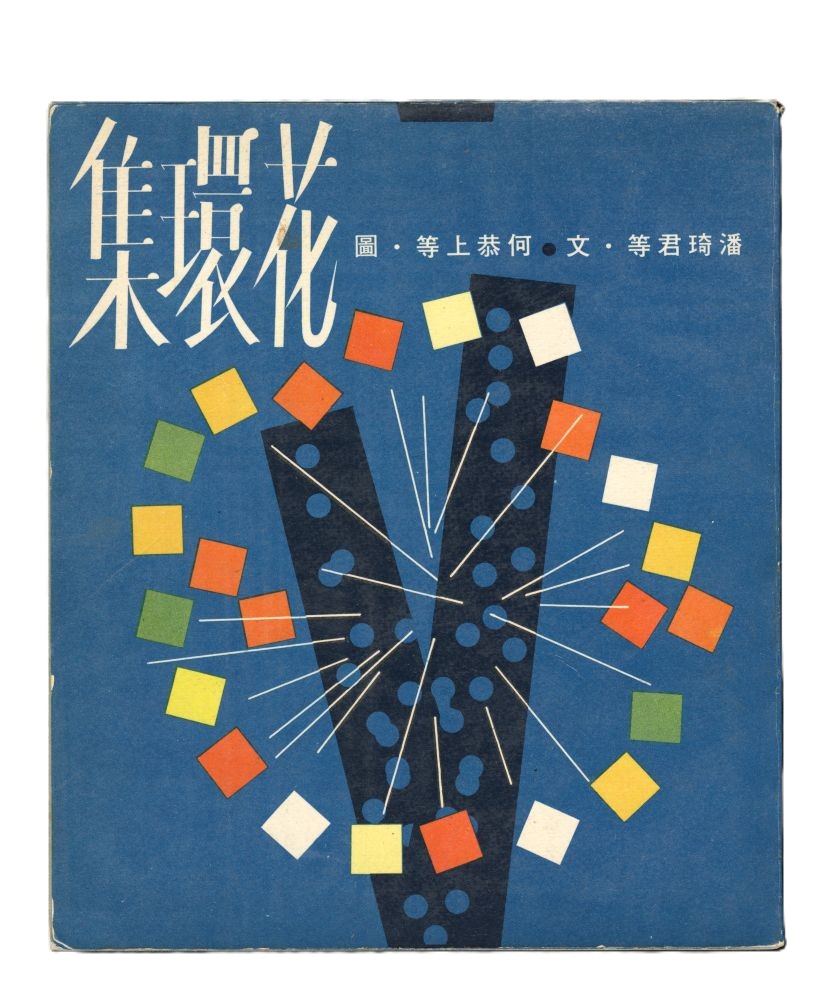
◧ Garland Collection (1965)
Edited by Liu Fang for upper elementary students, this prose collection includes works such as “My Nan’er” by Chi Chun, “Dad’s Pepper Candy” by Lin Hai-yin, “A Glimpse of Old Beijing” by Hsu Chung-pei, “Today’s West Berlin” by Chung Mei-yin, “The Tragedy of the Duck” by Chang Hsiu-ya, “Homesick for Five Places in One Night” by Shen Ying, and “The Old Champion” by Pan Renmu. The cover illustration was created by Ho Kung-shang. (Collection of the National Museum of Taiwan Literature)
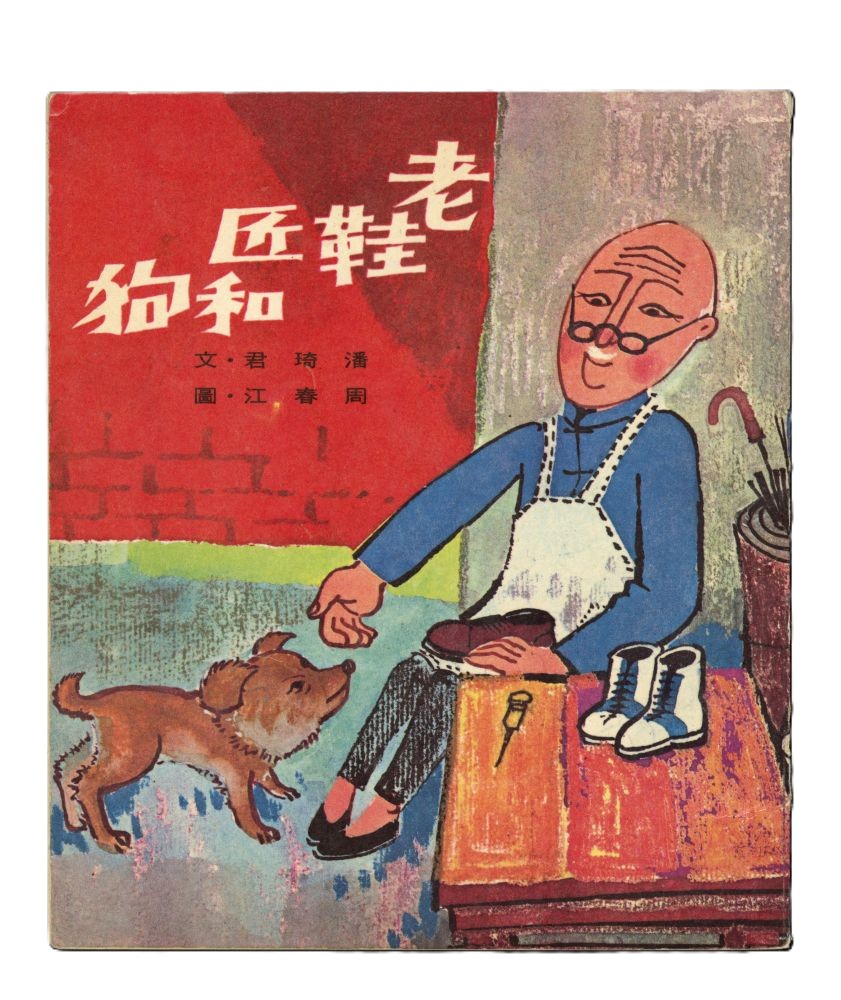
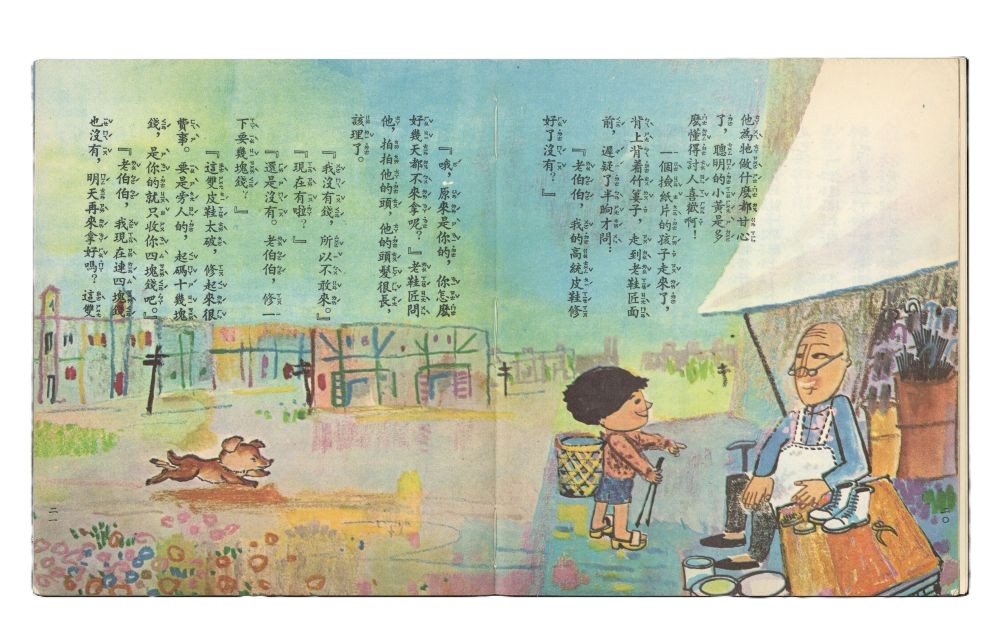
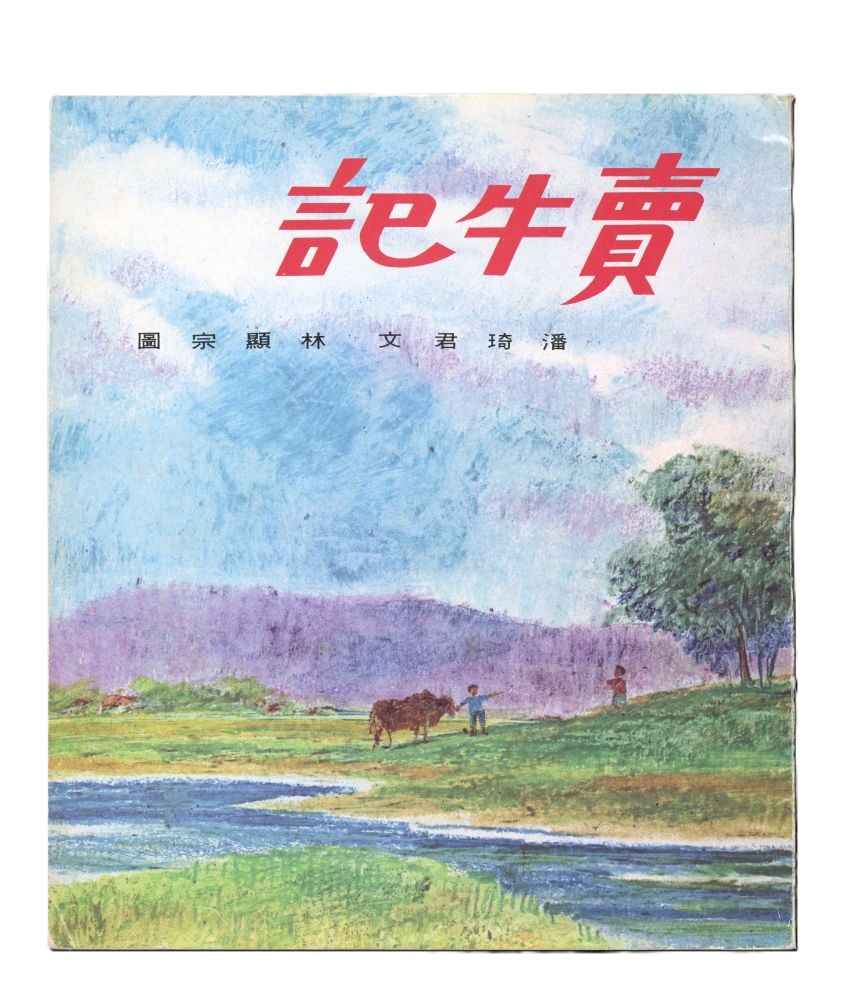
◧ The Old Shoemaker and the Dog and The Story of Selling an Ox
Chi Chun
In 1964, the Taiwan Provincial Department of Education established an editorial group for children’s books with support from UNICEF funding. Over time, more than 900 titles were published, involving many prominent writers and leaving a lasting impact. The Old Shoemaker and the Dog was illustrated by Chou Chun-chiang and published in 1969. The Story of Selling an Ox was illustrated by Lin Hsien-tsung and published in 1986. (Collection of the National Museum of Taiwan Literature)
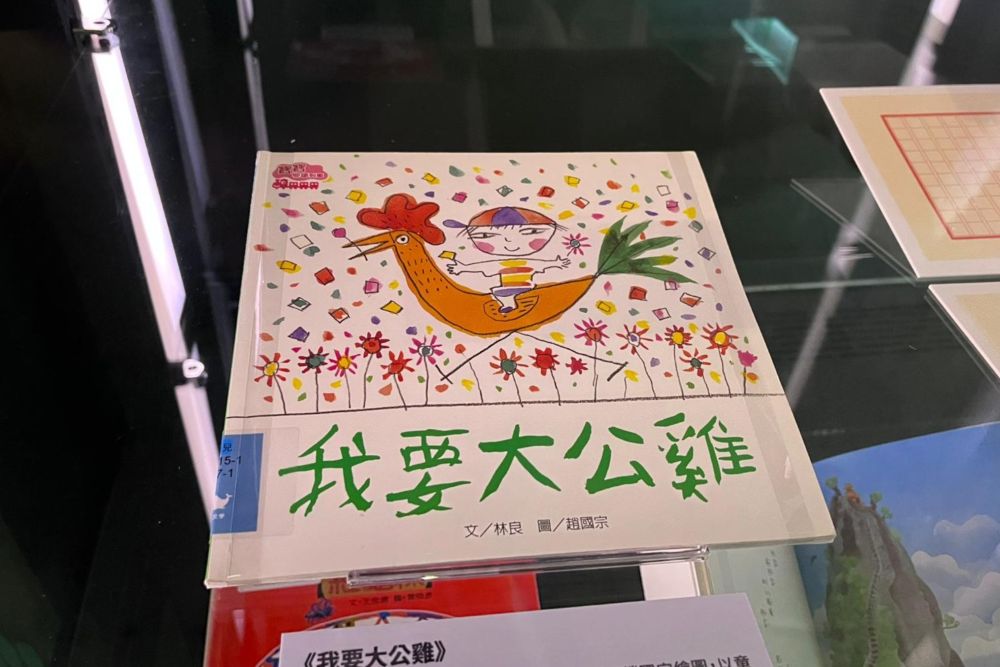
◧ I Want a Big Rooster
This book was written by Lin Liang, illustrated by Chao Kuo-tsung, and published in 1965 by the Taiwan Provincial Department of Education. Told in a poetic style, it follows the simple story of a child named Pang Pang and his encounter with a rooster. With its clear visuals and straightforward narrative, it became a classic of the series. A revised edition was later published in 2008 by the Hsin-Yi Foundation.
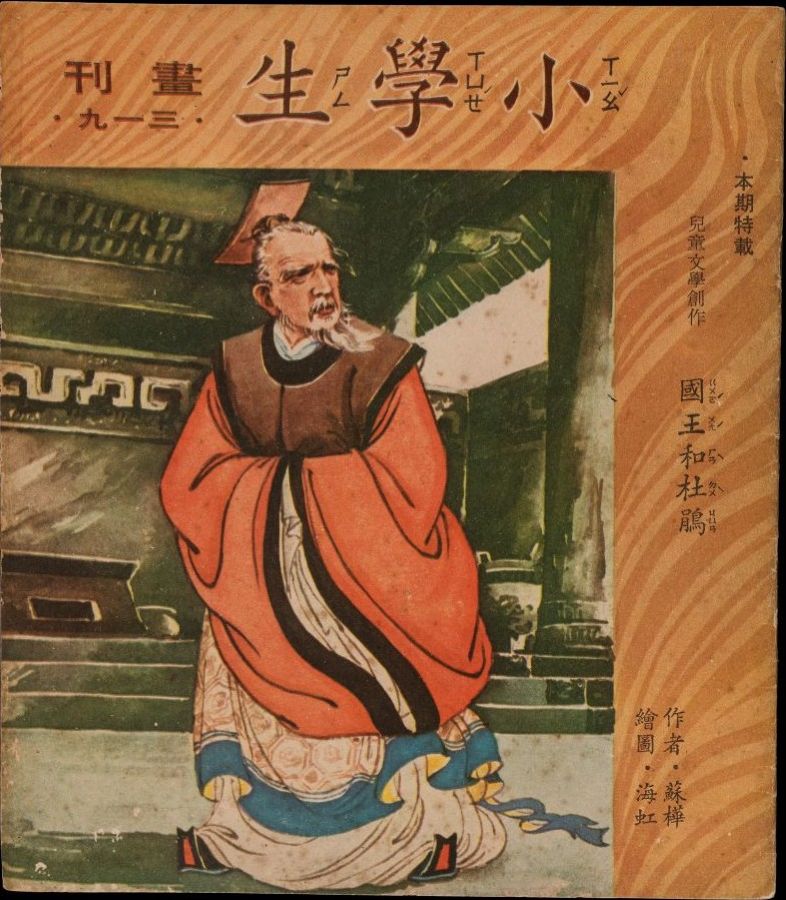
◧ Elementary Schoolers’ Pictorial, Issue 319, 1966
Originally launched in March 1951 under the guidance of the Taiwan Provincial Department of Education, Elementary Schoolers’ Pictorial later split into two publications in 1953.
From issue no. 47 onward, it was reorganized into Elementary Student Magazine for upper-grade students and Elementary Schoolers’ Pictorial for younger readers. (Collection of the National Museum of Taiwan Literature)
Limitless Imagination Takes Flight
As Taiwan’s economy continued to grow, writers, illustrators, and publishers worked together to create children’s books with more refined designs and beautiful layouts. Carefully crafted books filled with both words and pictures became increasingly popular.
Adults were also more willing than before to buy reading materials for children. More and more children’s books were published, book awards and recommended reading lists began to appear, and even bookstores dedicated to children’s books opened.
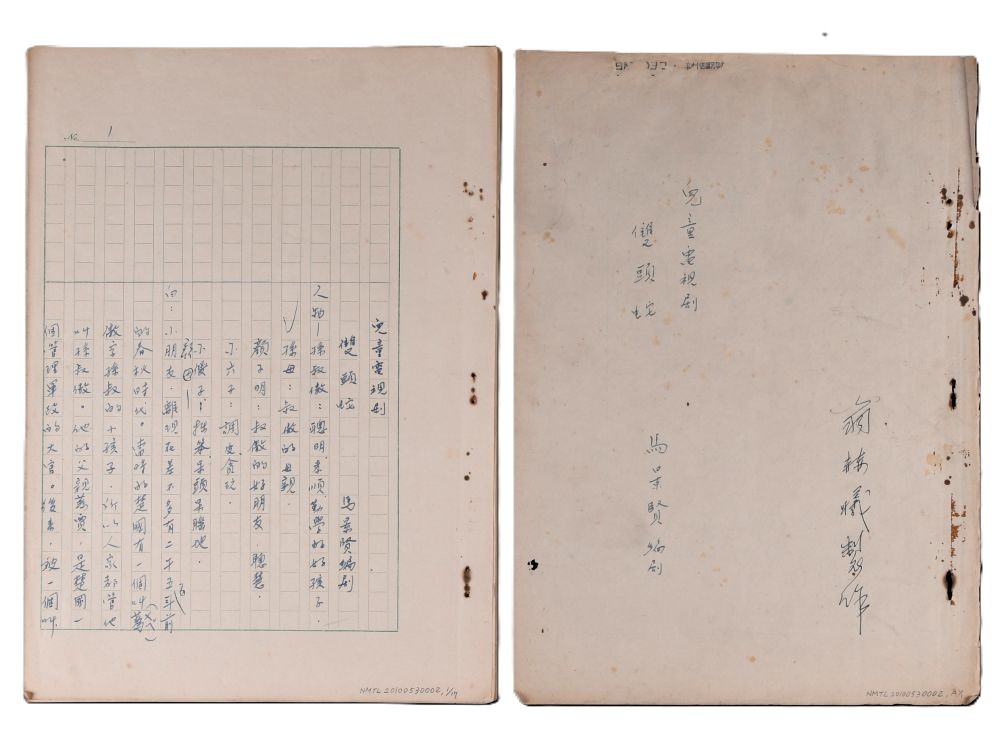
◧ Children’s Television Drama: The Two-Headed Snake Manuscript
Ma Ching-hsien
Around the 1980s, Ma Ching-hsien began writing television scripts for children. This work adapts the story of Sun Shu’ao killing a two-headed snake during the Spring and Autumn Warring States period in China, retelling the childhood story of Sun Shu-ao, who later became chief minister of the state of Chu. (Collection of the National Museum of Taiwan Literature)
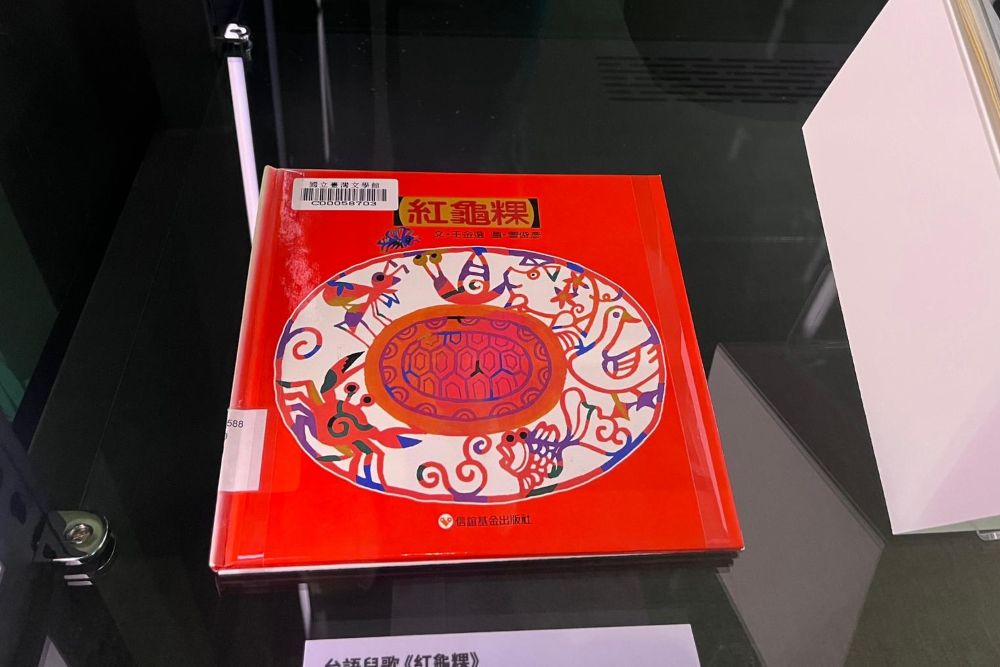
◧ Red Tortoise Cake: Children’s Songs in Taigi
Created by Cincia Wang in collaboration with illustrator Tsao Chun-yen and published in 1991 by the Hsin-Yi Foundation, this book is the first original Taigi-language children’s song collection created specifically for young children in Taiwan. It includes twenty catchy Taigi nursery songs about local life, folk culture, farm animals, and other playful creatures, all presented with warmth and humor.
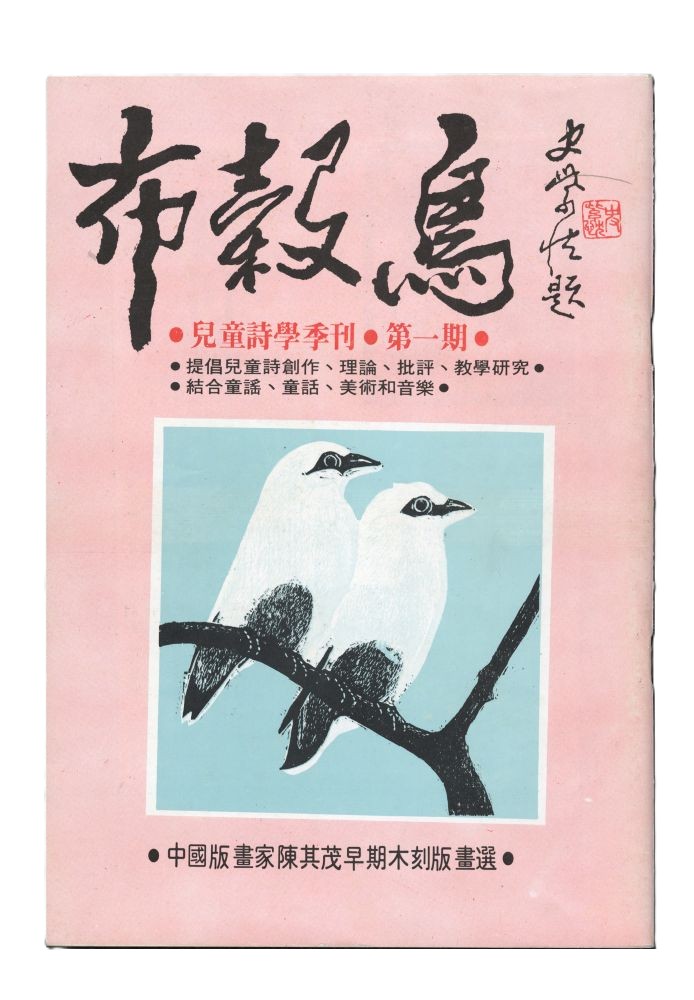
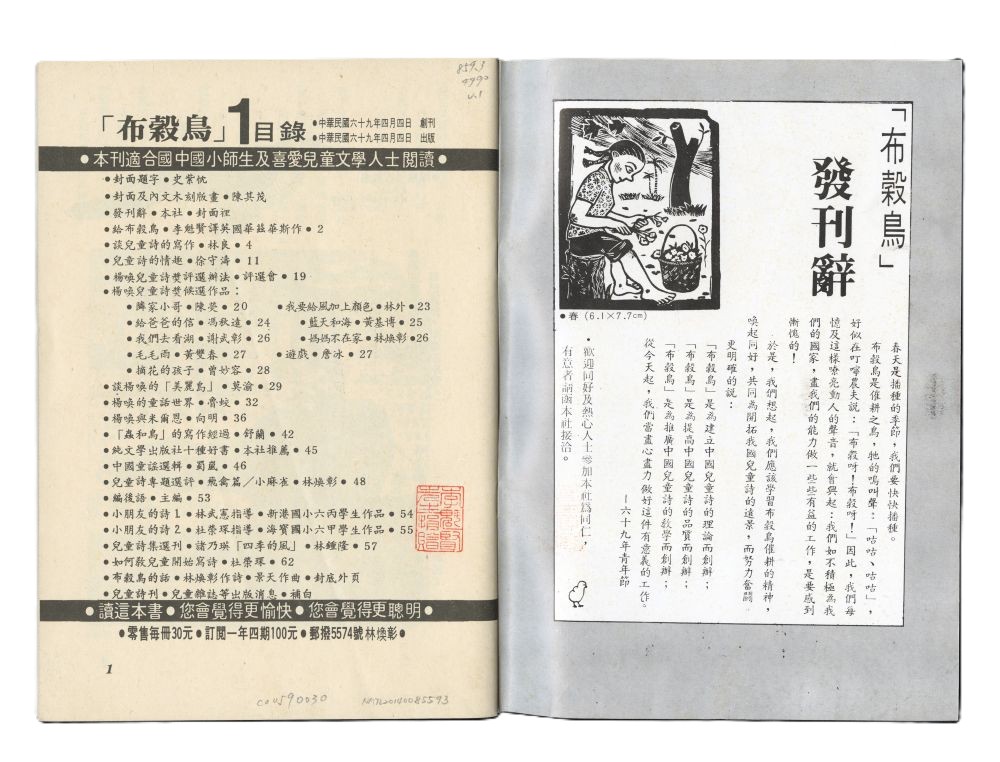
◧ The Cuckoo Children’s Poetry Quarterly, Issue No. 1
First published on April 4, 1980, this journal was proposed by Lin Fuan-chan, who invited Shu Lan in Taipei and Hsueh Lin in Tainan to jointly launch the publication. Lin Fuan-chan also served as editor-in-chief. In its inaugural statement, the journal states its mission as developing theories on children’s poetry, raising literary standards, and promoting education through the “spirit of the cuckoo.” The cover and interior illustrations feature early woodcut prints by Chen Chi-mao. (Collection of the National Museum of Taiwan Literature)
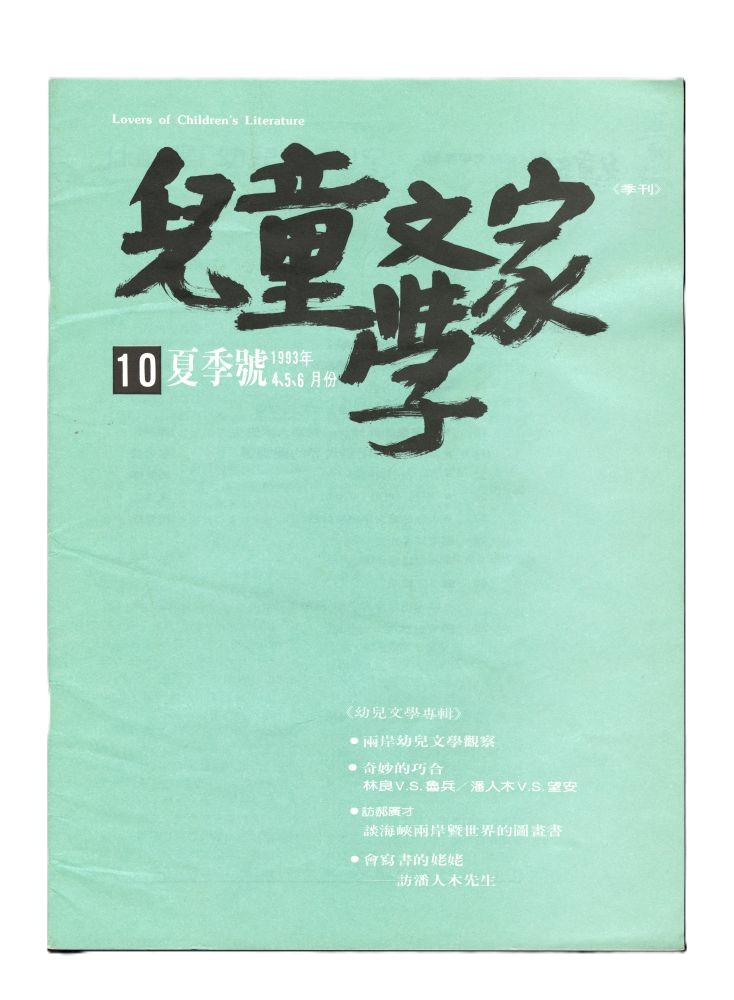
◧ Children’s Literature Writer, Issue No. 10, Summer Issue
Children’s Literature Writer was first launched in 1991, with Lin Fuan-chan serving as both publisher and editor-in-chief.
This issue, published in June 1993, is a special feature on literature for young children. (Collection of the National Museum of Taiwan Literature)
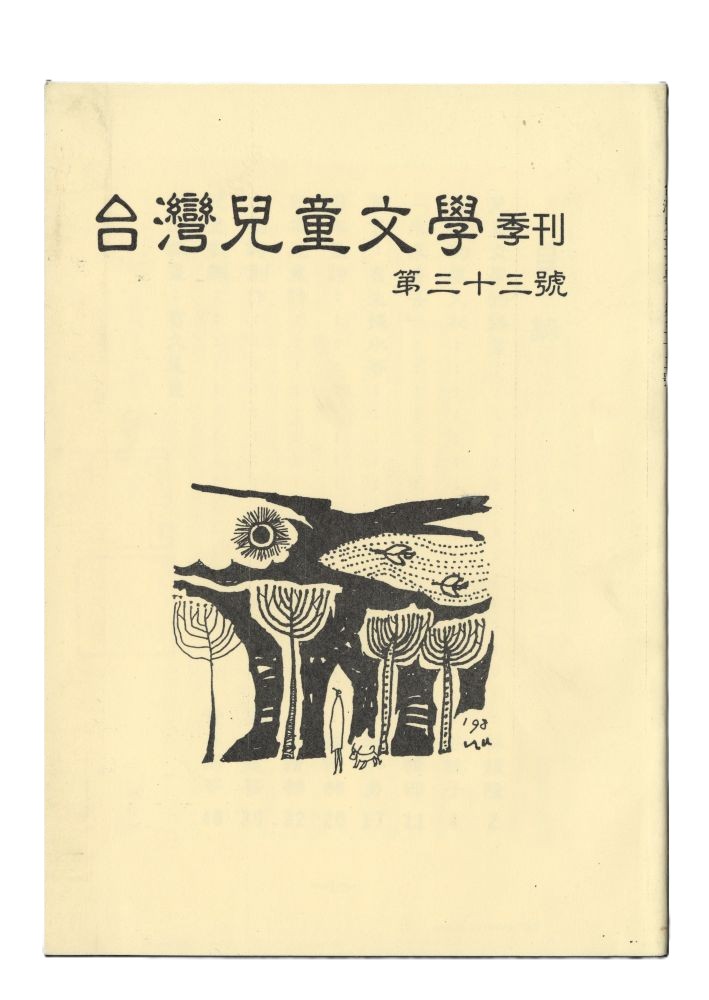
◧ Taiwan Children’s Literature Quarterly, Issue No. 33
Published in July 2000, this issue lists Peng-hsu Mei-feng as publisher. The journal was founded in February 1991 by Lin Chung-lung as a continuation of the children’s poetry magazine Moonlight. The journal later expanded beyond children’s poetry to include fairy tales, fables, children’s plays, folktales, everyday stories, and children’s literature criticism, evolving into a comprehensive children’s literature magazine. Publication ceased after Issue No. 58 in March 2009. (Collection of the National Museum of Taiwan Literature)
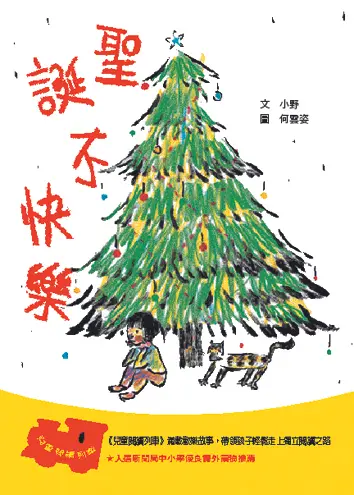
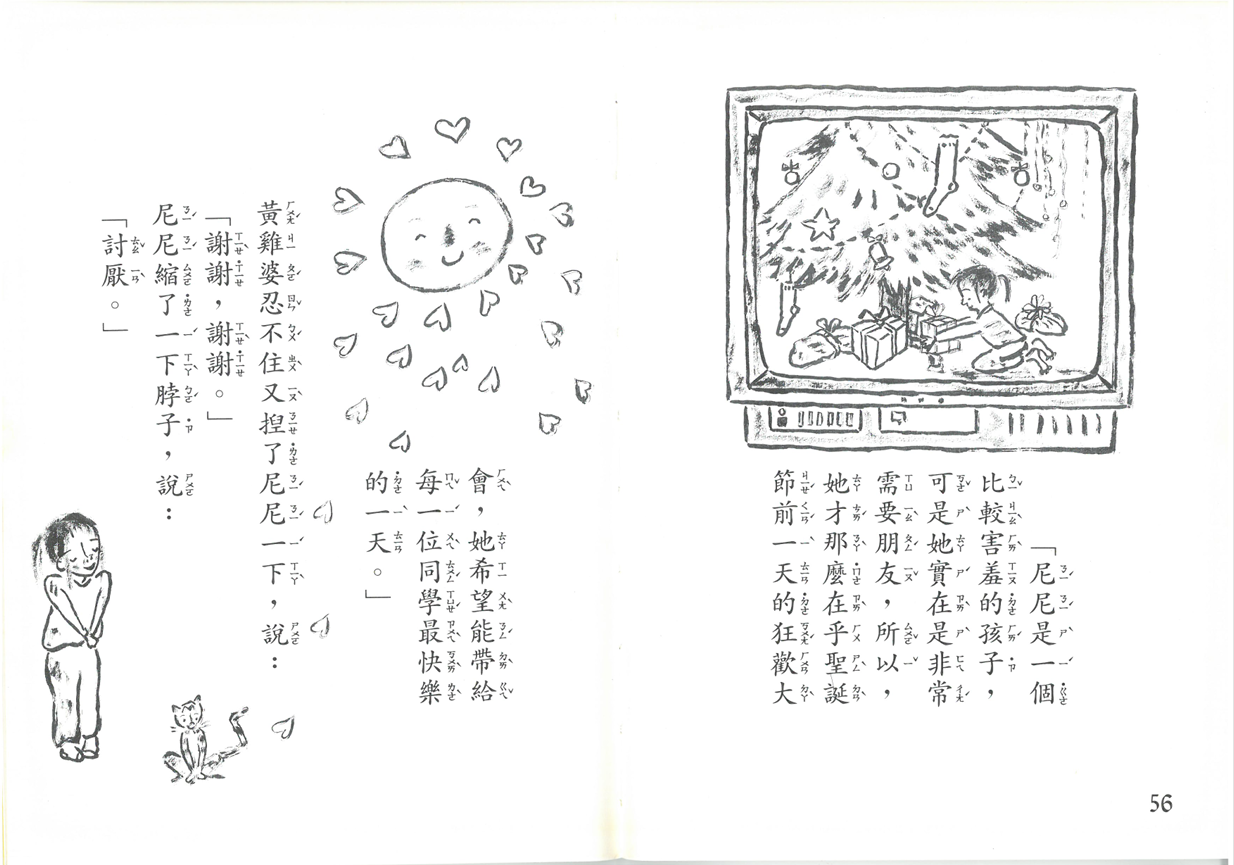
◧ A Not-So-Merry Christmas
Hsiao Yeh
Published in 1985, the bridge book contains a unique sense of humor and a thoughtful reflection on holiday culture. Through this work, Hsiao Yeh speaks directly to children, challenging the assumption that Christmas must always be joyful and exploring the more nuanced layers of children’s emotions.
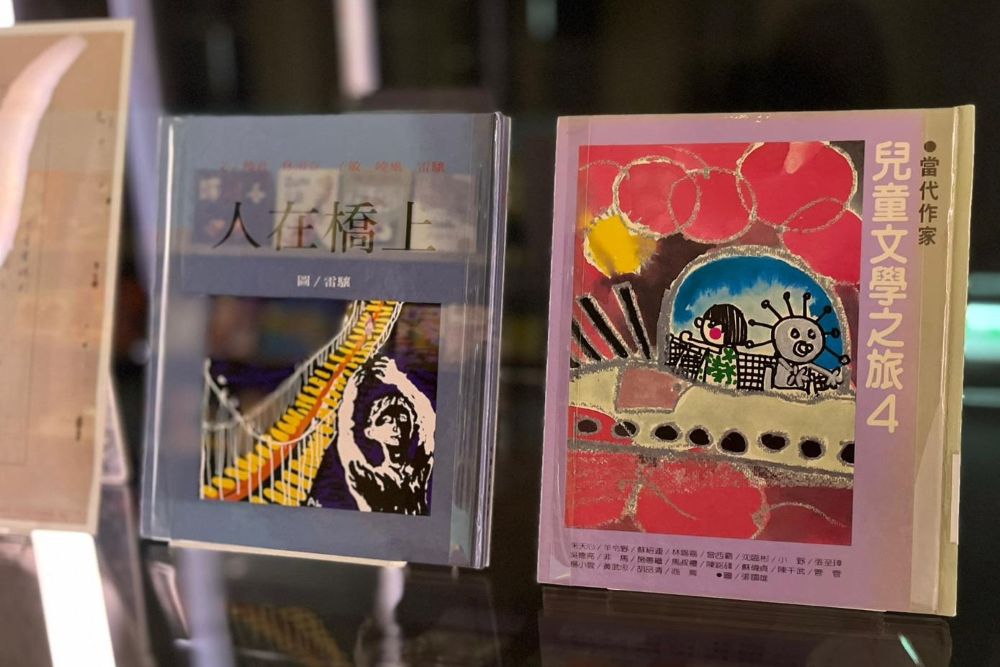
◧ Contemporary Writers—A Journey into Children’s Literature 4
Published in 1983, this six-volume series invited established literary writers, including Chu Tien-hsin, Su Wei-chen, and Wu Sheng, to create works for children. The series represents the trend of well-known authors crossing into children’s literature during that period.
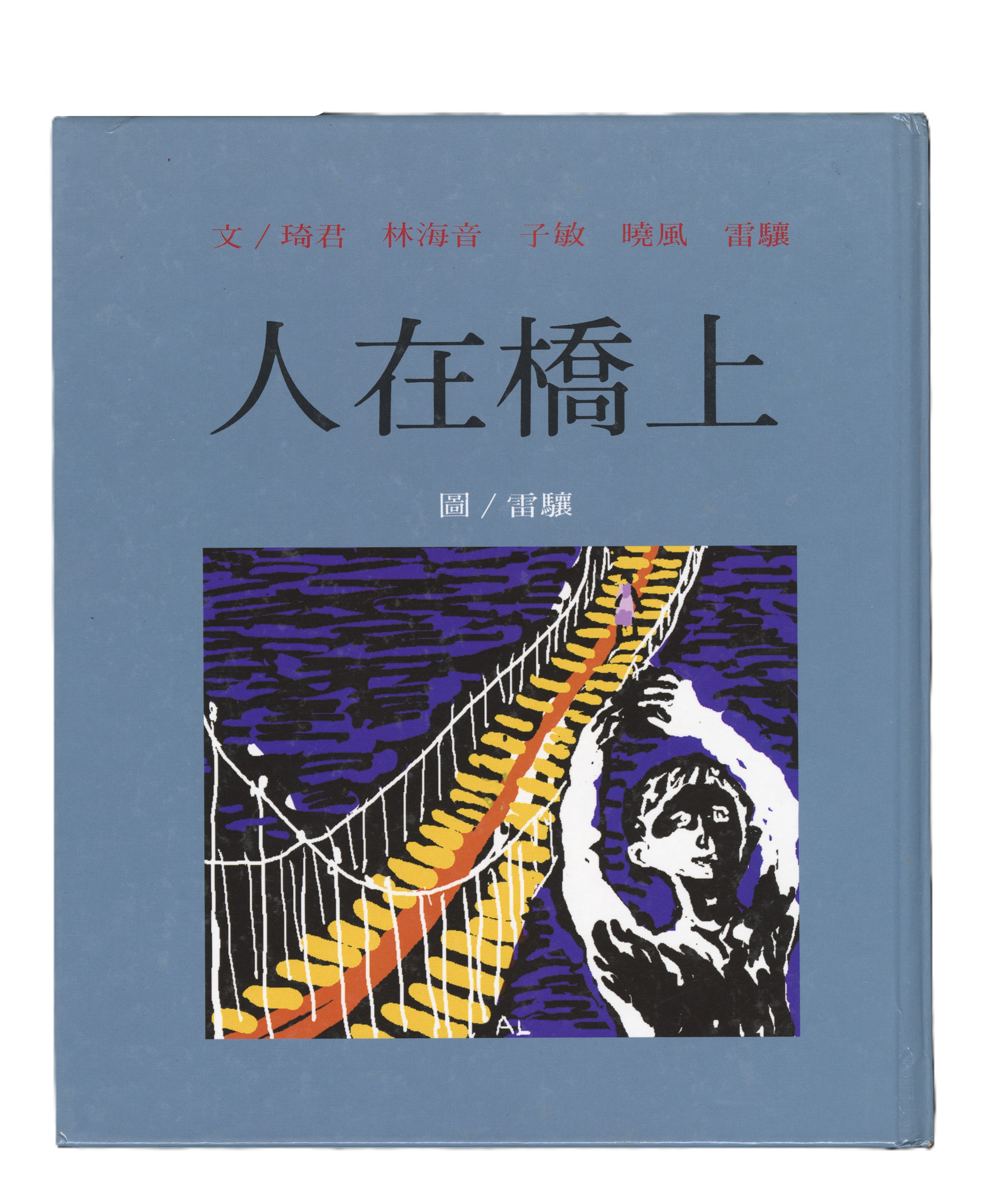
◧ People on the Bridge
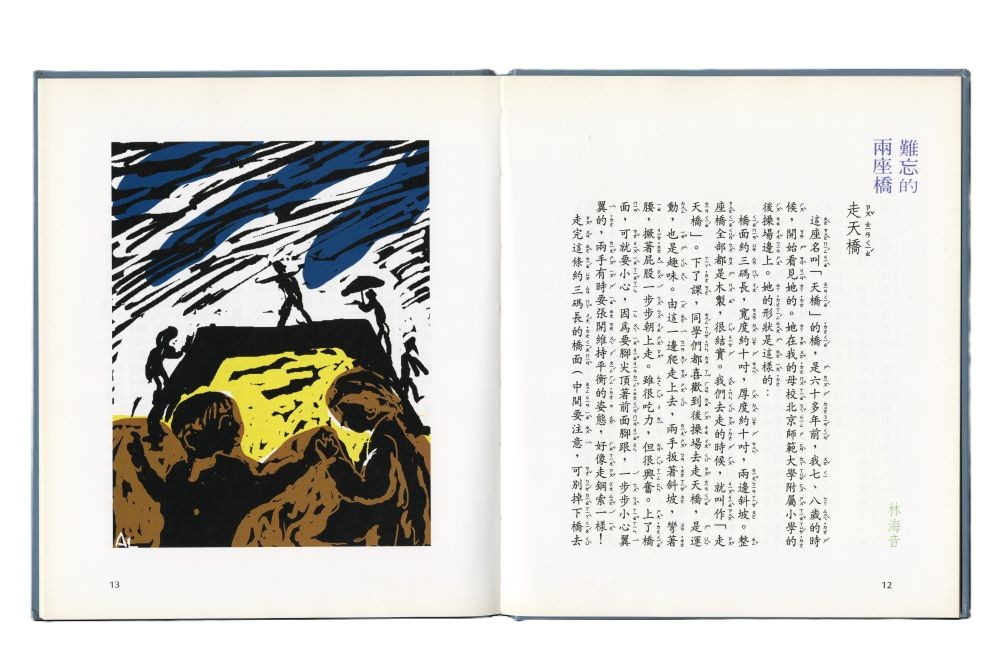
Published on October 30, 1995, as part of the Chinese Children’s Book Series by the Taiwan Provincial Department of Education, this volume includes writings by Chi Chun, Lin Hai-yin, Tzu-min (Lin Liang), Hsiao Feng, and Lei Hsiang. The cover and interior illustrations were created by Lei Hsiang. (Collection of the National Museum of Taiwan Literature)
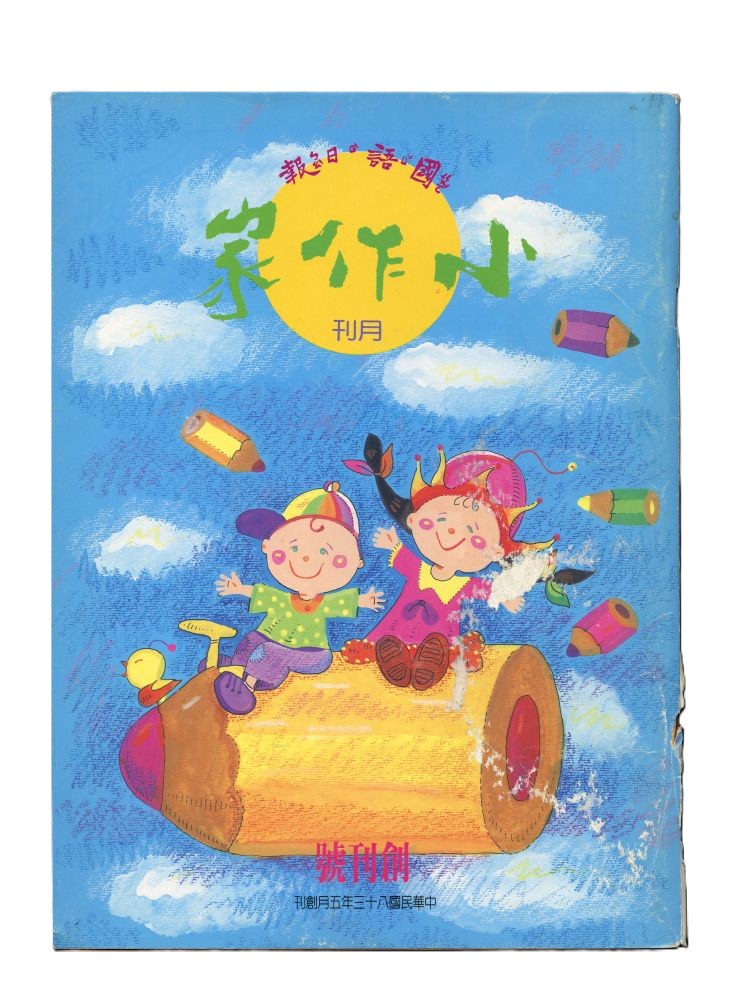
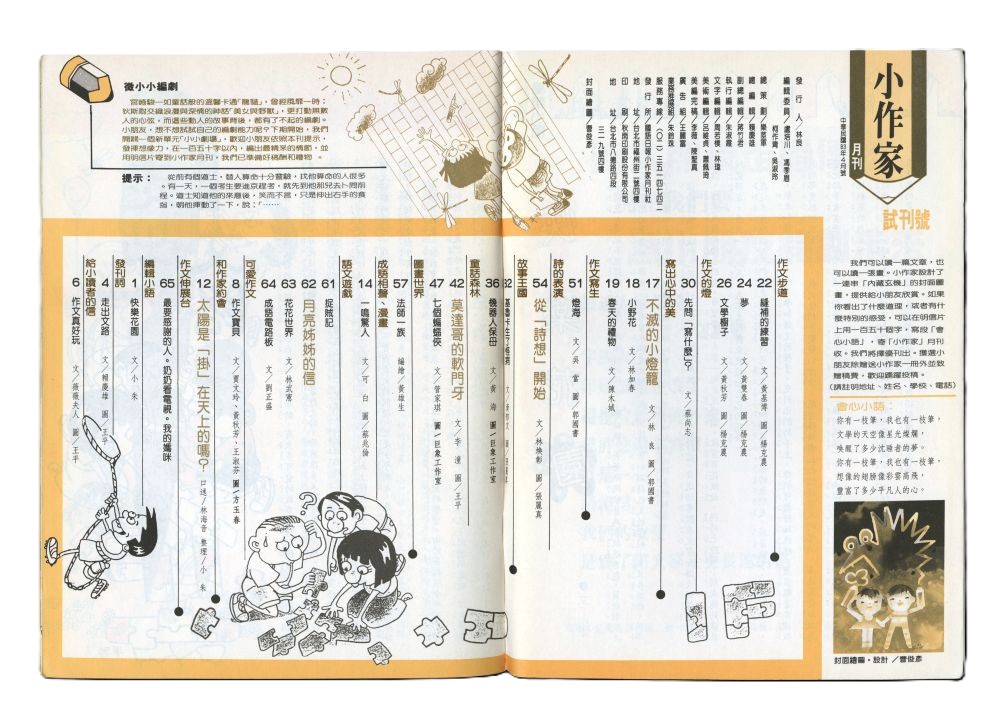
◧ Little Writer Monthly
The trial issue of Little Writer Monthly was released in April 1994 by the Mandarin Daily News Little Writer Monthly Editorial Office, with cover art designed by Tsao Chun-yen.
The magazine features works by writers such as Wang Shu-fen, Lin Liang, Lin Hai-yin, Lin Wu-hsien, Lin Fuan-chan, Kuan Chia-chi, Huang Chi-po, and Weiwei Furen. The first official issue was published in May 1994, with cover art designed by Chang Peng-chieh. (Collection of the National Museum of Taiwan Literature)
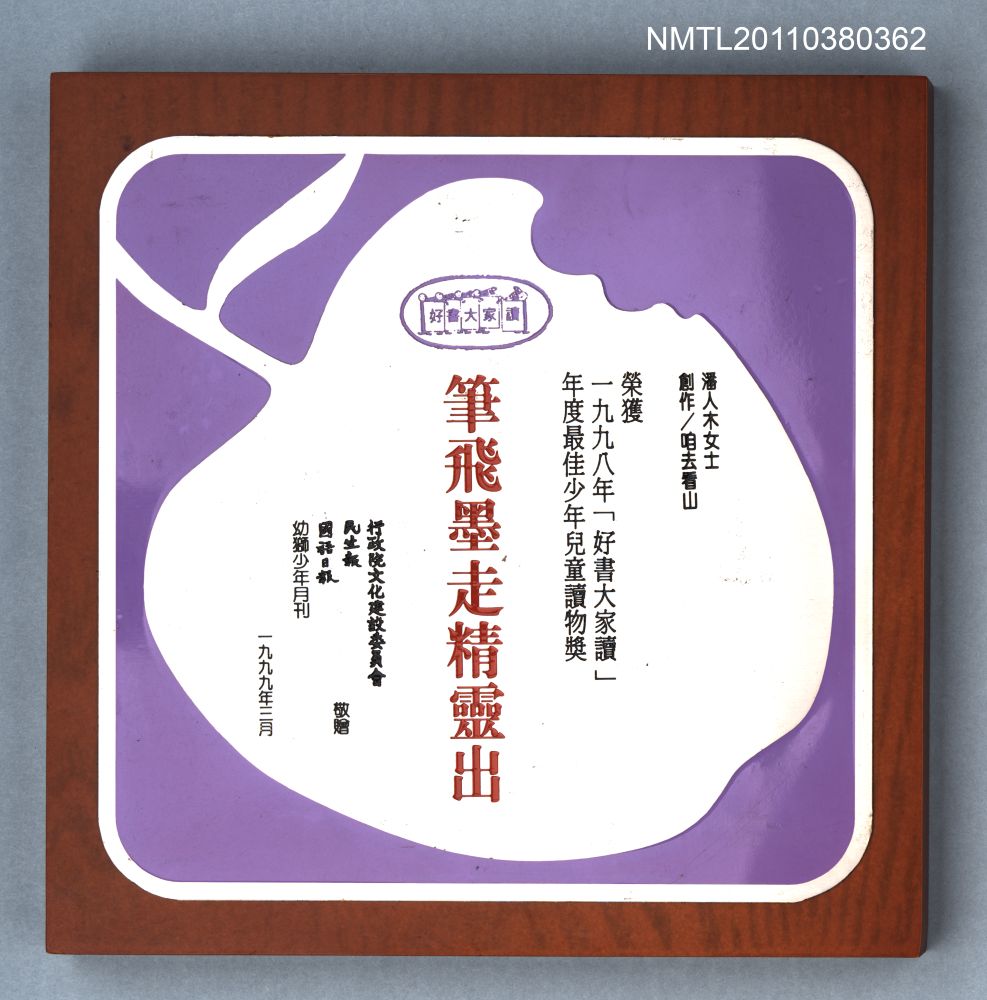
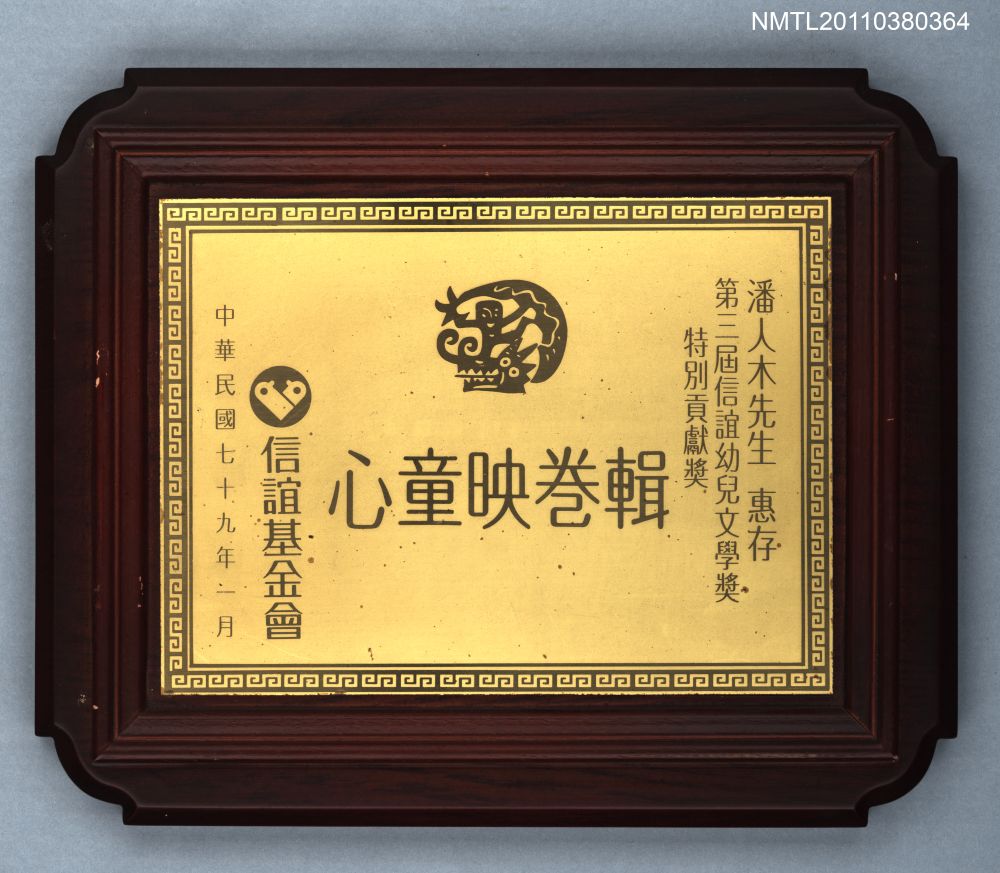
◧ Medal Awarded to Pan Renmu
Pan Renmu received the Special Contribution Award at the 3rd Hsin-Yi Children’s Literature Award in 1990. In 1998, her work Let’s Go See the Mountains received the Annual Best Children’s Book Award from the “Good Books for Everyone to Read” program. (Collection of the National Museum of Taiwan Literature)
Visual Storytelling Reaches the World
Since the 21st century, more Taiwanese children’s book illustrators have received international awards for their picture book illustrations, drawing growing attention at home. Many young artists have also gone abroad to develop their skills in illustration and picture book creation.
During this period, more original Taiwanese picture books began to be readily translated and published overseas. Publishers also introduced bridge books designed to match the reading abilities of different age groups. As visual storytelling gained greater importance, the illustrations and layouts of these books became increasingly refined.
Today‘s picture book creators are known for their distinctive storytelling styles and techniques. Their works, often rich in meaning and paired with carefully crafted illustrations, have been embraced by international publishers and translated into many languages, reaching readers worldwide.
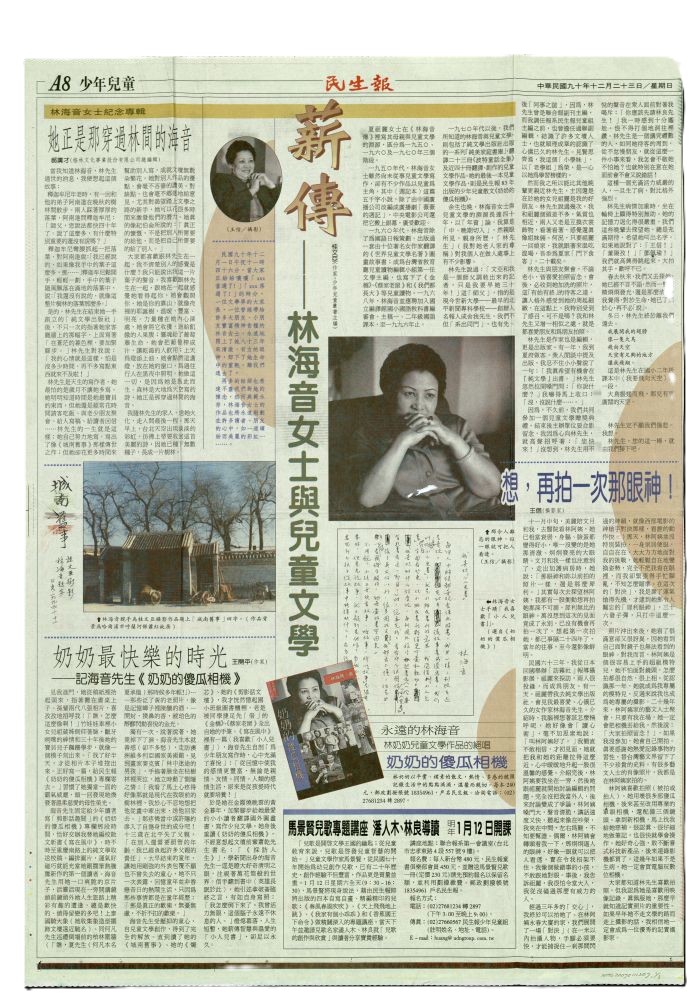
◧ “Lin Hai-yin and Children’s Literature,” Newspaper Clipping
After Lin Hai-yin’s passing, Kuei Wen-ya wrote the article “Passing the Torch—Lin Hai-yin and Children’s Literature,” reflecting on her contributions and literary achievements.
The article was published in the children’s section of Min Sheng Bao on December 23, 2001. (Collection of the National Museum of Taiwan Literature)

1. Privacy protection policy.
Personal privacy has become the main concern of users when browsing in the online world. The National Museum of Taiwan Literature (hereinafter referred to as the museum) has specially created a privacy protection policy. How to collect and use data", "Cookies, IP address", and "Protection and Use of Personal Data" to explain and declare:
(1) How to collect and use personal data:
In order to provide you with the best on this website The website service, according to different pages, will ask you to provide relevant personal information. The scope is as follows: This website is when you use the system function forms such as e-newslet subscription, group tour reservation, event registration, joining literary friends and publishing seminar information , Will retain the name, email address, contact method and usage time you provided.
(2) Cookies and IP Address:
When a user visits this website, the server will record relevant behaviors by itself, including the IP address of the connected device, time of use, browser used, browsing and click data records Etc., as a reference for us to improve our website services, this record is an internal application and will never be published.
(3) Protection and utilization of personal data:
The hosts of this website are equipped with various information security equipment such as firewalls, anti-virus systems and necessary safety protection measures to protect the website and your personal data. We adopt strict protection measures. Only authorized personnel can access your personal data. The relevant processing personnel have signed confidentiality contracts. Anyone who violates confidentiality will be punished by relevant laws.
Although this website will do its utmost to maintain the user’s personal data (not misused or disclosed), because the transmission of network data cannot ensure 100% security, this website cannot be sure or guarantee that the user’s or The data we send to users is completely secure. Regarding the above risks, users must be asked to bear them.
Unless you obtain your consent or other special provisions of laws and regulations, this website will never expose your personal data to a third party or use it for other purposes than the collection purpose.
2. Information Security Policy
The National Museum of Taiwan Literature (hereinafter referred to as the museum) respects and protects your security and privacy protection while using the Internet, in order to help you understand how the "National Museum of Taiwan Literature Global Information Network" protects your use of various services on this website For security, and how to collect, apply and protect the personal information you provide, please read the privacy protection and security policy of the "National Taiwan Literature Museum Global Information Network". Please read the following instructions carefully. You are also welcome to tell us your thoughts. If you have any comments or questions, please E-mail to twp@nmtl.gov.tw for
any unauthorized attempts to upload or modify the information provided by the library All services and related information activities are strictly prohibited and may violate the law. For site security purposes and to ensure that the service will continue to serve all Internet users, this site provides the following security measures:
. Use a network intrusion detection system to monitor network traffic to identify unauthorized attempts to upload or change, web page information, or sabotage.
. Install a firewall to prevent illegal intrusion, destruction, or theft or destruction of data, to avoid illegal use of the website, and to protect the rights of users.
. Install anti-virus software to scan for viruses regularly to provide users with a safer web browsing environment.
. Simulate hacker attacks from time to time, exercise system response procedures when security incidents occur, and provide appropriate security defense levels.