Home/Literary Panorama/Sharing the Magic of Stories from the NMTL Archive/
Back
THE MAGIC OF CATCH PHRASE FROM THE NMTL ARCHIVE

A fragment of stolen time and place lives within catch phrase.
How would you define Taiwan Literature in one, brief phrase?
SURVIVAL: Literature as Resilience through Crisis
Literature is a place of solace for battered and tormented souls. During the Japanese colonial and postwar periods, writers were left with words to confront the fateful yet turbulent eras of uncertainty.
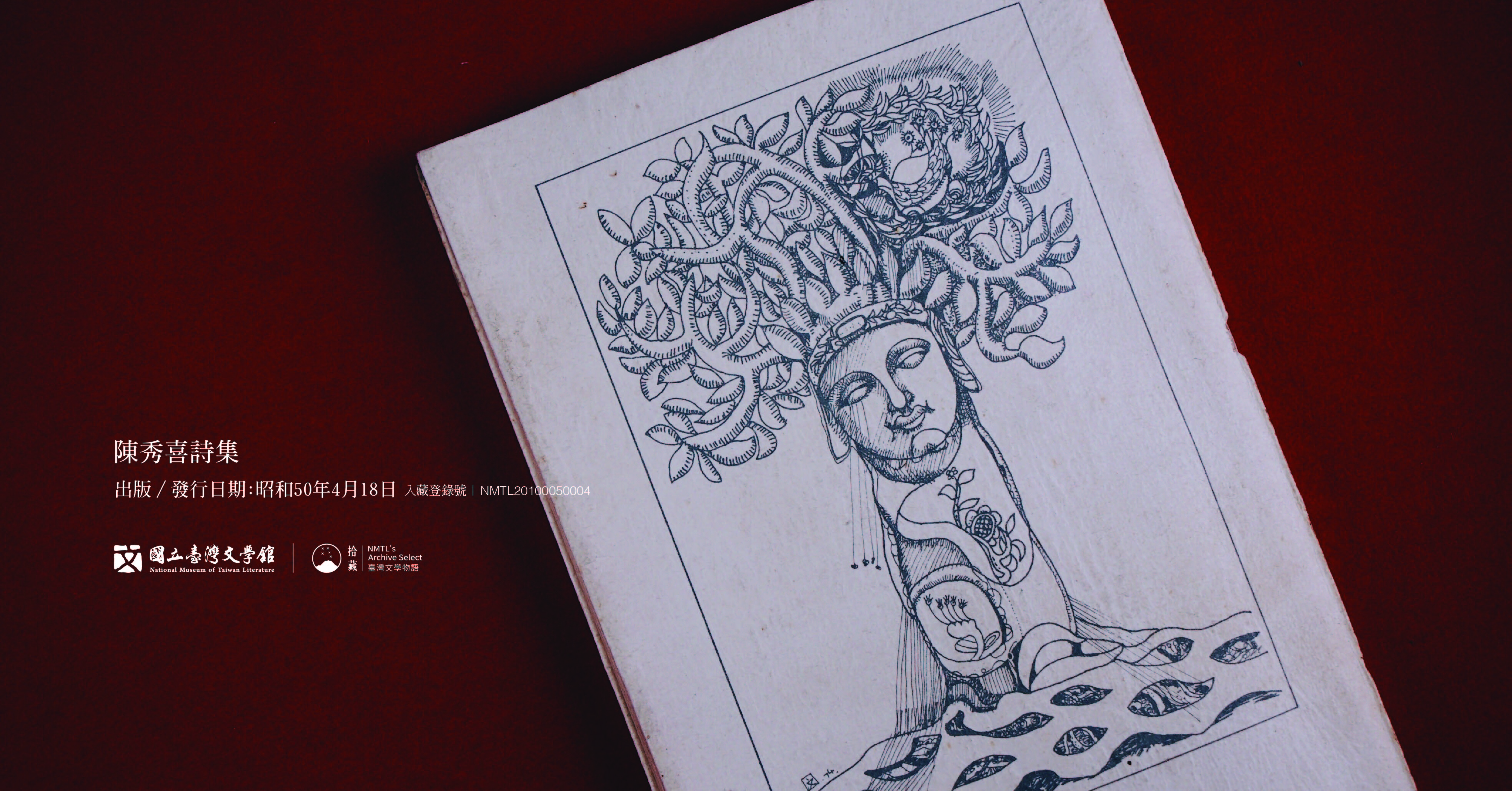
NMTL Collection | NMTL20100050004
Syong Yi-ping: The translingual generation, and the barriers yet uncrossed (in chinese)
Summary : As part of the translingual generation, Chen Hsiu-hsi was a woman who was able to empathize with the loneliness that belonged to that generation. Cultivated in Japanese, this generation became muted when the Nationalist government demanded that publications should only be made in Chinese.
DECISIONS: Literature as Unconceived Alternatives
Words bear witness to the writers’ experience. They inscribe a biography of growth and transformations. Yet, this seemingly singular path can also serve as an indication for an alternative route for the future. Literature embodies not only a personal reality but also the collective existence of an era.
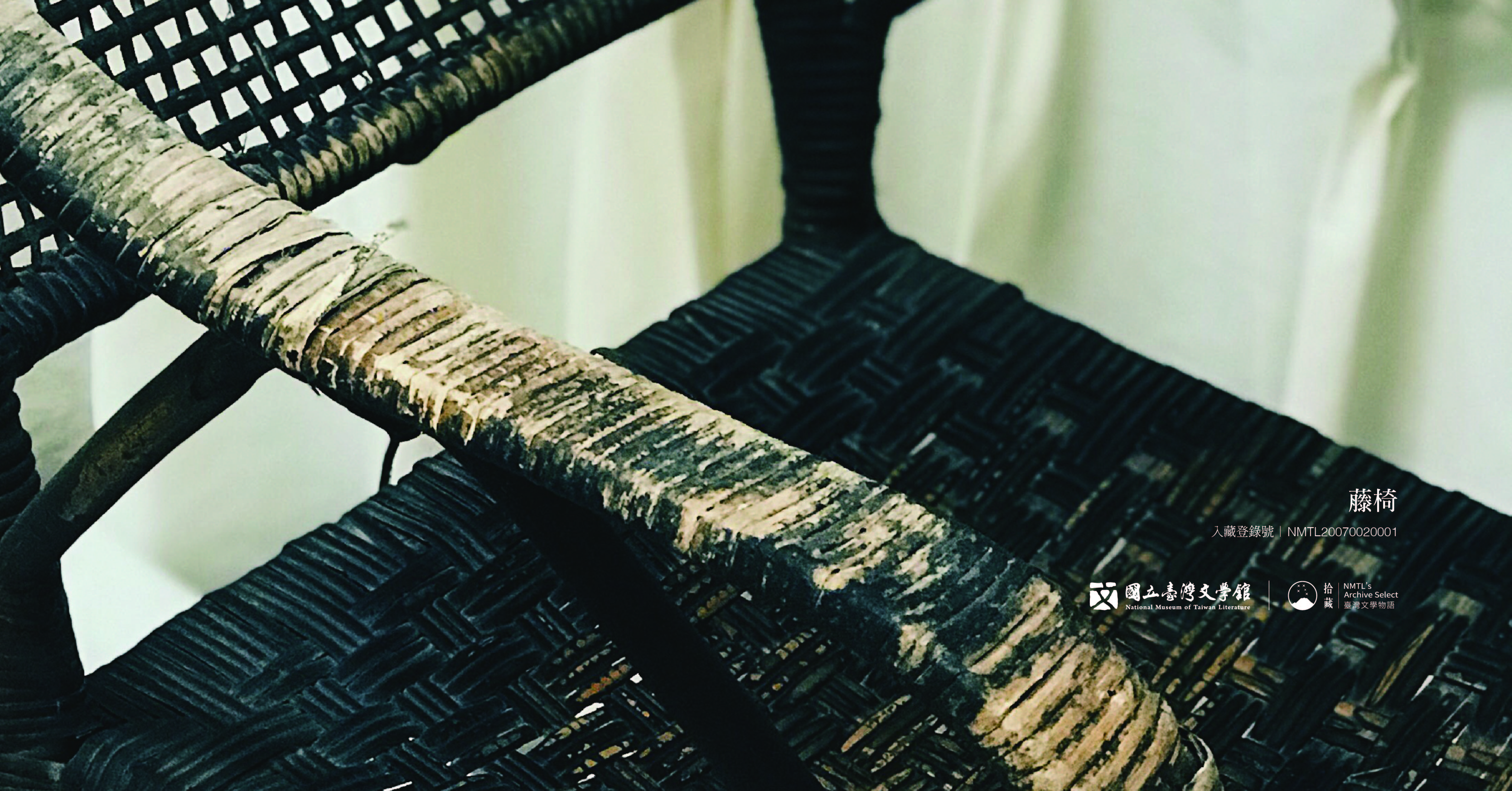
NMTL Collection | NMTL20070020001
Chen Ling-yang: Always there, but imperceptible-- a rattan chair and his Yeh Shih-tao (in chinese)
Summary : Having arranged for his wife and children to be cared for in her parents’ home in Zuoying, he settled in the dormitory alone, got his hands on a stack of writing paper, a few ball-point pens, a desk, a shabby rattan chair, and began again on his writing. After writing several million words of stories, he eventually came to realize that, cultivated in Japanese literature, no matter how hard he tried, he would never be able to produce sophisticated literature in Chinese. He then turned the focus of his writing to criticism and literary history.
TANGENTS: Literature as Borders Transcended
Writing reveals the variance of thoughts, and pushes one to embrace diverse opinions beyond one’s comfort zone. In the discourse with other authors, writers experience different points of view, and in turn discern their own identities.
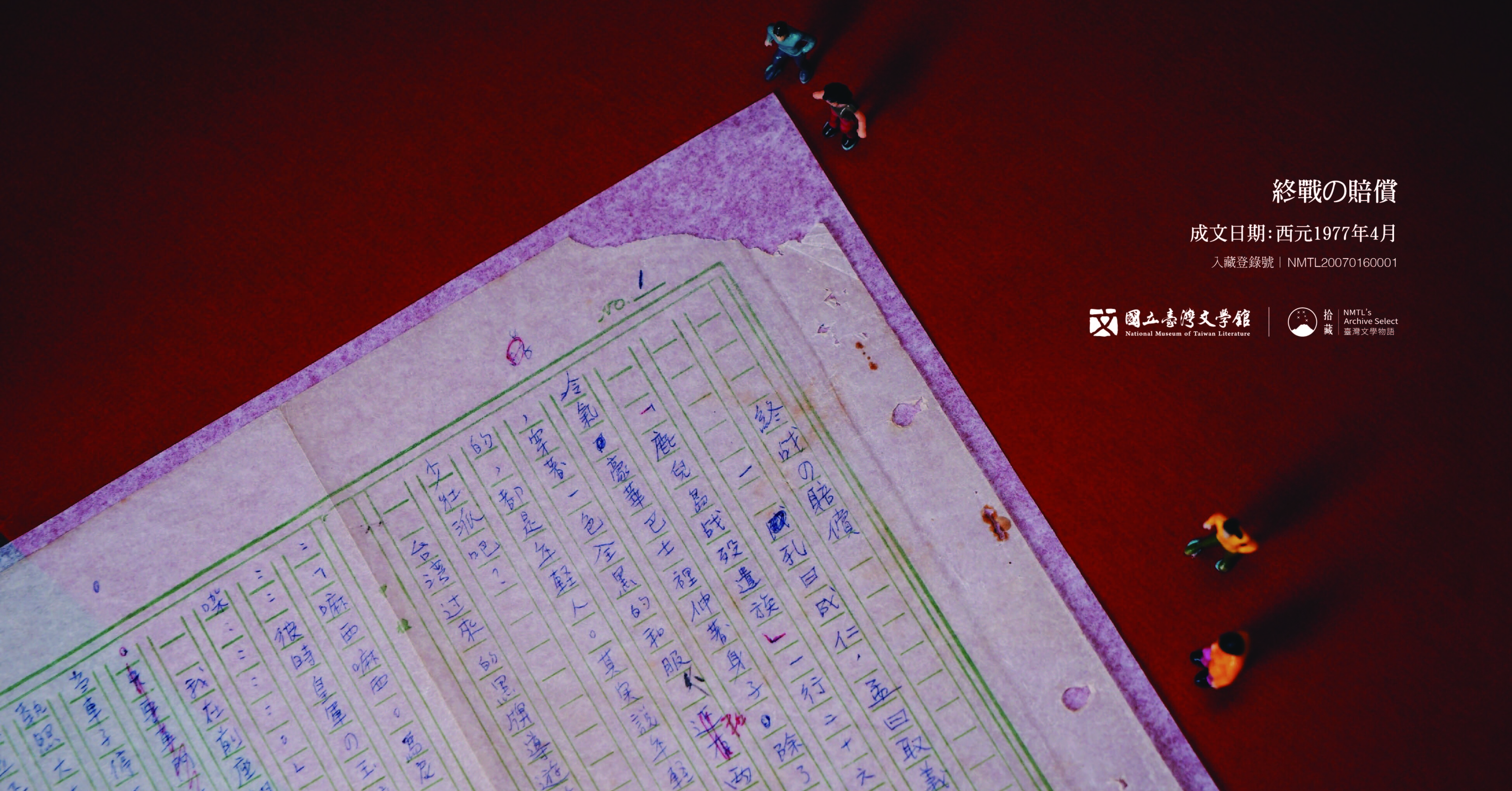
NMTL Collection | NMTL20070160001
Wu Jyun Sian: Who is it that has yet to speak-- Li Shuangze's "Reparation for Second World War" (in chinese)
Summary : Li Shuangze was a catalyst for Taiwan’s folk song movement. His work, stance, emotions, and efforts are still profoundly relevant on this island that he had cared about so deeply. Reflecting on “the nature of the self” and experimenting with how to “realize reality”, Li Shuangze’s essay is an embodiment of the author’s conviction and talent.
CONVERGENCE: Literature as an Accumulation of Emotions
Literature serves as a witness to flourishing ideas in a changing world. Aboard the boat of literature, writers navigate a turbulent world without ceasing to accumulate the energy that will inevitably unleash. Regardless of the source, all streams flow in the same direction: the future.
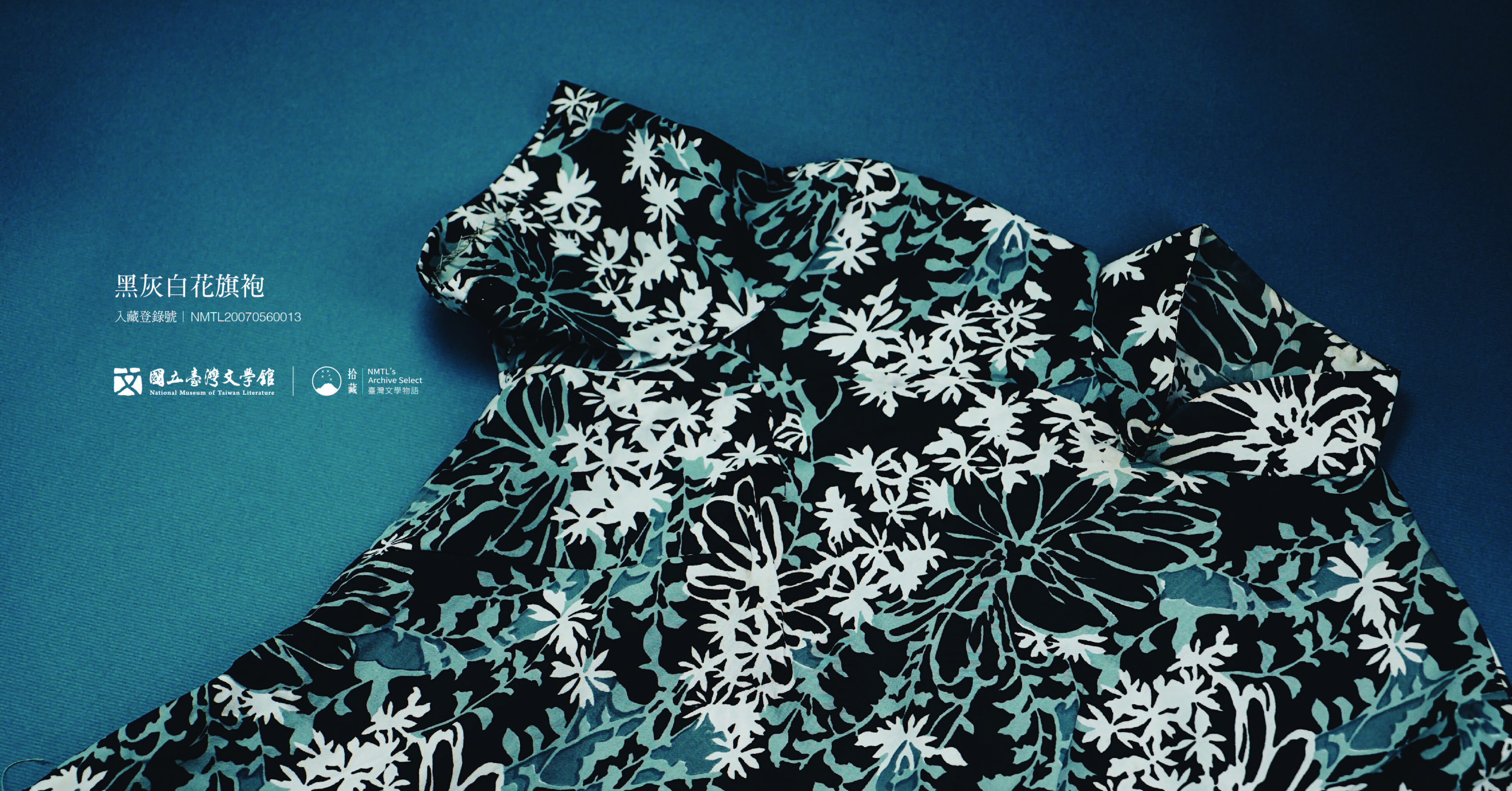
NMTL Collection | NMTL20070560013
Liu Cheng Hsin: Composing in life and persisting under restrictions-- Ai Wen’s cheongsam and her matchless existence (in chinese)
Summary : Under the gentle demeanor of her cheongsam, Ai Wen firmly committed to her ideals. She had a passion for life rivaling the heat of a volcano. The intensity of this fervor seemed to manifest in the maroon-colored cheongsam that she had designed and sewn herself.
ENDEAVOR: Literature as Refusal to Conform
Unwilling to surrender to the constraints of reality, writers break the deadlock by constructing infinite views with their boundless imagination, and thus, they become seekers in the unknown.
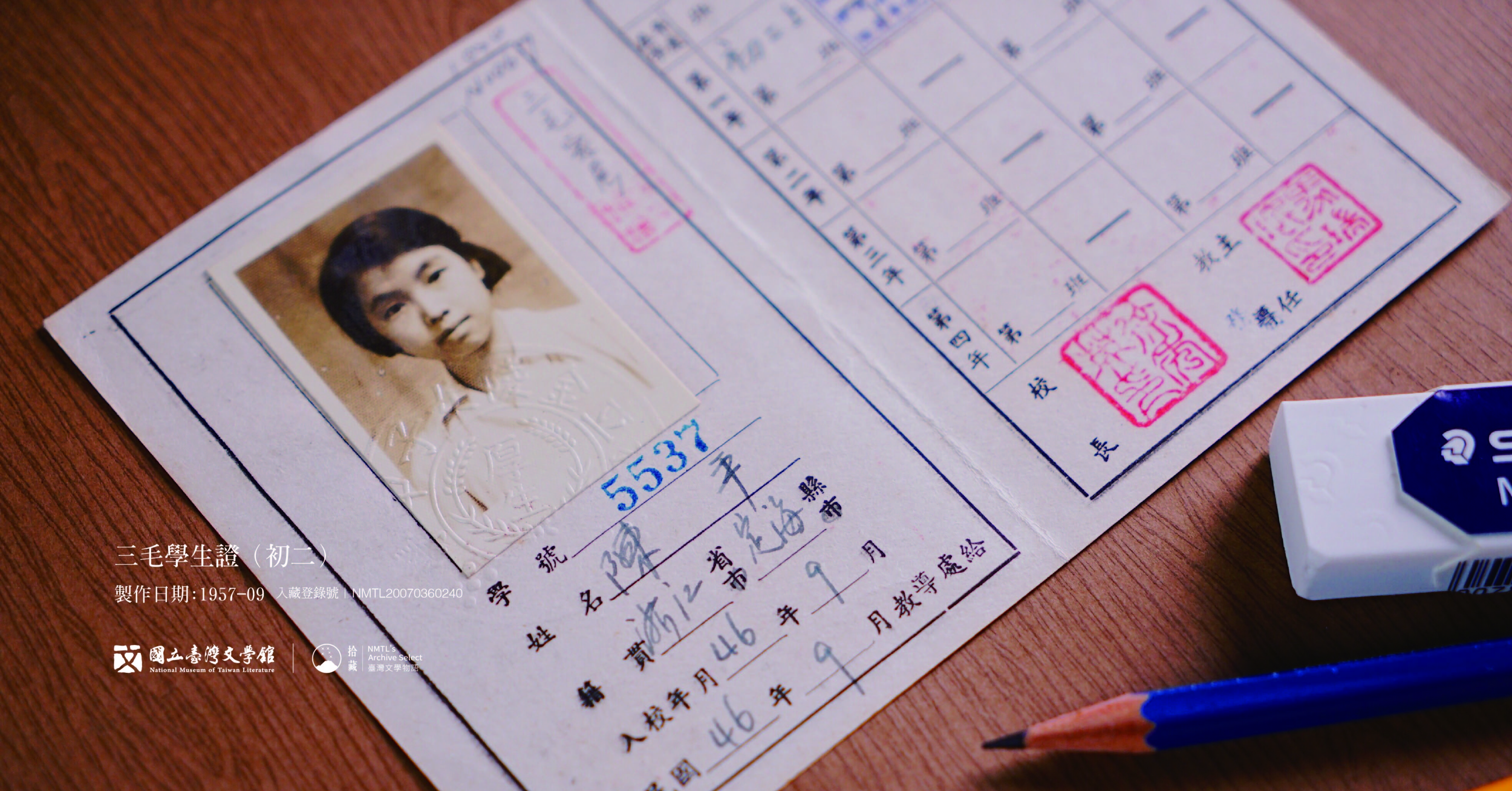
NMTL Collection | NMTL20070360240
Celan Lin: An augury for a faraway journey-- Sanmao’s student card* (in chinese)
Summary : Sanmao’s destination for when she skipped school was not the same as others’, who might instead have gone to the arcade, the juice bar, or the book rental shop. Sanmao skipped school to go to the public cemetery in Liuzhangli. "Among the clusters of ‘dirt buns’** in Liuzhangli, I buried my unpleasant school life." She was not fond of graveyards, but the dead didn’t speak, and she could read in peace.
*Sanmao is also known as Echo or Echo Chan. **A colloquial term for graves.
VOICE: Literature as Silent Articulation
Silent yet resounding, words vocalize the writers’ opinions and sentiments.
The pen is their instrument, and words are their songs. Literature carries their legacy into the future.
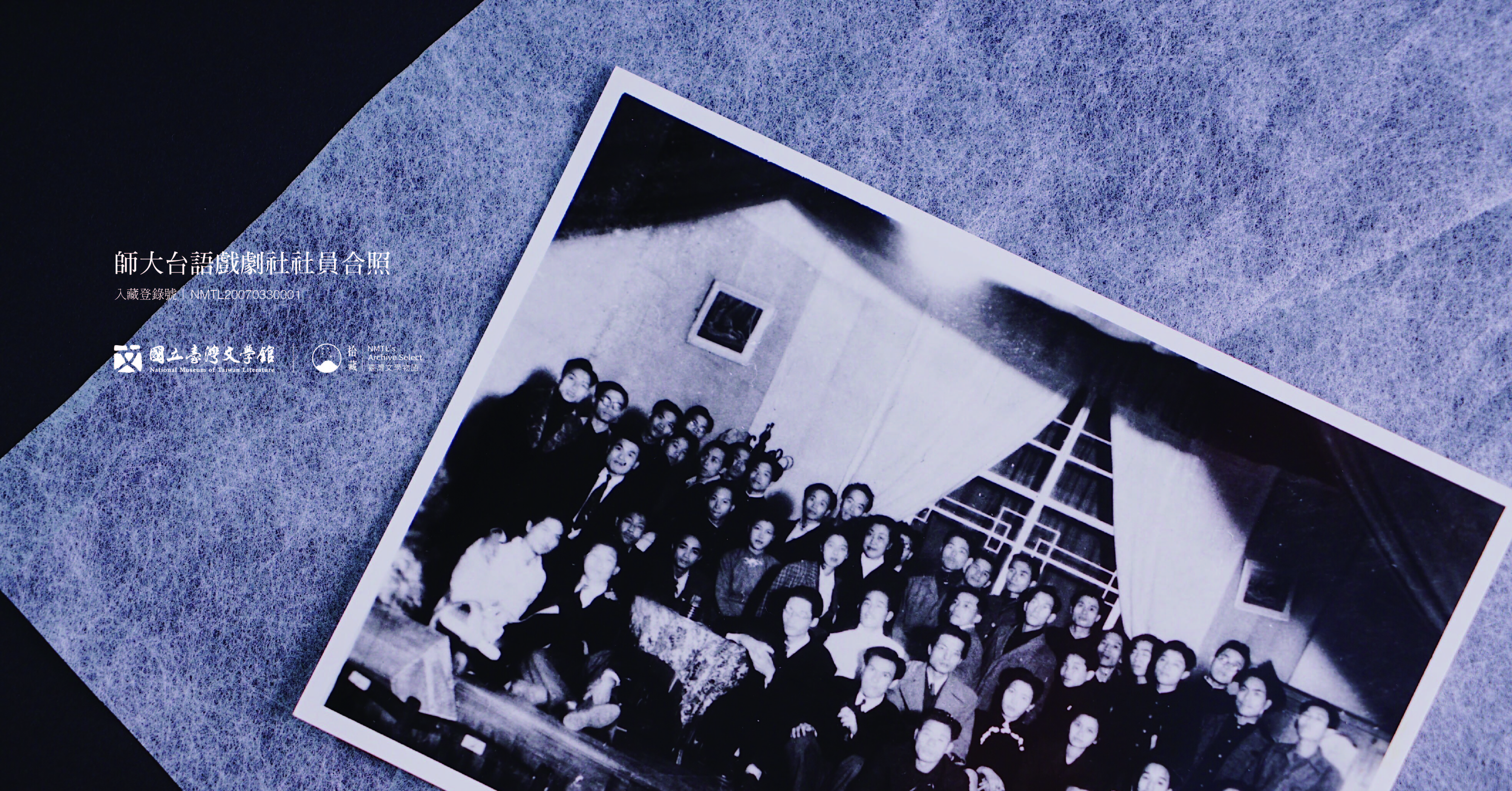
NMTL Collection | NMTL20070330001
Wu Ying-tong: The sun has yet to rise, let’s put on the last show in Taiwanese (in chinese)
Summary : Full of ambition and ideals, these highly spirited youths injected their love of art, society and this island into the theatre. They aimed to cast light in a time of darkness with their production, Before Dawn.
US: Literature as Identities in the Collective
Using the power of words, writers express their identification with the nation, the land, and the communities. Here, they sought solace, fought injustice and found where they belong.
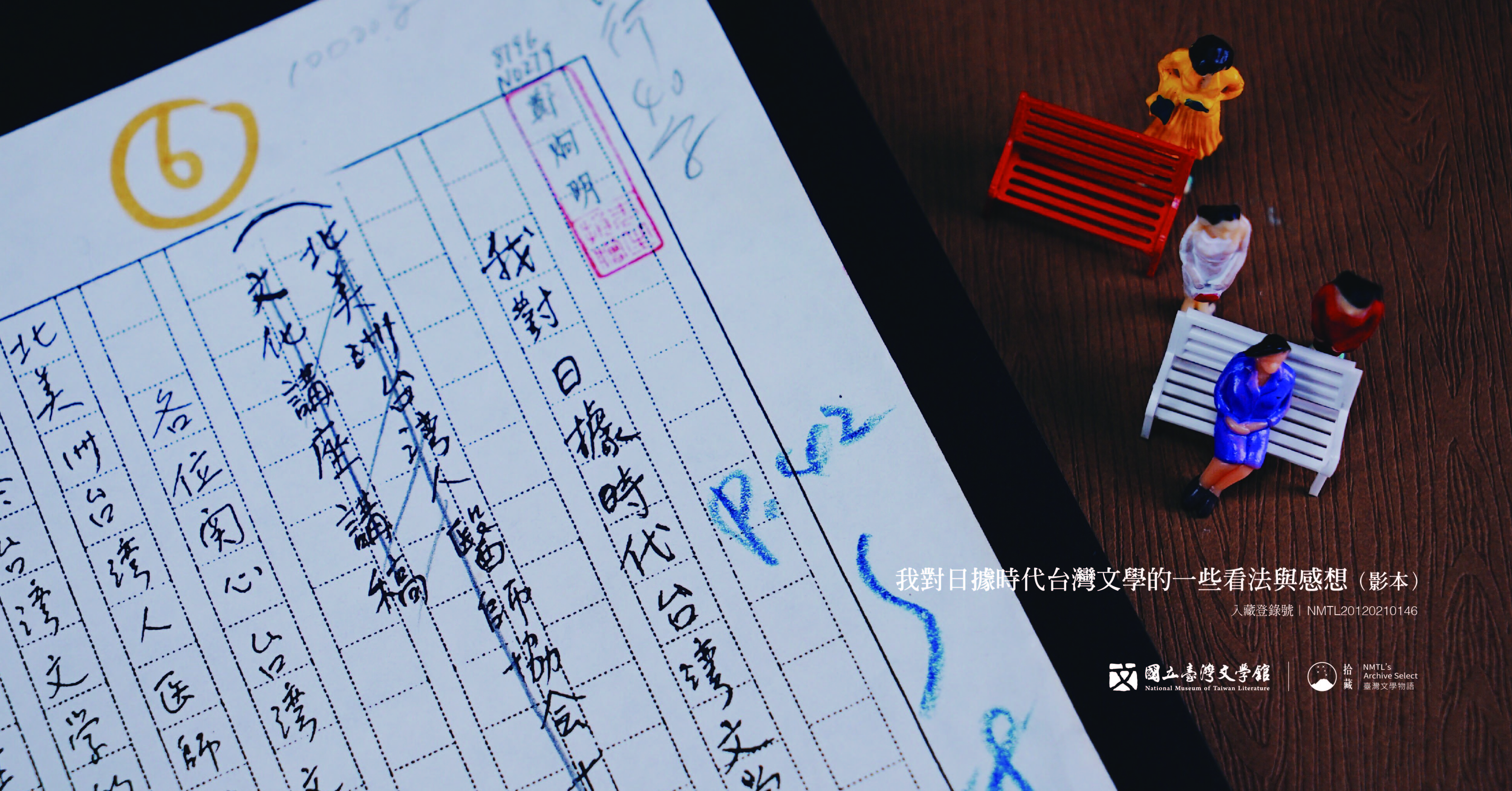
NMTL Collection | NMTL20120210146
Summary :
After graduating from university, Yang Qianhe* found a position as an assistant at the professor’s research lab in the former College of Science and Agriculture, National Taiwan University. However, she discovered a significant disparity and quit her job in a fury: in Taiwan, back in 1941, the Japanese residents (called naichi-jin), received 60 percent additional salary compared to Taiwanese residents (hontō-jin).
*Also known as Ho Yang Lin, Yang Chian-ho.
1. Privacy protection policy.
Personal privacy has become the main concern of users when browsing in the online world. The National Museum of Taiwan Literature (hereinafter referred to as the museum) has specially created a privacy protection policy. How to collect and use data", "Cookies, IP address", and "Protection and Use of Personal Data" to explain and declare:
(1) How to collect and use personal data:
In order to provide you with the best on this website The website service, according to different pages, will ask you to provide relevant personal information. The scope is as follows: This website is when you use the system function forms such as e-newslet subscription, group tour reservation, event registration, joining literary friends and publishing seminar information , Will retain the name, email address, contact method and usage time you provided.
(2) Cookies and IP Address:
When a user visits this website, the server will record relevant behaviors by itself, including the IP address of the connected device, time of use, browser used, browsing and click data records Etc., as a reference for us to improve our website services, this record is an internal application and will never be published.
(3) Protection and utilization of personal data:
The hosts of this website are equipped with various information security equipment such as firewalls, anti-virus systems and necessary safety protection measures to protect the website and your personal data. We adopt strict protection measures. Only authorized personnel can access your personal data. The relevant processing personnel have signed confidentiality contracts. Anyone who violates confidentiality will be punished by relevant laws.
Although this website will do its utmost to maintain the user’s personal data (not misused or disclosed), because the transmission of network data cannot ensure 100% security, this website cannot be sure or guarantee that the user’s or The data we send to users is completely secure. Regarding the above risks, users must be asked to bear them.
Unless you obtain your consent or other special provisions of laws and regulations, this website will never expose your personal data to a third party or use it for other purposes than the collection purpose.
2. Information Security Policy
The National Museum of Taiwan Literature (hereinafter referred to as the museum) respects and protects your security and privacy protection while using the Internet, in order to help you understand how the "National Museum of Taiwan Literature Global Information Network" protects your use of various services on this website For security, and how to collect, apply and protect the personal information you provide, please read the privacy protection and security policy of the "National Taiwan Literature Museum Global Information Network". Please read the following instructions carefully. You are also welcome to tell us your thoughts. If you have any comments or questions, please E-mail to twp@nmtl.gov.tw for
any unauthorized attempts to upload or modify the information provided by the library All services and related information activities are strictly prohibited and may violate the law. For site security purposes and to ensure that the service will continue to serve all Internet users, this site provides the following security measures:
. Use a network intrusion detection system to monitor network traffic to identify unauthorized attempts to upload or change, web page information, or sabotage.
. Install a firewall to prevent illegal intrusion, destruction, or theft or destruction of data, to avoid illegal use of the website, and to protect the rights of users.
. Install anti-virus software to scan for viruses regularly to provide users with a safer web browsing environment.
. Simulate hacker attacks from time to time, exercise system response procedures when security incidents occur, and provide appropriate security defense levels.